Wedding Slideshow vs. Video Guest Book: Which Should You Make?
Choosing a wedding slideshow vs video guest book starts with one simple question: what do you want the finished video to preserve? A slideshow tells a planned story about the couple. A video guest book saves the faces, voices, and wishes of the people celebrating with them. Both can become meaningful keepsakes, but they need different material and planning. This guide compares the two formats so you can choose with confidence. You will also find practical setup steps, sample requests, and a simple hybrid option.
Wedding Slideshow vs Video Guest Book: The Main Difference
A wedding slideshow is a story chosen by an editor. It often uses photos from childhood, early dates, family events, trips, the proposal, and the wedding journey. Music, short captions, and a few video clips can help connect those moments.
A video guest book is a collection of messages from wedding guests. Each person records a greeting, memory, wish, or piece of advice. The finished video focuses more on the community around the couple than on a full timeline of their relationship.
Think of the slideshow as the couple's story so far. Think of the guest book as the people they shared the day with. That difference should guide your choice.
The Quick Answer
Choose a wedding slideshow when you have strong photos and want a polished video to show at the rehearsal dinner or reception. It is also a good choice when one person knows the couple's story well enough to shape it.
Choose a wedding video guest book when hearing from friends and family matters most. It works well when some loved ones cannot attend or when you want to save voices and personalities, not just images.
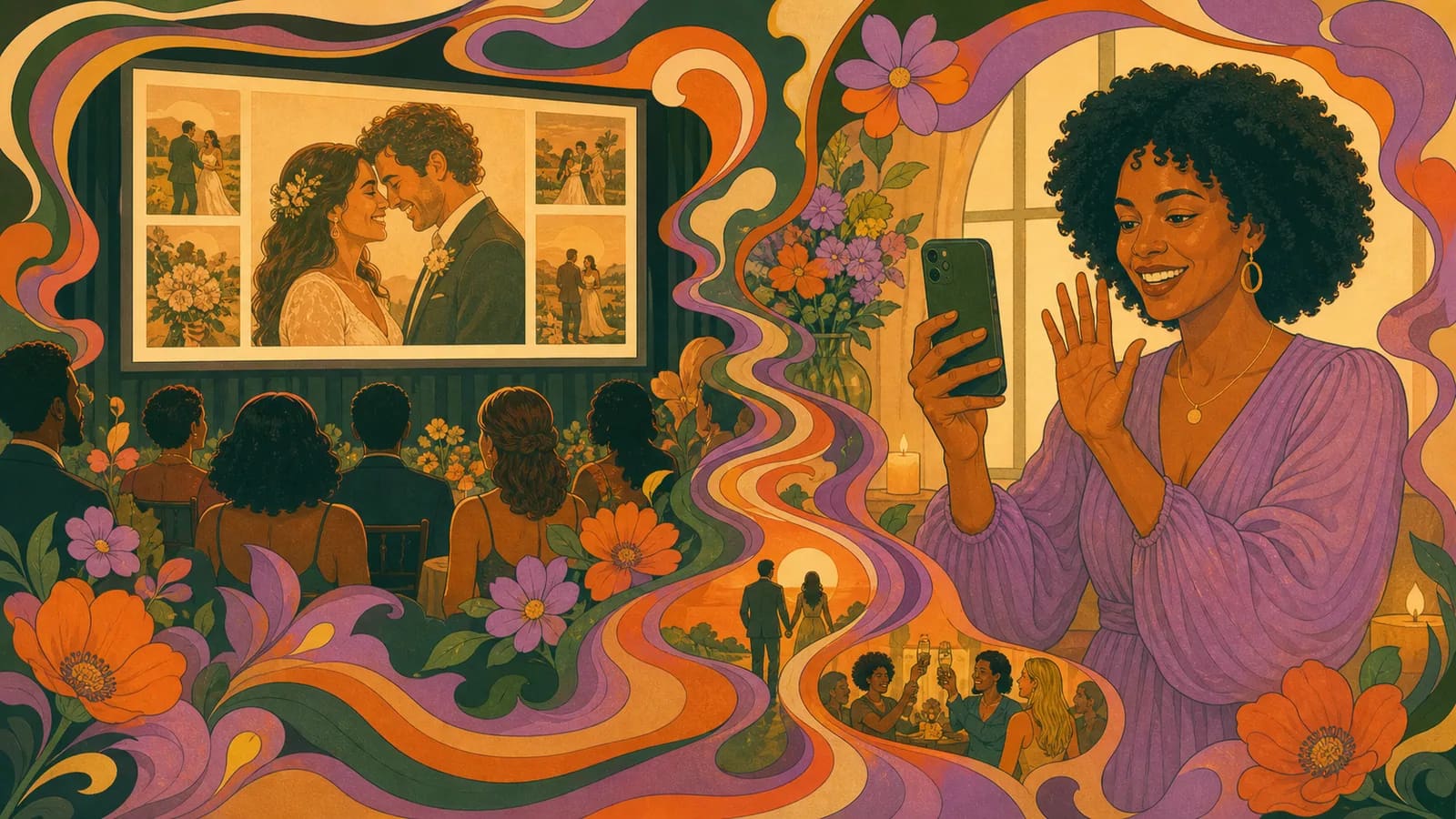
Choose a hybrid when you want both. Use a short slideshow for the couple's story, then add selected guest messages. The result can feel complete without becoming too long.
When a Wedding Slideshow Works Best
A slideshow works best when the viewing time is fixed. You can prepare it before the wedding and play it for everyone at once. The editor controls the order, length, music, captions, and mood.
This format is useful when you have photos from several stages of the couple's lives. A clear story might move from childhood to friendship, dating, engagement, and the wedding. You can also build the slideshow around a theme, such as family, travel, or the places that shaped the relationship.
The main challenge is selection. Too many similar photos can slow the story. Choose images that add a person, place, feeling, or turning point. A smaller set of meaningful photos is often stronger than a long gallery.
When a Wedding Video Guest Book Works Best
A video guest book works best when the people are the keepsake. It captures voices, expressions, laughter, and small stories that a signed book cannot hold. Guests who are far away can also take part if they receive a recording link before the deadline.
This format needs clear prompts. A blank request to say something nice can make guests freeze. Ask one focused question, such as how they met the couple, what they admire about the relationship, or what they hope the couple enjoys in married life.
Guest comfort matters too. Give people a quiet place, simple instructions, and enough time. You can collect messages before the wedding, at the venue, after the event, or through a mix of all three.
Compare the Experience Before, During, and After the Wedding
Before the wedding, a slideshow needs collecting, sorting, and editing. Most of the work belongs to the organizer. A guest book spreads the work across contributors, but it needs invitations, prompts, reminders, and a deadline.
During the wedding, a prepared slideshow only needs a tested screen, sound system, and backup copy. A live recording station needs signs, good light, clear sound, power, and someone who can help guests. Phone-based submissions reduce the need for a booth, but guests still need reminders.
After the wedding, the slideshow is usually complete. The guest book may still need late submissions, trimming, ordering, captions, and sound checks. Decide who owns that work before choosing the format.
Choose Based on the Feeling You Want
Pick a slideshow if you want guests to watch one shared story. It can be warm, funny, reflective, or celebratory. Music and careful order help create a steady mood.
Pick a guest book if you want the result to feel candid and personal. Different voices make it less predictable. One guest may tell a funny story, while another offers a quiet wish. That variety is part of its charm.
For a formal reception, a short slideshow may be easier to present. For a relaxed celebration, a guest recording area can become part of the event. For a private gift, either format can work. The right answer depends on the couple, not on wedding trends.
Think About Your Guests
A guest book asks more from each person. Some guests enjoy speaking on camera. Others may feel rushed or self-conscious. Written messages and photo uploads can give those guests another way to contribute.
A slideshow asks less during the event. Guests can simply watch. However, the organizer may need help gathering old photos from both families. Start early if the pictures are spread across phones, boxes, and family albums.
Accessibility also matters. Add captions when speech is hard to hear. Use large, short text in a slideshow. Give guests plain recording steps. Avoid making anyone download an unfamiliar app unless it is truly necessary.
Can You Make Both Without Doubling the Work?
Yes, but keep one format in the lead. For example, build a five-minute photo story and place three short guest messages between its chapters. Another option is to show the slideshow at the reception and save the full guest book as a private gift.
You can also collect photos, videos, written messages, and locations through one contribution request. The editor can then choose the best material for each part. One clear collection process is easier than sending several unrelated requests.
Set limits from the start. Ask for one photo, one short clip, and one memory from each person. Short contributions are easier to review and more likely to fit the final story.
A Simple Planning Process
First, write one sentence that describes the finished keepsake. You might write, “This video will show the places and people that shaped Maya and Chris.” That sentence helps you reject material that does not fit.
Next, choose when people will watch it. A reception video needs a firm deadline and a tested running time. A private post-wedding gift gives you more room for late messages and careful editing.
Then, list what you need. For a slideshow, request clear photos, dates, names, and short context notes. For a guest book, request brief clips, a chosen prompt, the speaker's name, and their connection to the couple.
Finally, test the finished video on the screen and speakers you plan to use. Check names, captions, music levels, clip volume, and orientation. Keep a backup copy in a second location.
Use Places to Give the Story More Shape
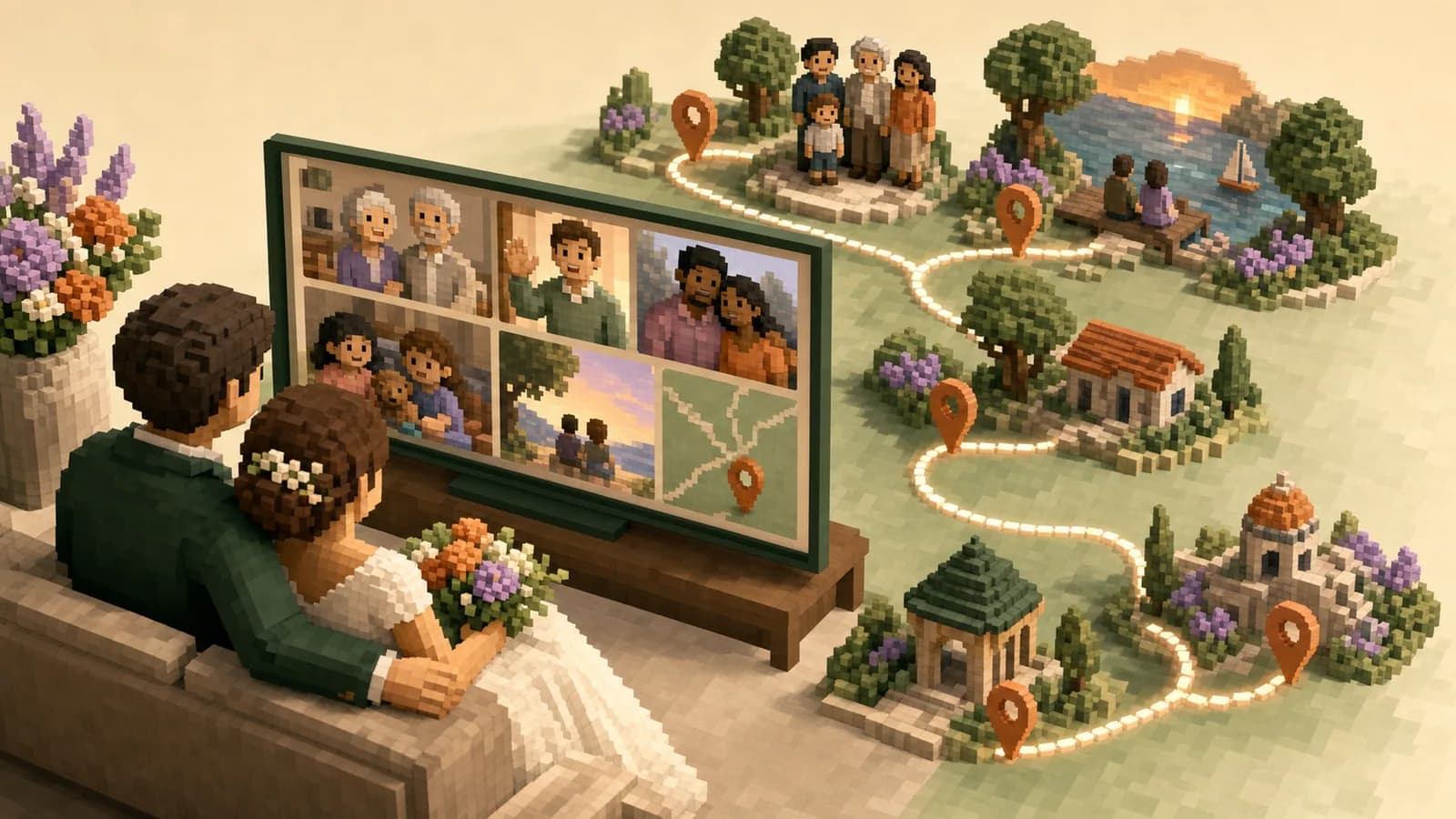
Places can connect a slideshow and a guest book. The story might move from the couple's hometowns to where they met, their first trip, the proposal spot, and the wedding venue. A guest can also attach a message to the place where a shared memory happened.
AlbumMap is useful when you want those locations to guide the final video. It can bring photos, short videos, written notes, and places into one map-based story. This is most helpful when memories come from different cities or several parts of the couple's lives.
You do not need to add every address. Choose places that explain a chapter. Each map stop should carry a memory, message, or image that moves the story forward.
Common Mistakes to Avoid
Do not make the video longer just because you collected more material. Keep the strongest moments and save the rest in a private folder. A focused keepsake is easier to watch again.
Do not place a recording station beside loud music. Do not ask guests to invent a speech without a prompt. For a slideshow, avoid tiny captions, busy effects, and songs that cover spoken clips.
Get permission before using private or embarrassing material. Leave out stories about ex-partners, family conflict, or jokes that may age badly. The finished video should feel safe for both partners to watch and share.
Examples You Can Copy
Copy-ready slideshow photo request
We are making a short wedding slideshow for Maya and Chris. Please send one to three clear photos that show a meaningful stage, trip, friendship, or family memory. Add the names, year, place, and one sentence about why the photo matters. Please send everything by [date].
Copy-ready video guest book request
We are collecting short video messages for Maya and Chris. Please record a clip of 30 to 60 seconds. Share one favorite memory, something you admire about them as a couple, or one wish for their marriage. Say your name at the start and submit your clip by [date].
Copy-ready hybrid request
Help us build a wedding memory video for Maya and Chris. Please send one favorite photo, one short message, and the place connected to that memory. You may also record a brief video wish. Keep your contribution simple and send it by [date].
Copy-ready reception sign
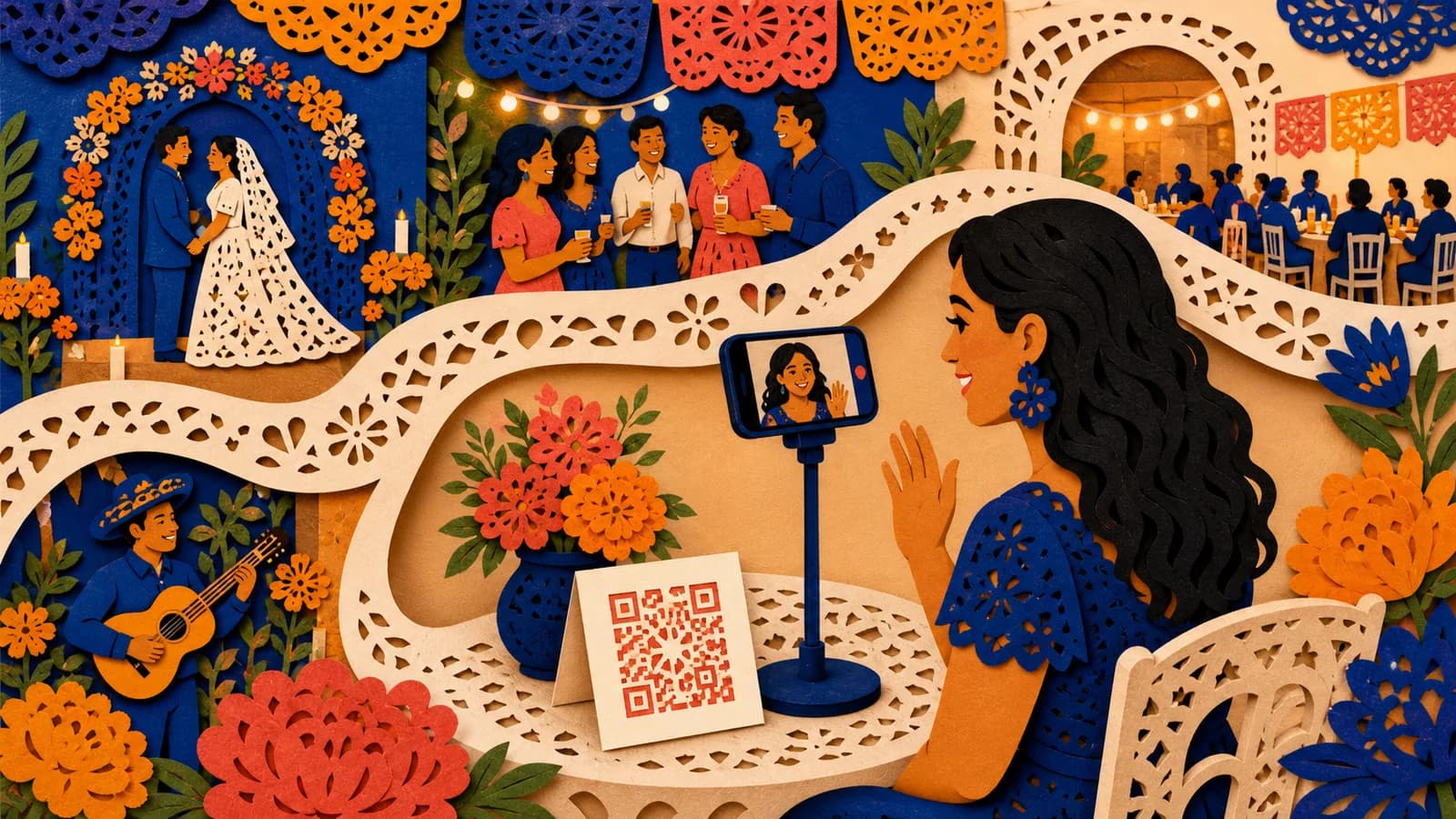
Leave a message for the newlyweds. Scan the code, say your name, and share one memory or wish. Keep your video under one minute. Need an idea? Tell us when you knew these two belonged together.
Final Thoughts
There is no single winner between a wedding slideshow and a video guest book. Choose the slideshow when you want a planned story built from meaningful images. Choose the guest book when the voices and personalities of loved ones matter most. If both goals feel important, make a short hybrid with firm limits. Start with the feeling you want the couple to have when they watch. Then choose the format that supports that feeling with the least stress. When photos, messages, clips, and meaningful places belong in one story, a map-based wedding video can help connect them.
Helpful answers
Frequently asked questions
- Is a wedding slideshow the same as a video guest book?
- No. A wedding slideshow is usually an edited story made from selected photos, music, captions, and occasional clips. A video guest book is built mainly from messages recorded by wedding guests.
- Which option is easier to show at the reception?
- A completed slideshow is usually easier because its order and length are fixed. Test the file, screen, speakers, and backup before the event. A guest book can also be shown, but messages must be collected and edited before the reception.
- How long should a wedding slideshow or guest book be?
- Keep a reception slideshow short enough to hold the room's attention. Five to ten minutes often gives you space for a focused story. A private guest book can be longer, but trimming pauses and repeated wishes will make it easier to rewatch.
- Can guests submit messages if they cannot attend the wedding?
- Yes. Send remote guests the same recording link, prompt, deadline, and length limit. Their messages can be added to the final guest book or placed within a hybrid slideshow.
- Can a wedding slideshow include video messages?
- Yes. Short messages can separate photo chapters or support key moments. Keep clips brief, add captions when helpful, and lower the music while people speak.
- What should we ask guests to say in a video guest book?
- Use one focused prompt. Ask for a favorite memory, a quality they admire in the couple, a short marriage wish, or the moment they knew the pair worked well together.
- Should we make both formats?
- Make both only when each has a clear job. You could show a short slideshow at the reception and give the full guest book privately. You could also make one hybrid video with a photo story and a few selected messages.