Anniversary Video Ideas That Feel Personal
The best anniversary video ideas do not depend on perfect editing. They begin with a clear story about two people. You might show the places they have called home, ask family members to share memories, or trace one ordinary year together. This guide offers practical concepts, prompts, and simple plans you can adapt for your partner, parents, grandparents, or friends. Choose one idea that fits the couple, then build around details only they would recognize.
Start with one feeling, not a folder of photos
Before collecting anything, decide how the video should feel. Warm and grateful is different from playful and surprising. A quiet video for your partner will also need a different tone from a family tribute shown at a large party.
Write one sentence to guide your choices. Try, “I want them to feel proud of the life they built,” or, “I want us to laugh at the small moments that became our story.” Keep material that supports that sentence. Save unrelated clips for another project.
Next, decide who the video is from. A partner can tell an intimate first-person story. Children and grandchildren can show the couple's effect on the family. Friends can add outside views, early memories, and details the couple may have forgotten.
12 anniversary video ideas that feel personal
1. The places that made us: Move through where you met, your first home, a favorite trip, and the place you live now. Add one memory to every stop. This structure works well when location is part of the relationship.
2. Then and now: Pair early photos with recent versions of the same people, places, or traditions. Show what changed and what stayed familiar. Avoid turning it into a plain timeline by adding a short reflection to each pair.
3. A year in ordinary moments: Use breakfast photos, walks, pet clips, home projects, and quiet weekends. Small moments can say more about a relationship than a list of major events.
4. What we learned from you: Ask children, grandchildren, or friends to share one lesson they learned from the couple. The lesson might involve patience, humor, teamwork, or making people feel welcome.
5. Our funniest chapter: Build the video around harmless mishaps, repeated jokes, and stories everyone enjoys. Let the humor feel affectionate. Leave out any story that could embarrass someone during the reveal.
6. A spoken love letter: Record a short letter and place photos or video beneath the narration. Use specific details. Mention a difficult day they improved, a habit you love, or a choice that changed your life.
7. Messages from every chapter: Invite people from school, early work years, old neighborhoods, family life, and recent friendships. Arrange the clips by when each person entered the couple's story.
8. The soundtrack of us: Choose a few legally usable songs or instrumental tracks linked to different years. Add a brief note explaining each choice. Check music rights before sharing the video publicly.
9. One photo, one story: Give each contributor a photo and ask for the memory behind it. This keeps messages focused and gives the final edit a steady pattern.
10. An anniversary video for parents: Ask siblings and grandchildren to finish the sentence, “Because of you, our family…” Mix those answers with home photos, celebrations, and familiar places.
11. A future time capsule: Celebrate the past, then record hopes for the next year or decade. Add a promise to revisit one place, restore an old tradition, or make time for a shared goal.
12. A recreated memory: Return to a first-date location, remake an old photo, cook an early favorite meal, or retell a proposal story. Show the original and the new version together.
Choose a simple story shape
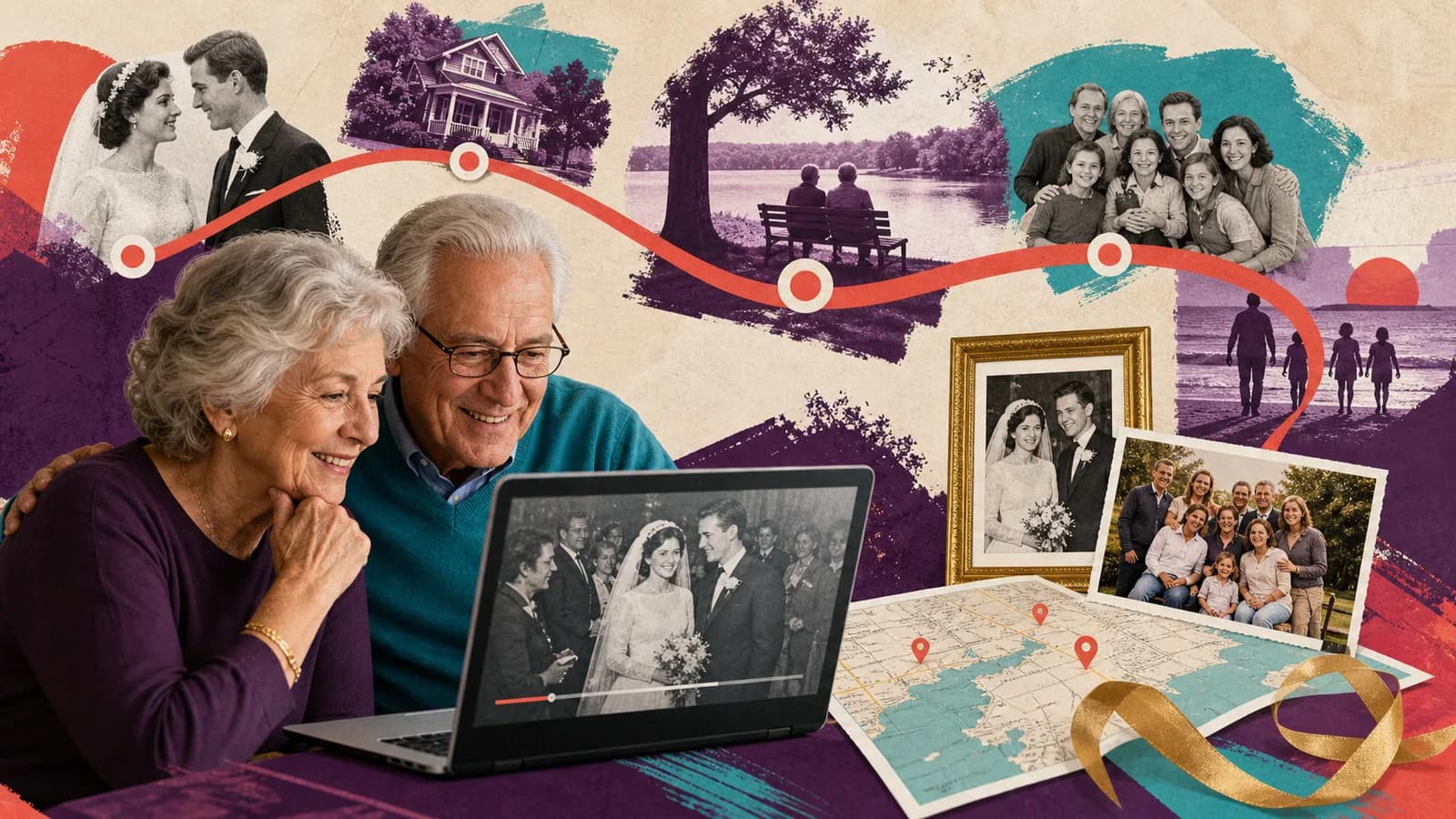
A video is easier to follow when it has a beginning, middle, and end. A chronological shape starts with early years, moves through major chapters, and ends in the present. It suits a milestone wedding anniversary video with memories from several decades.
A theme-based shape groups material by ideas such as home, adventure, family, and laughter. It works when dates are missing or the best memories come from different periods. A place-based shape follows a route through important locations.
Open with a clear promise. For example, “Five places made us who we are.” In the middle, add detail and variety. End with a direct message to the couple. A simple shape creates more meaning than a large set of random clips.
Gather better photos, clips, messages, and places
Make a short collection list before contacting anyone. Ask for a mix of early photos, recent pictures, short vertical or horizontal clips, written notes, and clear location names. Request original files when possible instead of screenshots taken from social media.
For a group project, give everyone a deadline several days before you truly need the material. Send one upload link and two or three prompts. Explain the desired clip length, recording direction, and whether the project is a surprise.
Ask contributors to record in a quiet room with light facing them. They should look toward the camera and pause before speaking. A sincere clip recorded on a phone is enough. Clear sound matters more than a polished background.
Review privacy before editing. Confirm that private stories, children, addresses, and sensitive events may be included. If you plan to post the finished relationship montage online, ask each contributor for permission.
Use prompts that lead to specific anniversary video messages
“Say happy anniversary” often produces many similar clips. A focused prompt gives people a starting point. Ask, “What small habit shows how well they know each other?” or, “When did you see them work as a team?”
Other useful prompts include: “Which place makes you think of them?” “What family tradition did they create?” “What is one funny moment they both enjoy?” and, “What do you hope they do together next?” Give each person one main prompt instead of a long questionnaire.
Tell contributors they do not need a formal speech. One memory and one warm closing are enough. Encourage natural words, even if the delivery is not perfect. The goal is to sound like a real friend or family member.
Plan the video before you edit
Create a rough sequence on paper. A simple anniversary slideshow might open with a title, move through three story chapters, add a group-message section, and finish with a personal note. Place your strongest material near the opening and ending.
Keep each section focused. Trim repeated greetings and long pauses. Mix photos with voices so viewers are not watching the same type of material for too long. Use dates and place names only when they help the story.
Do not force every file into the final cut. A shorter video with clear choices often feels more thoughtful. Save extra photos and full-length messages in a shared folder if the couple would enjoy seeing them later.
Watch the complete draft without editing. Note where your attention drops, where sound levels change, and where a private reference needs context. Then make one careful revision instead of adding more effects.
Make a place-based anniversary story with AlbumMap
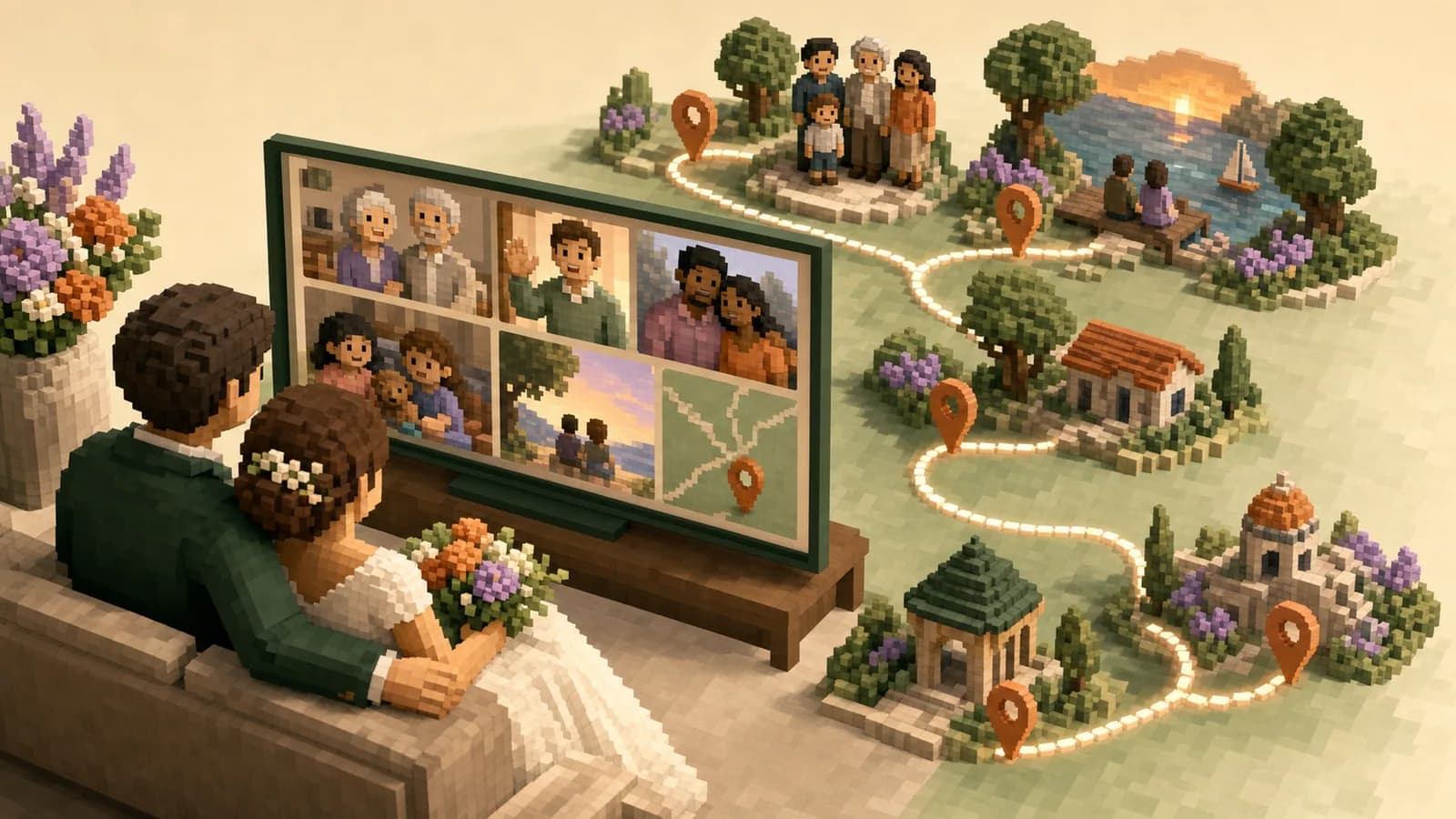
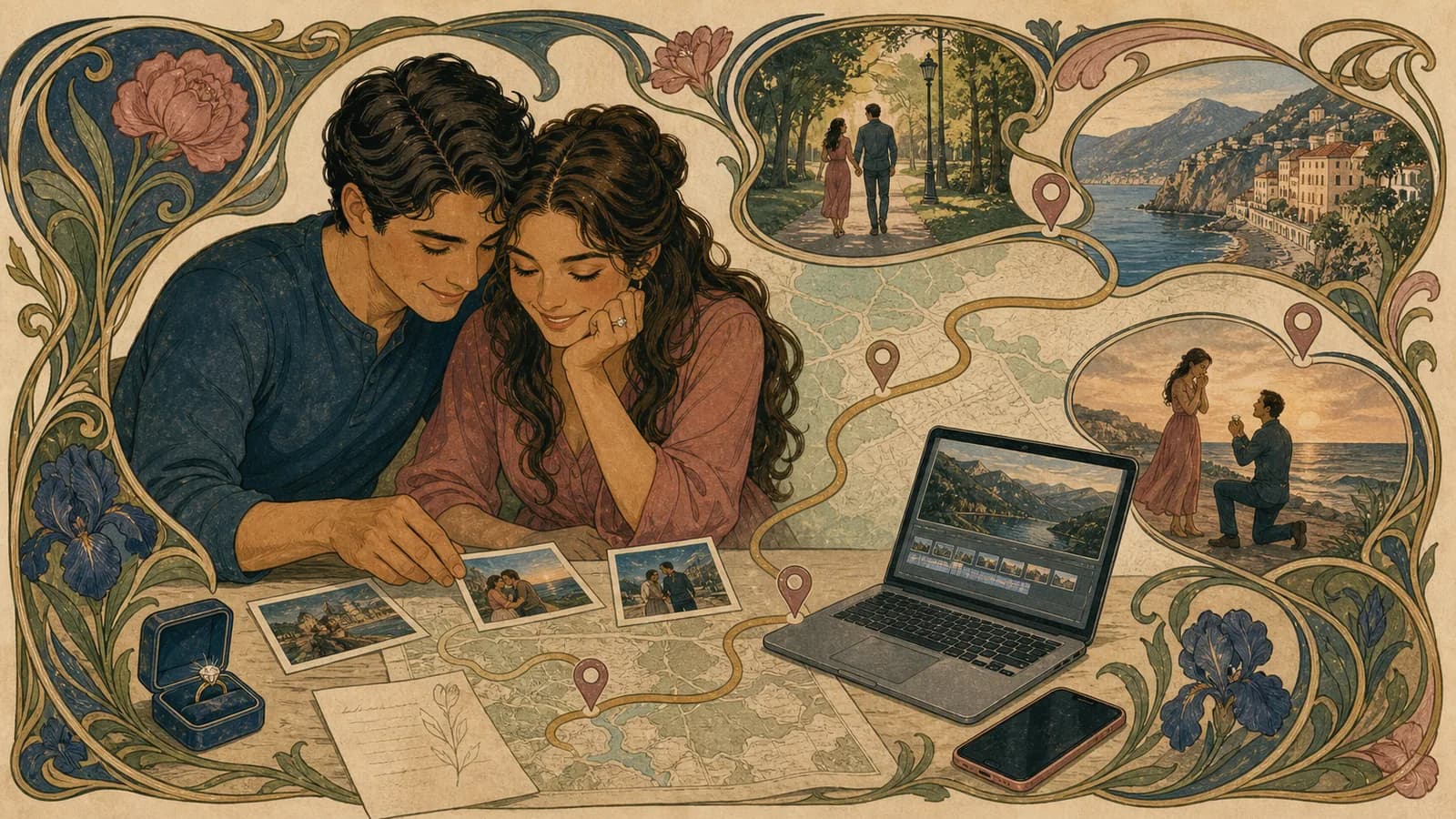
AlbumMap is useful when the relationship is closely tied to places. It can bring photos, short videos, written notes, and locations into one map-based story. The route might move from where the couple met to their first home, wedding location, favorite trip, and present-day home.
If family members live far apart, they can each add a memory from their own phone. One relative might submit a wedding photo. Another could record a short message. Someone else could add the location of a yearly family gathering.
Use the map only when the places add meaning. A standard montage may be better if every memory happened in one setting or the couple prefers a very private story. The format should support the relationship, not distract from it.
Add music, captions, and transitions with care
Choose music after the story has a shape. Instrumental tracks are often easier beneath spoken messages. Keep background music low enough that every voice remains clear. Use music you are allowed to include, especially if the video will be posted online.
Add captions for spoken clips when possible. Captions help viewers in noisy rooms and support people who are deaf or hard of hearing. They also make quiet voices easier to follow. Check names and place spellings by hand.
Use simple transitions. Cuts and gentle fades are enough for most personal videos. Fast effects can weaken a reflective moment. Keep titles large, brief, and easy to read on a phone or television.
Plan a reveal that fits the couple
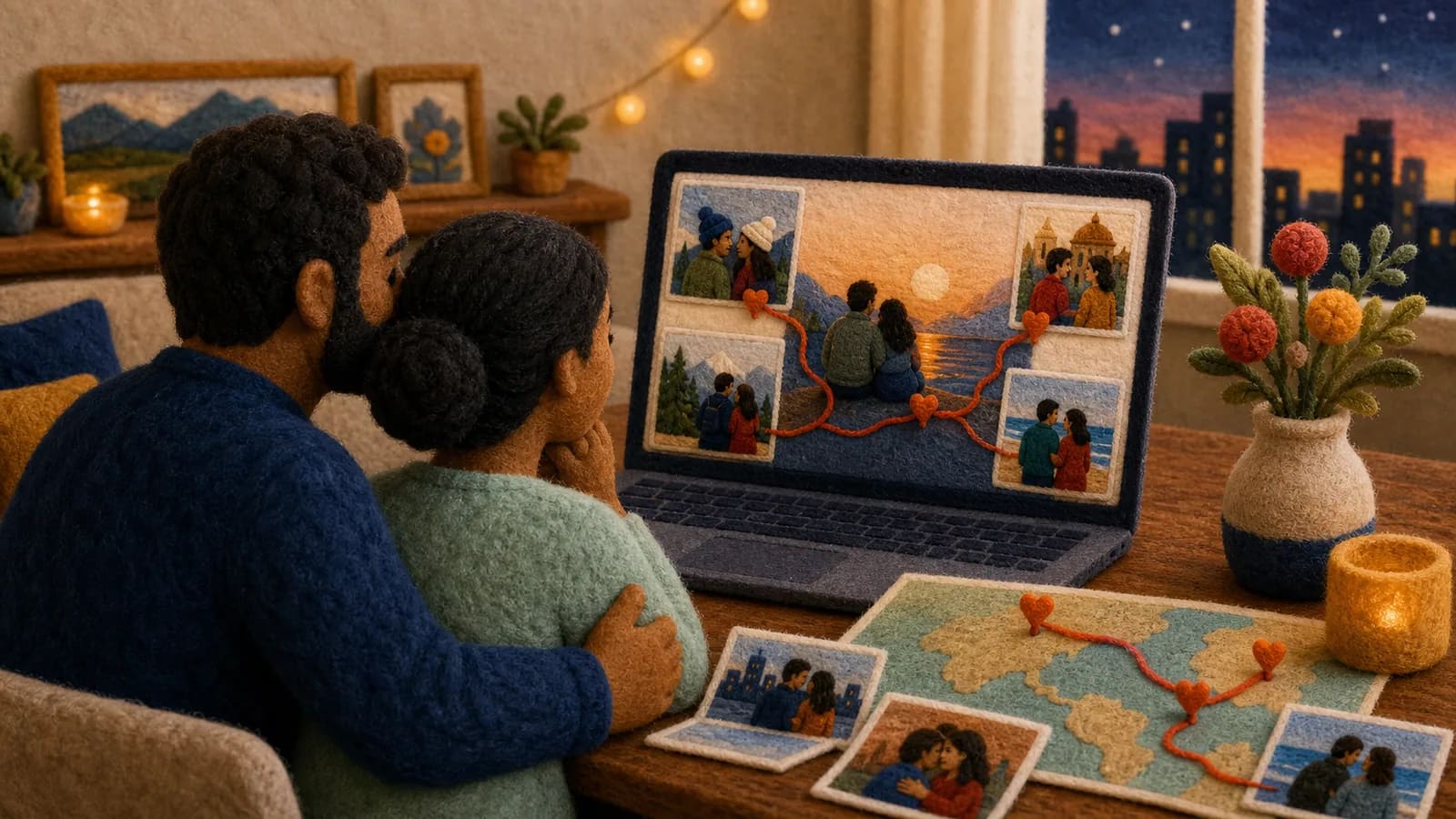
Think about how the couple likes to celebrate. A private viewing after dinner may suit a quiet pair. A family video can work well after a toast at an anniversary party. A long-distance couple can watch together during a video call.
Test the screen, speakers, internet connection, and file before a public reveal. Keep a downloaded backup if the venue permits it. Turn off notifications on the device used for playback.
Give the couple time to react. Do not rush into another activity as soon as the video ends. You can also send them the finished file or private link afterward so they can watch again at their own pace.
Common mistakes to avoid
Do not begin with every file you can find. Begin with the story. Too much material can hide the best details and make the video feel like an archive instead of a gift.
Avoid generic praise, private jokes without context, and messages that tell the same story. Ask better prompts and give contributors different roles. One person can share an early memory while another talks about the family today.
Do not use copyrighted music without permission, assume every photo may be shared publicly, or reveal sensitive locations. Personal does not need to mean public. A thoughtful privacy check protects the people the video celebrates.
Finally, do not wait until the last evening to collect group clips. Set an early deadline, send one friendly reminder, and prepare a shorter backup plan. A complete three-minute video is better than an unfinished ten-minute plan.
Examples You Can Copy
Copy-ready invitation to contributors
We are making a surprise anniversary video for Maya and Daniel. Please send a 20- to 40-second clip by September 8. Share one moment that shows who they are as a couple, then finish with a short wish. Please do not mention the project to them.
Copy-ready prompt for children or grandchildren
Finish this sentence in your own words: “Because of you, our family…” You can add one short memory, tradition, or lesson that explains your answer.
Copy-ready opening narration
This story begins in Halifax, grows through three homes and many long drives, and continues around the table where everyone still gathers. These are some of the places, people, and moments that made your life together.
Copy-ready closing message from a partner
I love the big chapters we remember, but I am most grateful for our ordinary days. Thank you for making home feel like us. Happy anniversary. I cannot wait to see where we go next.
Copy-ready reminder message
A quick reminder about the anniversary surprise: please upload your clip by Friday. A simple phone recording is perfect. If you are unsure what to say, share one favorite memory and one wish for the years ahead.
Final Thoughts
A personal anniversary video does not need every photo, every person, or every year. It needs a point of view. Choose one feeling, gather details that support it, and arrange them in a simple order. The couple is more likely to remember a familiar voice, a meaningful place, or one honest story than an elaborate effect. Start small, protect private memories, and let the relationship guide every choice.
Helpful answers
Frequently asked questions
- What should an anniversary video include?
- Include a clear opening, a few focused story sections, specific photos or clips, and a direct closing message. You can also add written notes, voice recordings, place names, and short contributions from family or friends. Every item should support the same feeling or theme.
- How long should an anniversary video be?
- There is no required length. A focused solo video may work in two to four minutes. A group or milestone video may need more time. Remove repeated greetings and long pauses. Stop when the story feels complete rather than aiming for a set duration.
- What can I say in an anniversary video message?
- Share one specific memory, something you admire about the relationship, or a lesson the couple taught you. Then end with a short wish. Specific details usually feel warmer than formal quotes or broad praise.
- How can I make an anniversary slideshow feel less generic?
- Use a theme instead of placing every photo in date order. Build it around meaningful places, family traditions, ordinary moments, or then-and-now pairs. Add short captions or narration explaining why each memory matters.
- Can several people contribute to the same anniversary video?
- Yes. Give contributors one upload method, a clear deadline, a suggested clip length, and focused prompts. Ask permission before sharing their messages publicly. One friendly reminder can help you collect missing clips without creating confusion.
- How do I make an anniversary video when family members live far away?
- Send one private contribution link and let each person record from a phone or computer. Ask them to identify their location or share a place connected to the couple. Arrange the submissions by time, theme, or location so the final video still feels connected.