How to Create a Digital Wedding Guest Book With Photos and Videos
A digital wedding guest book can save more than names and short notes. It can hold candid photos, video wishes, written messages, and moments the couple missed. Guests can contribute from their phones, including people who cannot attend in person. The best results come from a simple plan. Decide what to collect, give guests one link, and explain what to do. Then place the link where people will see it before, during, and after the wedding. This guide walks through the full process, from choosing your format to saving the final keepsake.
What can a digital guest book include?
A paper guest book usually collects signatures and a few written wishes. An online version can include more of each guest's personality. You might collect a short note, a photo from the day, a video message, or a favorite memory of the couple.
You do not need to ask for every type of content. A small wedding may focus on longer video wishes. A large reception may work better with quick photo uploads and short prompts. Choose what you will enjoy seeing again.
A digital collection also helps remote guests join. They can use the same private link before the wedding or during the event. Their messages can sit beside contributions from people at the venue.
Decide what you want before choosing a tool
Start with the finished keepsake. Do you want a private gallery, a video montage, a printed book, or a story built around meaningful places? Your answer will shape what you ask guests to send.
Make a short list of required features. Check whether guests can contribute without installing an app. Look for clear privacy settings, simple uploads, owner controls, downloads, and enough storage for video. Test the process on more than one phone.
Decide who will manage the collection. That person should test the link, answer questions, review uploads, and make a backup. Giving this job to a trusted friend can help the couple stay present on the wedding day.
How to create a digital wedding guest book
First, create one private collection for the wedding. Add the couple's names, the event date, and a warm welcome. Keep the instructions short enough to read on a phone.
Next, choose two or three contribution types. A balanced request might ask for one favorite photo, one short video, and one written wish. Set a suggested video length, such as 15 to 30 seconds, so the final collection stays easy to review.
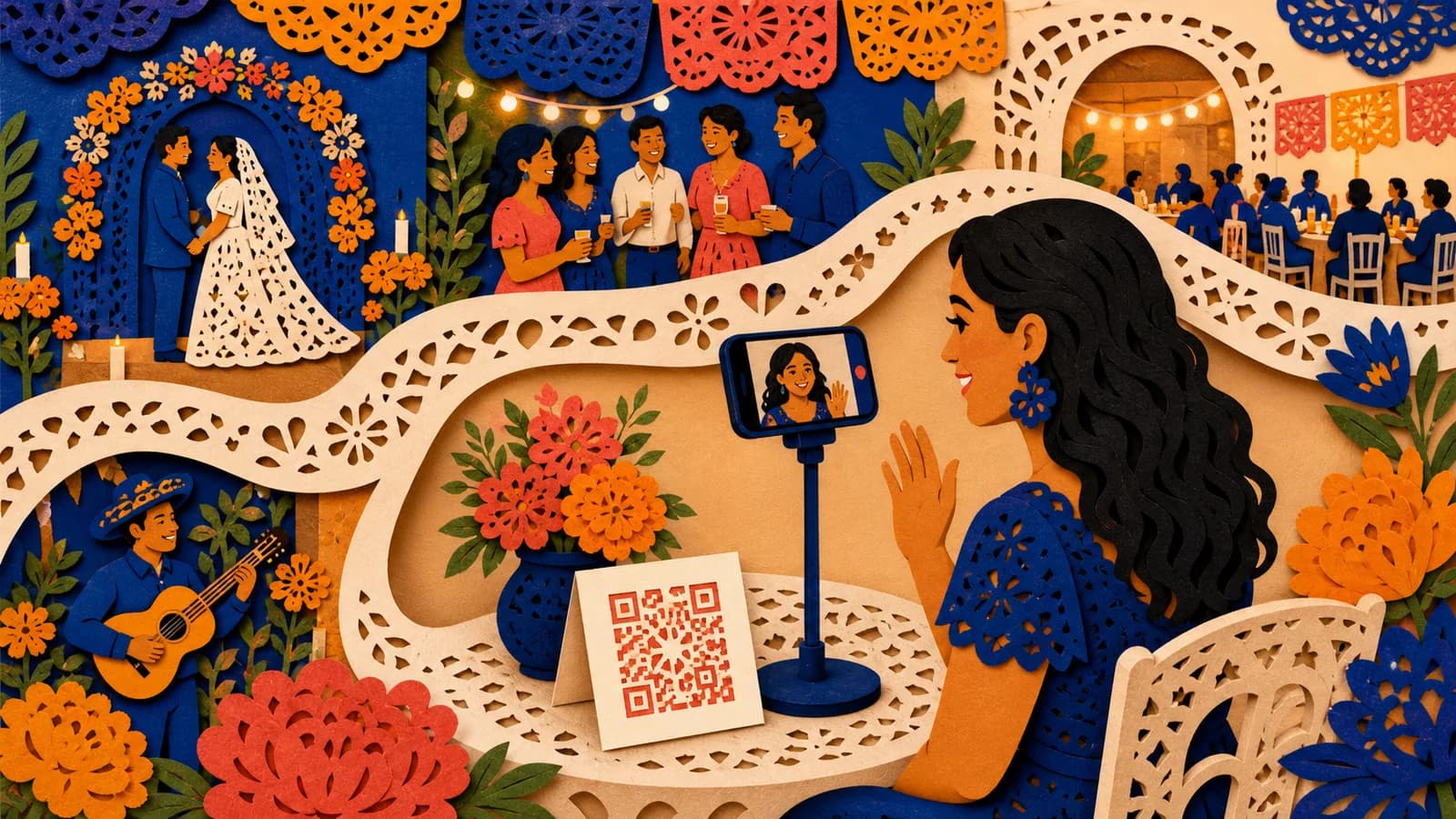
Create a shareable link and, if available, a wedding guest book QR code. Scan it with different phones before printing anything. Complete a test upload as a guest, then check that the file appears in the owner's view.
Finally, set a closing date. Keep the collection open after the reception because many guests will upload from home. A clear deadline gives you time to sort and save the files.
Give guests prompts that are easy to answer
A blank message box can make people freeze. One clear prompt removes that pressure. Ask for a memory, a wish, a small moment from the day, or one piece of kind advice.
Offer both warm and playful choices. A guest might not want to give marriage advice, but they may enjoy sharing how they met the couple. Guests should feel invited, not tested.
Useful prompts include: What made you smile today? What is a favorite memory with us? What place should we visit together next? What do you hope we remember ten years from now? What moment did you capture that we may have missed?
Share the link before, during, and after the wedding
Introduce the guest book before the event. Add the private link to the wedding website or send it to close family. Early contributions show that the process works and give other guests examples.
At the reception, place QR cards where people pause. Dinner tables, a lounge, the photo booth, and the guest-book table can work well. One sign at a busy entrance is easy to miss.
Ask the DJ, emcee, planner, or a member of the wedding party to make one short announcement. Explain what guests can share and where they can find the code. A personal reminder can also help relatives who are less comfortable with QR codes.
Send one thank-you reminder within a few days. Include the same link and a deadline. Many people will choose better photos when they have time to look through their camera rolls.
Help guests capture better photos and videos
Keep the advice light. For video messages, suggest a quiet area with light facing the guest. Ask them to hold the phone steady and speak close enough for clear sound.
Do not turn the request into a filming assignment. Candid clips, quick wishes, and imperfect laughter often feel more personal than polished speeches.
If you set up a shared tablet, keep it charged and place it away from loud speakers. Add a small sign with two prompt choices. Have someone check the device during the reception.
Guest uploads complement professional wedding photos. They may show reactions, table conversations, travel moments, and dance-floor scenes that the main camera did not capture.
Include people who cannot attend
Send remote guests the contribution link several days early. Tell them what to record and when it is due. They can share a video wish, an old photo, or a story about the couple.
You can also invite them to add their city or another meaningful place. A message from a distant relative feels more connected when the couple can see where it came from.
Keep remote and in-person contributions in the same collection. This avoids a second editing task and makes the final guest book feel like one shared celebration.
Protect privacy and set simple boundaries
Tell guests who will be able to view their uploads. If the collection may be shared online, ask permission before using personal messages or photos outside the private guest book.
Review the tool's access settings and download options. Use a private link when possible. Avoid placing an open link on public social media unless that is part of your plan.
Remove accidental uploads, private moments, and repeated files before sharing the collection. If children appear in a photo or video, confirm that the family is comfortable with how it will be used.
Save a backup after the collection closes. Keep the original files in an organized folder, even if you also create a gallery, printed book, or edited video.
Turn the uploads into a keepsake with a clear story
Start by removing duplicates and files that are hard to see or hear. Then group the strongest items by part of the day, person, theme, or place. A smaller, thoughtful set is often easier to revisit than every upload.
You might create a simple timeline from getting ready to the last dance. Another option is to group messages by family, friends, work, and travel. Add names or short captions where context will matter later.
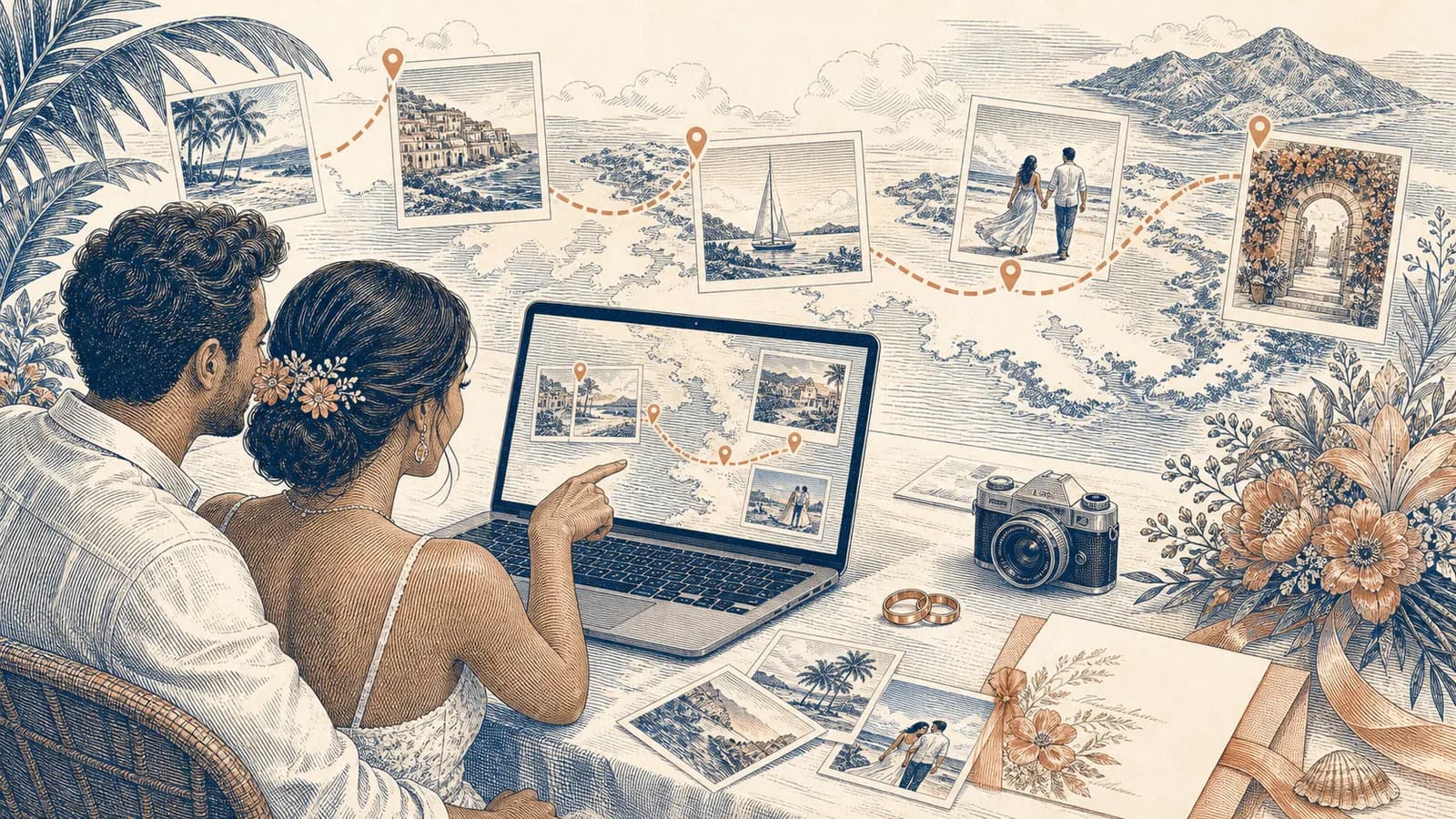
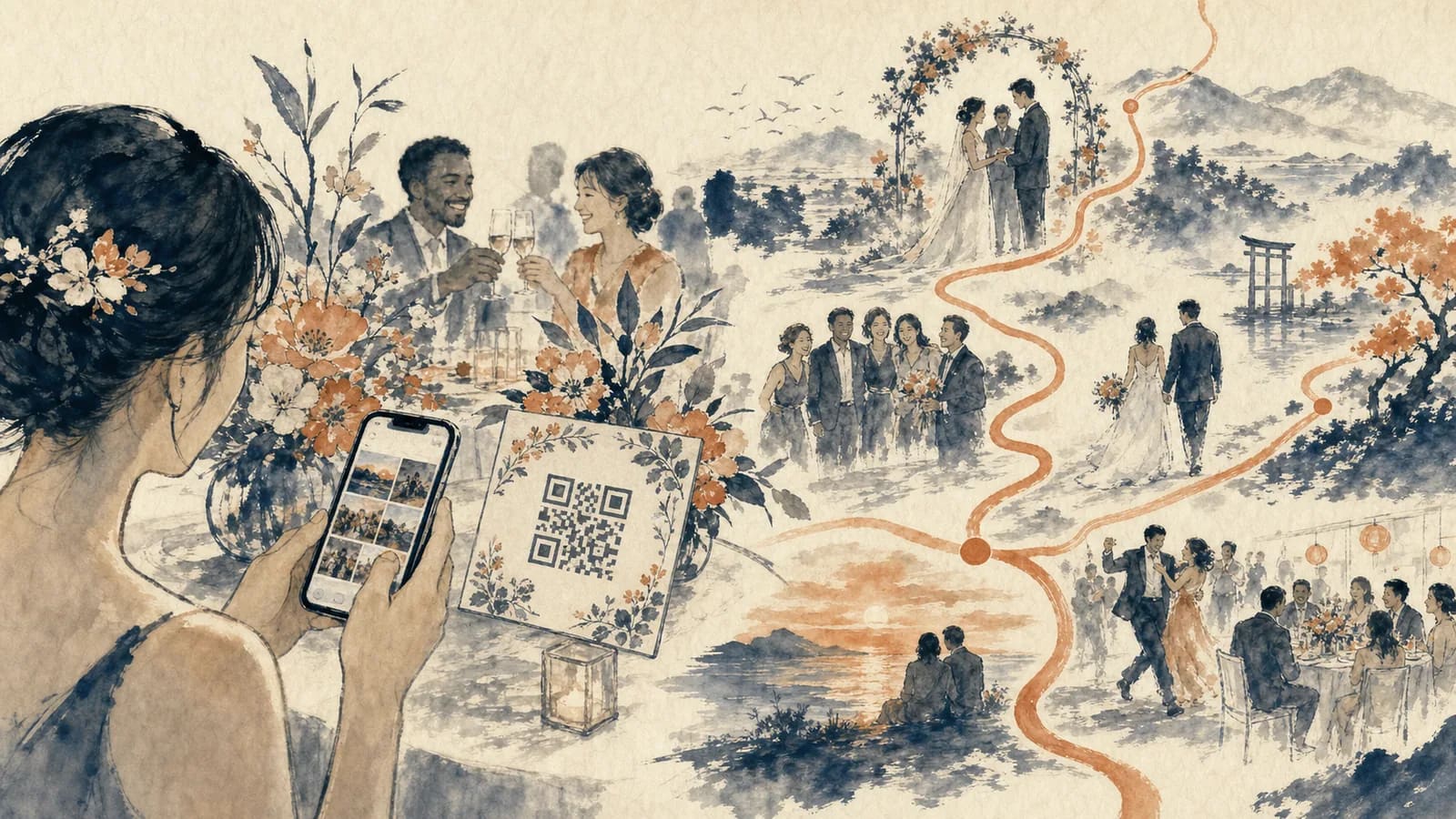
If places are important to the relationship, AlbumMap offers another approach. You can connect photos, short videos, written wishes, and locations in a map-based video. The story might move from where the couple met to the proposal spot, ceremony, reception, and honeymoon.
A guest can also add a place linked to an older memory. One friend may choose a college campus. A parent may choose the family home. A remote guest may add the city where they watched the ceremony. These locations give the collection a natural path.
Use this simple wedding guest-book timeline
Two to four weeks before the wedding, create the collection and test every step. Prepare the QR cards, choose prompts, and ask a few close friends to contribute first.
During the wedding, display the code in several useful places. Make one short announcement and have a helper check the setup. Keep the process optional and easy.
One or two days later, send a thank-you message with the link. Close the collection on the stated date, review permissions, download the files, and make a backup. Then build the gallery, book, or video you planned.
Common mistakes to avoid
Do not ask for too much. Guests are more likely to share one photo and one short message than complete a long form.
Do not rely on one QR sign. People may walk past it while finding their seats. Repeat the code in places where guests have time to stop.
Do not wait until the reception to test the link. Check uploads, sound, owner access, privacy controls, and downloads in advance.
Do not forget a post-wedding reminder. Guests may take photos all night but need a quiet moment at home to upload them.
Do not keep the final plan vague. Decide how the guest book will be saved so the files do not become another forgotten folder.
Examples You Can Copy
Wedding website note
We would love to save the wedding through your eyes. Use our private link to add one favorite photo, a short video, or a message for us. You can contribute before the wedding or after the celebration.
QR code sign
Help us remember the moments we missed. Scan this code to share a photo, a short video, or a wedding wish. No perfect speech needed.
Emcee announcement
The couple would love to see the celebration through your eyes. Please scan the code on your table to share a photo, video, or short message. You can also upload after the wedding.
Post-wedding reminder
Thank you for celebrating with us. If you took any photos or videos, please add your favorites through our private link by [date]. We would love to keep the moments you saw.
Video prompt card
Choose one: Share a favorite memory with us, tell us what made you smile today, or leave one wish for our future. A 15-to-30-second message is perfect.
AlbumMap location request
We are turning our wedding memories into a map video. Along with your photo, video, or note, you may add a place connected to your memory. It could be a city, home, school, venue, or trip.
Final Thoughts
A useful wedding guest book does not need a complex setup. It needs one tested link, clear prompts, visible reminders, and a plan for the files. Make it easy for guests to share from their phones. Give them time after the wedding, then save a private backup. The final keepsake can be a gallery, book, video, or map-based story. Choose the format that will help you revisit the people, places, and small moments behind the celebration.
Helpful answers
Frequently asked questions
- What should guests add to an online wedding guest book?
- Ask for a small mix of content, such as one favorite photo, a short video, and a written wish. Clear prompts help guests choose useful contributions without making the task feel like work.
- How do guests use a wedding guest book QR code?
- Guests open their phone camera and scan the code. The linked contribution page should open in their browser. Test the code on several phones and place a short instruction beside it.
- Where should we place QR codes at the reception?
- Use several places where guests pause, such as dinner tables, the lounge, photo booth, bar, and guest-book table. Do not rely only on a sign near the entrance.
- Can people contribute if they cannot attend the wedding?
- Yes. Send remote guests the same private link before the event. They can upload a video wish, photo, written memory, and a meaningful location from home.
- How long should wedding guest video messages be?
- A suggested length of 15 to 30 seconds works for many groups. It gives guests time to share a real thought while keeping the final collection easy to watch.
- Should we keep a paper guest book too?
- You can use both. Paper preserves handwriting, while a digital option collects photos, voices, and remote messages. Choose both only if the extra station will not confuse guests.
- How should we protect guest privacy?
- Use private access settings, explain who can view uploads, and ask permission before sharing personal messages publicly. Review every contribution and save a secure backup after the collection closes.
- What can we do with the files after the wedding?
- You can make a private gallery, printed photo book, video montage, or map-based keepsake. AlbumMap can connect selected photos, short videos, written wishes, and locations in one map video.