Wedding Video Guest Book: What It Is and How to Make One
A wedding video guest book is a collection of short messages recorded by the people who care about you. Instead of signing a page, guests can share their voices, expressions, stories, and wishes. They may record at the reception or use a private link from home. You can then save the clips or edit them into one keepsake. The idea is simple, but a little planning makes a big difference. Guests need clear prompts, an easy recording method, and a quiet place to speak. You also need a plan for reviewing and saving the files. This guide explains each choice and walks you through the setup from start to finish.
What is a wedding video guest book?
It is a modern version of the traditional signed guest book. Guests record short video messages instead of writing only their names and wishes. The finished collection lets the couple see faces and hear voices from the wedding.
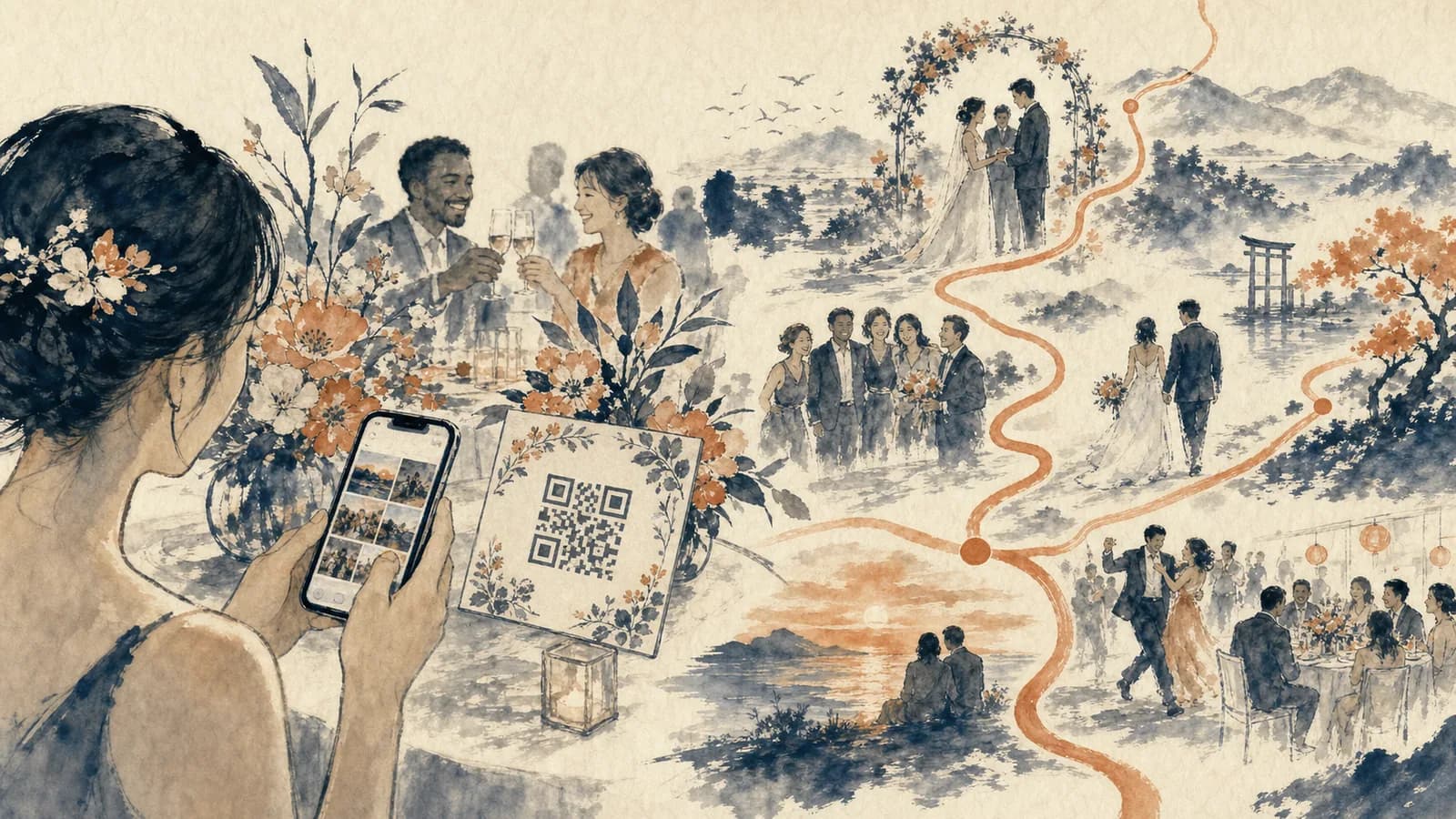
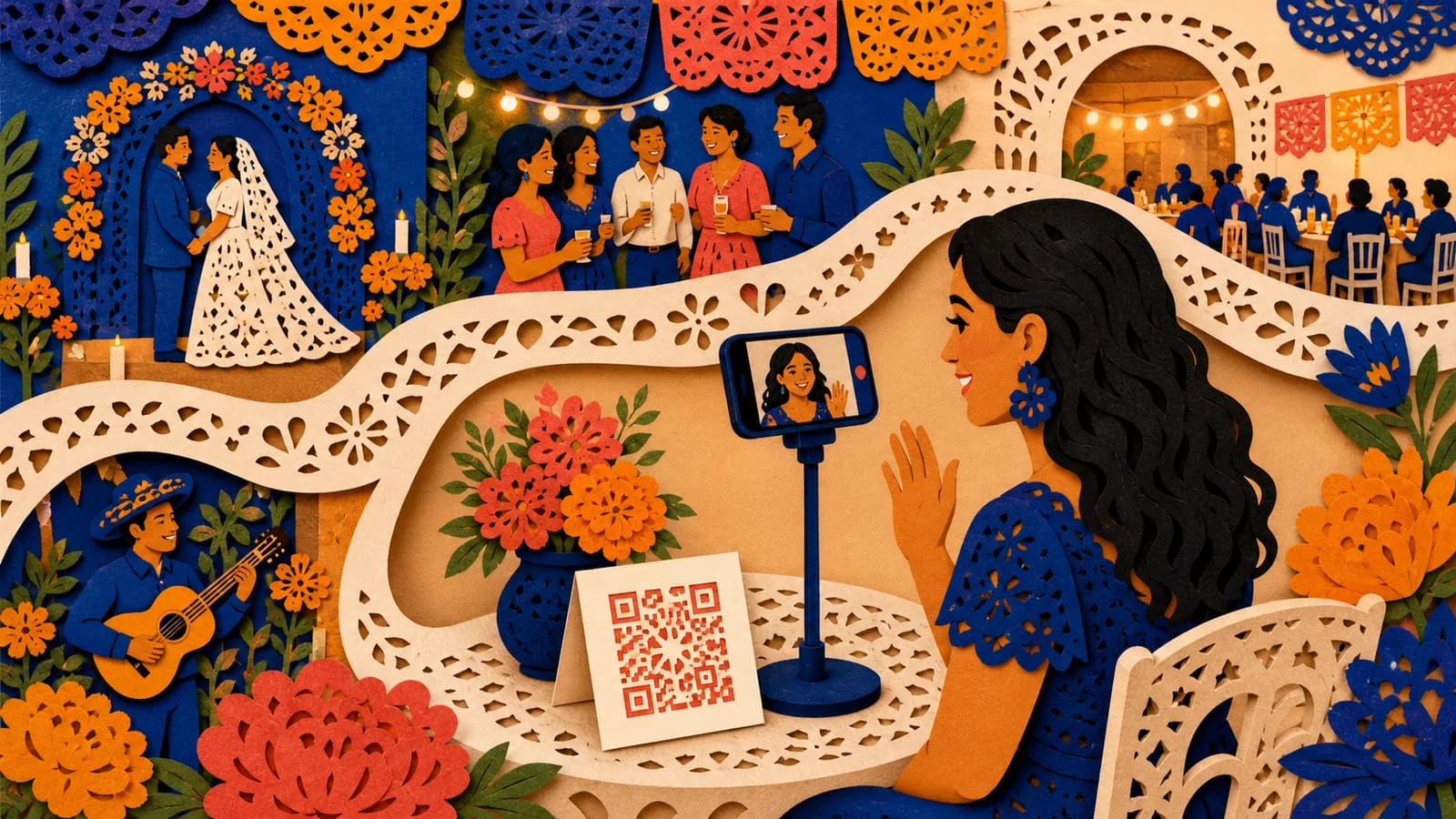
Some versions use a phone or tablet at the reception. Others give guests a link or QR code that opens on their own phones. A digital wedding guestbook may also accept photos and written notes. The right format depends on what you want to keep.
A video guest book is different from a formal wedding film. A videographer records planned parts of the day. Guest messages are personal contributions from friends and family. The two formats can work together because they capture different views of the celebration.
Decide what kind of guest book you want
Begin with the finished result. You might want a folder of original clips, a simple video montage, or a wider story with photos and messages. Knowing the goal helps you choose the right collection method.
A staffed recording station gives guests guidance. A helper can explain the prompt, start the recording, and check the sound. This works well when older relatives or less confident guests may need support.
A self-serve station needs less help. Place a phone or tablet on a stable stand with short instructions. Guests can record when they have a quiet moment. Test the device lock, charging cable, camera angle, storage, and upload flow before the event.
A private link or wedding guest book QR code lets people use their own phones. It also includes guests who cannot attend. Before choosing a tool, check its privacy controls, supported file types, download options, recording limits, and owner review tools. Avoid assuming every service offers the same features.
How to make a wedding video guest book in seven steps
First, choose what guests can submit. Video can be the main format, but you may also accept photos or written wishes. Keep the request focused so guests know what matters most.
Second, choose one collection tool or recording device. Complete the entire process as a guest. Open the link, record a test, upload it, and confirm that the owner can view and download the file.
Third, write two or three simple prompts. Give guests a choice between a warm question and a playful one. This is easier than asking everyone to invent a speech.
Fourth, choose where and when people will record. Find a visible area away from speakers and busy walkways. If guests will use their phones, prepare a tested QR code and private link.
Fifth, invite a few close relatives or wedding party members to record early. Their clips confirm that the system works. They can also help other guests understand the expected length and tone.
Sixth, share the invitation before, during, and after the wedding. Use the same link each time. A wedding website note, reception sign, short announcement, and one follow-up message are usually enough.
Seventh, close the collection on a clear date. Review the contributions, correct names, remove accidental uploads, and download the original files. Make a separate backup before editing anything.
Set up a recording space guests can use
Good sound matters more than an elaborate backdrop. Pick a place away from the DJ, kitchen doors, and crowded bar. Test the area while music is playing at a realistic volume.
Face the guest toward a soft light. Avoid a bright window directly behind them. Put the camera near eye level and mark where the person should stand or sit. A simple chair, small lamp, and plain background can be enough.
Keep the instructions short. Tell guests where to look, which prompt to answer, and how long to speak. If they must press buttons or upload a file, show each action in the order it happens.
Check the station during the reception. A helper can reconnect a loose charging cable, clean the camera lens, and confirm that new recordings are being saved. The helper should invite participation without making anyone feel pressured.
Give guests prompts that are easy to answer
A blank camera can make people nervous. Specific prompts give them a clear starting point. Ask for a memory, a hope, a small moment from the day, or one piece of kind advice.
Offer choices for different personalities. One guest may enjoy telling a funny story. Another may prefer a short and sincere wish. Both can add value to the final collection.
Useful questions include: How did you meet us? What is a favorite memory we share? What made you smile today? What should we remember on a difficult day? Where should we travel together next? What do you hope our life looks like in ten years?
Avoid prompts that demand private details or perfect answers. Guests should be free to skip a question. Tell them that a natural message is better than a polished speech.
Collect messages before, during, and after the wedding
Start before the wedding with close family, the wedding party, and remote guests. Early clips reduce pressure on the reception. They also give you time to solve technical problems.
At the venue, place the QR code where guests naturally pause. A welcome table, lounge, dinner table, or guest-book station can work. Use more than one small sign because a single entrance sign is easy to miss.
Ask the emcee, DJ, planner, or a trusted friend to mention the guest book once. The announcement should take only a few seconds. Explain what to share and where to find the link.
Send one warm reminder after the celebration. Some guests will record better messages at home. Others may want to upload a clip after reviewing their photos from the day. Include the deadline in the reminder.
Help guests record clear and personal messages
Suggest a short target, such as 20 to 45 seconds. This is long enough for a real thought but short enough to feel manageable. Longer stories can be welcome when they add something meaningful.
Ask guests to hold the phone steady and speak near its microphone. Light should face them rather than shine from behind. If you need one screen shape for the final edit, state whether phones should be vertical or horizontal.
Guests do not need to memorize their words. A pause, laugh, or imperfect sentence often feels more genuine than a formal speech. Let people record again when they want to, but do not make several takes feel required.
Invite each person to say their name and relationship to the couple. You can also add this information later as a caption. Names will help future viewers understand who appears in each clip.
Review, edit, and protect the recordings
Tell guests how their recordings will be used. A clip saved for the couple is different from one posted publicly. Ask for permission before sharing personal messages on social media or using them in public marketing.
Review every upload before building the final keepsake. Remove test files, duplicates, private moments, and anything submitted by mistake. Check the spelling of names before adding captions.
A simple edit can begin with a welcome, move through family and friends, and end with a group wish. Another option is to sort clips by prompt. Keep the strongest version when one person sends several takes.
Do not hide every quiet pause with music. Voices are the main reason to make this keepsake. Use music at a low level when it supports the message, and check that every speaker can still be heard.
Download the original files before the collection closes. Keep one backup in a separate location. Save a list of names and any needed permissions with the files so the context is not lost.
Turn guest messages into a story about people and places
A basic montage can place one message after another. That may be all you need. If the couple's history spans several places, location can give the collection a clearer shape.
AlbumMap can gather wedding photos, short clips, written wishes, and places in one map-based video. The route might begin where the couple met, move to the proposal, and finish at the wedding venue. Messages can appear beside the places connected to them.
A college friend might record a memory tied to campus. A parent could add a photo from the family home. A remote guest might share a wish from another city. These details show how different people and places became part of the same relationship.
Use only locations that add meaning. A map should support the story, not distract from the guest messages. If place is not important to the couple, a simple clip order may be the better choice.
Use a simple timeline and avoid common mistakes
Four to six weeks before the wedding, choose the format, collection method, prompts, and project owner. Test the full guest experience on at least two phones. Prepare signs only after the link and QR code are final.
One or two weeks before the event, collect a few early messages. Send the link to anyone who cannot attend. Confirm the recording location with the venue or planner.
On the wedding day, set up before guests arrive. Check sound, lighting, power, and uploads. Make one short announcement and let guests contribute when they feel comfortable.
After the wedding, send one reminder and state the closing date. Then review the files, download the originals, and make a backup before editing.
Common mistakes include placing the station beside loud speakers, writing a long instruction sign, asking vague questions, and relying on one QR code. Other problems come from skipping the test or waiting too long to request remote messages.
Do not judge success by the number of clips alone. Ten thoughtful recordings may mean more than a large set of rushed greetings. Focus on messages that help the couple remember the voices, people, and stories around their wedding.
Examples You Can Copy
Wedding website invitation
We are creating a video guest book for our wedding. Please use this private link to record a short message, memory, or wish for us. A natural 20-to-45-second video is perfect. You can contribute even if you cannot attend.
Reception QR code sign
Leave us a message we can see and hear for years. Scan this code, choose a prompt, and record a short video. No perfect speech needed.
Warm recording prompt
Tell us about a favorite memory we share, or leave one wish for our life together.
Playful recording prompt
What should we do on our first anniversary, and what wedding moment should we never forget?
Emcee announcement
The couple is collecting short video wishes from their favorite people. Scan the QR code on your table or visit the guest-book station when you have a moment. Your message can be short and informal.
Post-wedding reminder
Thank you for celebrating with us. If you did not get a chance to record, our private video guest-book link will stay open until [date]. We would love a short memory, message, or wish from you.
Location-based AlbumMap request
We are turning our guest messages into a map video. If a place is part of your memory, please include it with your photo, video, or note. It could be a school, home, city, venue, or trip we shared.
Final Thoughts
A good video guest book does not need a complex booth or a long list of rules. It needs one tested method, a few useful prompts, clear sound, and kind reminders. Decide how the finished keepsake should feel before asking for clips. Then make recording easy for people at the venue and at home. Review the files with care, protect private messages, and save a backup. Whether you choose a simple montage or a map-based story, the most valuable part will be the familiar faces and voices behind each message.
Helpful answers
Frequently asked questions
- How long should wedding guest video messages be?
- A suggested length of 20 to 45 seconds works well for many guests. It gives someone time to share a real memory or wish without making the recording feel like a speech. Let close relatives record longer stories when needed.
- Can guests record a message if they cannot attend?
- Yes. Send remote guests the same private contribution link before the event. Give them a clear prompt and deadline. Their clips can be included with messages recorded at the reception.
- Do we need a professional video booth?
- No. Guests can use a phone, tablet, simple recording station, or private upload link. Clear sound, stable framing, good light, and easy instructions matter more than an elaborate booth.
- Where should we place the recording station?
- Choose a visible area away from speakers and heavy foot traffic. A lounge, hallway, cocktail area, or side room can work. Test the sound while the venue is active, not only when it is empty.
- Should we use a QR code or a shared device?
- A QR code lets guests use their own phones and can also work after the event. A shared device makes the idea more visible and gives every recording a similar frame. Some couples use both methods.
- What should guests say in their videos?
- Give them two or three choices. They can share a favorite memory, a kind wish, marriage advice, or a moment they noticed during the wedding. Specific questions are easier to answer than an open request.
- Can we include photos and written messages too?
- Yes, if your chosen collection method accepts them. Photos, short videos, and notes can add useful context. AlbumMap can also connect selected contributions to meaningful locations in a map-based wedding video.
- How should we protect guest privacy?
- Explain who will view the submissions and where the finished video may be shared. Review every upload, remove accidental or private content, and ask permission before posting personal messages publicly.