Halloween and Fall Group Video Ideas for Families and Schools
Good Halloween video ideas do not need costly props or advanced editing. A phone, one clear theme, and a few short clips can be enough. Families can save costume reveals and seasonal traditions. Schools can create a class greeting, fall showcase, or virtual costume parade. This guide offers simple choices for both groups, including non-Halloween fall themes. It also covers prompts, planning, privacy, and safe ways to share the finished video.
Start with one clear purpose
First, decide what the video should do. It might entertain relatives, celebrate a class, thank school helpers, or save memories from the season. One purpose helps every contributor understand what to record.
Choose the audience before asking for clips. A private family keepsake can feel casual and personal. A school video may need shorter clips, neutral wording, and formal permission. A public social post needs an even stricter privacy review.
Pick one main format as well. A costume parade works best with quick clips in the same order. A fall memory story can mix photos, spoken messages, and places. A class comedy may need a basic script and a teacher directing each scene.
Keep the finished length realistic. One to three minutes works for many small groups. A larger class may need three to five minutes. If every person contributes, limit each clip so the video keeps moving.
Halloween video ideas that work for a group
A virtual costume parade is an easy starting point. Each person records a full-body entrance, turns toward the camera, and gives one short line. Put the clips together by family, class, team, or costume type.
Try a friendly monster introduction. Each contributor invents a harmless monster and explains its funny skill. One monster may find lost socks. Another may make vegetables taste like candy. This format gives shy children a simple role to play.
Make a pass-the-pumpkin video. Each person receives a small pumpkin from one side of the frame and passes it out the other side. The editor joins the clips to make the pumpkin appear to travel between homes or classrooms.
A spooky sound story can include people who do not want to appear on camera. Contributors can record footsteps, rustling leaves, creaking doors, owl calls, or silly ghost sounds. Add drawings or close shots of decorations while the sounds play.
For a seasonal quiz, ask each person one short question. Mix easy questions with visual clues. A host can pause before each answer. Schools should check the facts and keep every question suitable for the age group.
A kindness cauldron offers a softer theme. Each person names one kind act and pretends to add it to a bowl or paper cauldron. This works well for younger classes and family groups that want less focus on scares.
Easy family Halloween and fall videos
Create a then-and-now costume reel with old family photos and new clips. A parent might show a childhood costume, followed by a child wearing a costume today. Add names or years only if everyone is comfortable sharing them.
Record a family recipe story. One person can show the ingredients for apple crisp, pumpkin bread, or another fall dish. Other relatives can explain where the recipe came from or share a memory linked to it. Avoid recording private family details that people do not want shared.
Build a fall places story around a pumpkin patch, a grandparent’s home, a favorite park, or a decorated street. Record a few seconds at each stop. Add a short message about why the place matters. This approach turns scattered clips into a story with a clear path.
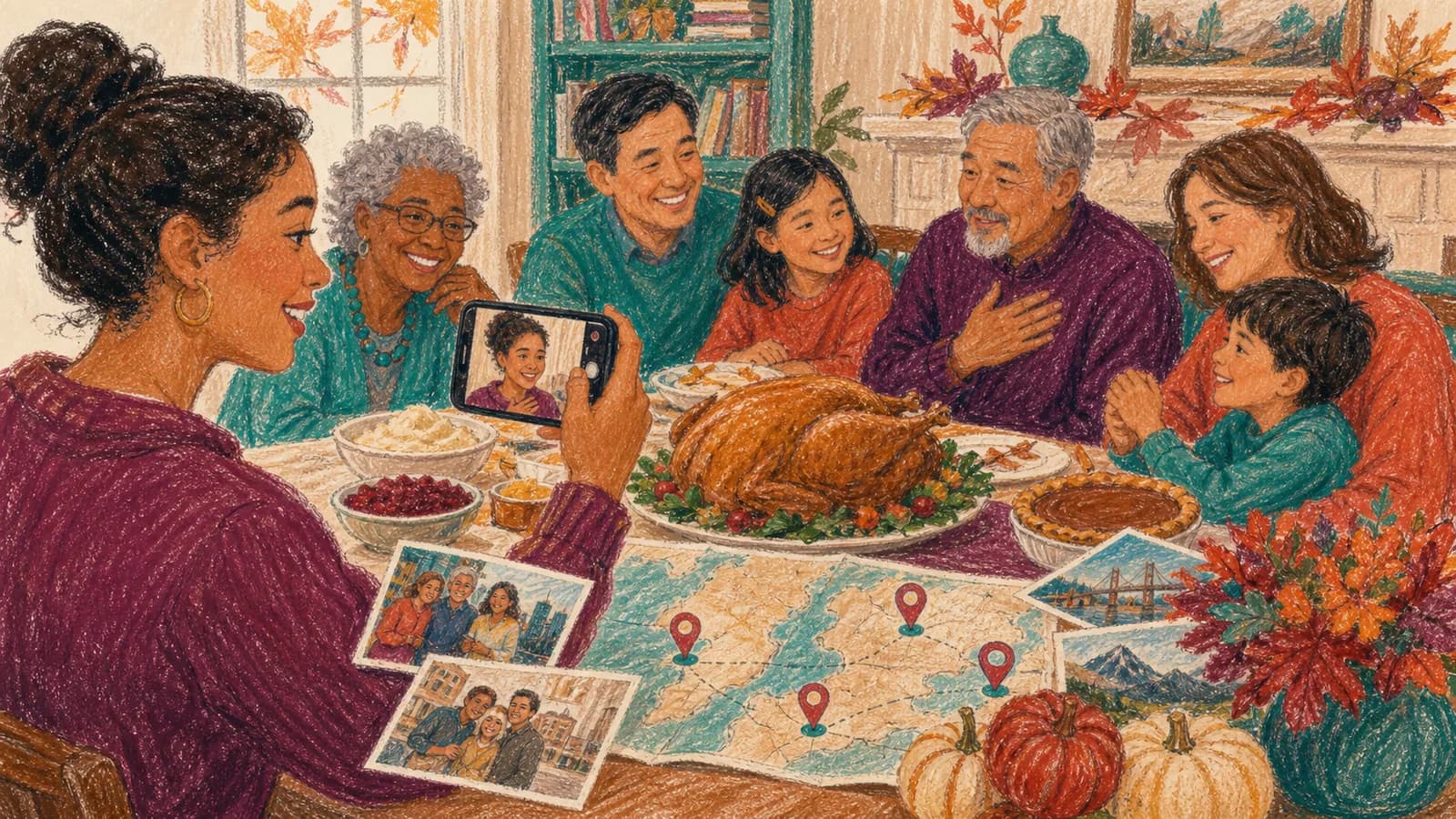
Families living far apart can make one seasonal greeting. Give everyone the same prompt, such as “Show us one sign of fall where you live.” Snow, warm weather, red leaves, and city decorations can all appear in the same video. The differences make the result more interesting.
School video ideas for different ages
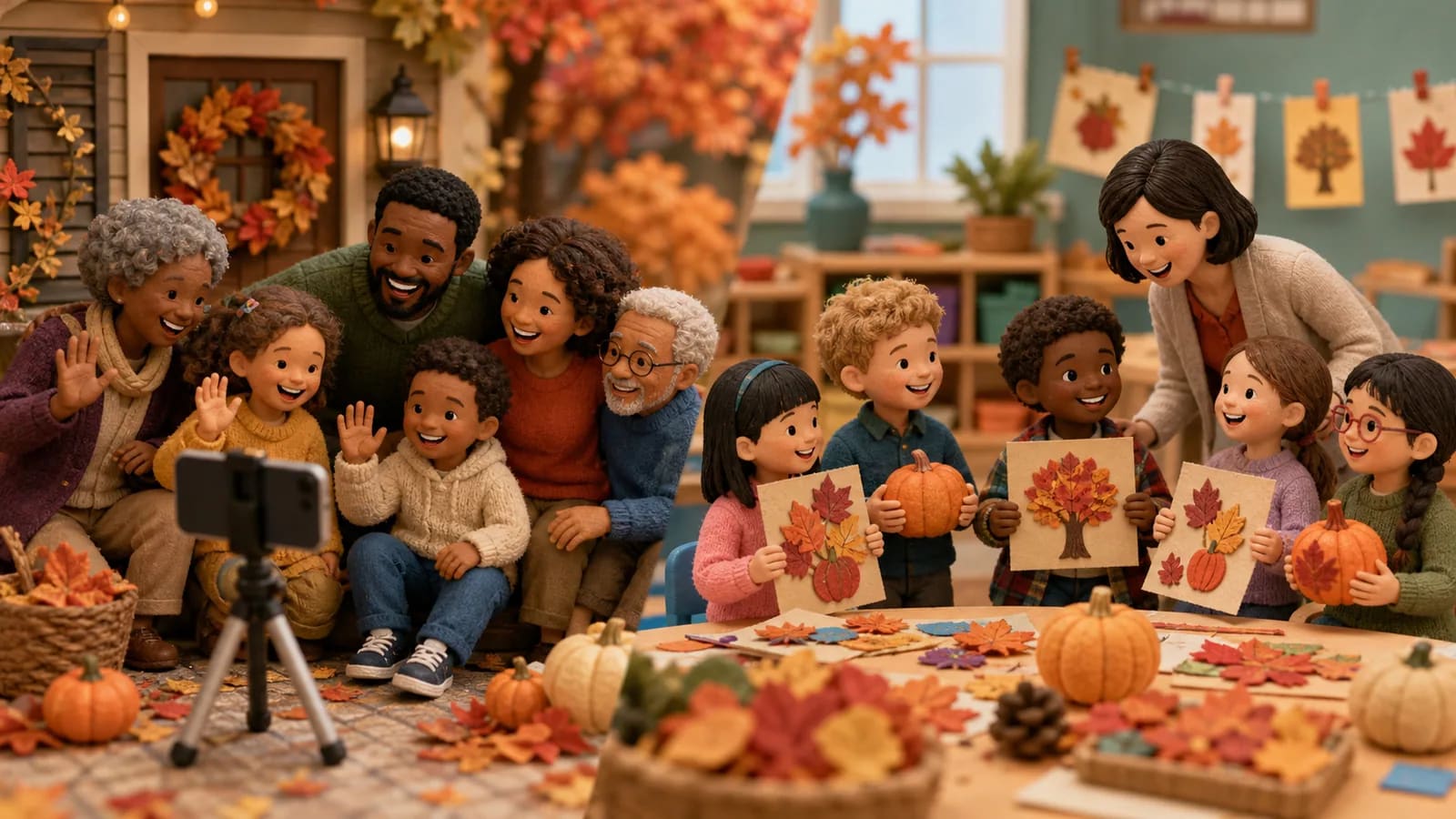
For younger students, try a leaf-color parade. Children can hold a red, yellow, orange, or brown paper leaf. Each child says the color or names one thing they enjoy about fall. A harvest theme can include students who do not celebrate Halloween.
Elementary classes can create a pumpkin character gallery. Each student draws a pumpkin character and gives it a name, voice, and friendly talent. Record the art instead of the child if face sharing is not allowed.
Older students can make a short mystery. Give groups a beginning, a clue, and a safe ending. A missing library book or a vanishing classroom decoration can replace frightening topics. Keep the story brief enough to film during a planned class period.
A school-wide thank-you video can feature short messages for crossing guards, office staff, custodians, volunteers, or cafeteria teams. Add fall art between the messages. This option has a clear purpose and does not require costumes.
A class time capsule can save short answers to the same prompt. Ask what students learned, what made them laugh, or what they hope to do before winter. Set a future date for the class to watch the video again.
Inclusive fall video ideas beyond Halloween
Not every family celebrates Halloween. Some children also dislike masks, loud sounds, dark scenes, or surprise scares. Offer a fall choice instead of assuming every person wants the same theme.
A nature change video can track one tree, garden, or schoolyard across several weeks. Students or relatives record the same view each time. The finished sequence shows color, weather, and light changing through the season.
Try a fall gratitude chain. Each person names someone, somewhere, or something they value. The answers can be warm without being tied to a religious or cultural event.
Other neutral options include a cozy reading list, a fall art gallery, an apple taste test, or a school spirit greeting. Let contributors choose between appearing on camera, showing an object, sharing art, or recording only their voice.
Plan the group video in six simple steps
Step one is to choose the idea, audience, and final length. Write those choices in one sentence. For example: “We are making a two-minute private fall greeting for grandparents.”
Step two is to choose a coordinator. This person sends instructions, answers questions, checks permission, and tracks missing clips. A school project may also need approval from an administrator or communications lead.
Step three is to send one clear request. Include the prompt, clip length, deadline, camera direction, and sharing plan. Tell contributors if they should record vertically or horizontally. Ask everyone to use the same direction.
Step four is to collect clips in one approved place. Avoid long message threads with many file versions. Use clear filenames or a list so the coordinator knows who has contributed.
Step five is to arrange the story. Start with a title or welcome. Group similar clips together. Add a short transition only when it helps viewers follow the idea. Finish with a shared greeting, class artwork, or final group message.
Step six is to review before sharing. Watch for accidental names, house numbers, school signs, license plates, or private conversations. Check the sound level and remove empty seconds at the start or end of clips.
Use simple prompts to get better clips
People record more useful clips when the request is specific. “Send something for our video” leaves too many choices. A prompt with one action and one sentence is easier.
Match the prompt to the age group. Young children may need a choice between two actions. Older students can answer a question or help plan a scene. Adults can share a memory, explain a tradition, or record a meaningful place.
Ask for natural delivery. Contributors do not need to memorize a speech. They can place the prompt near the camera, pause between lines, and try again if needed. Short, relaxed clips are often easier to edit.
Record clear clips with a phone
Clean the camera lens before recording. Use a quiet room or a calm outdoor spot. Face a window or soft light, but do not stand with a bright window behind you.
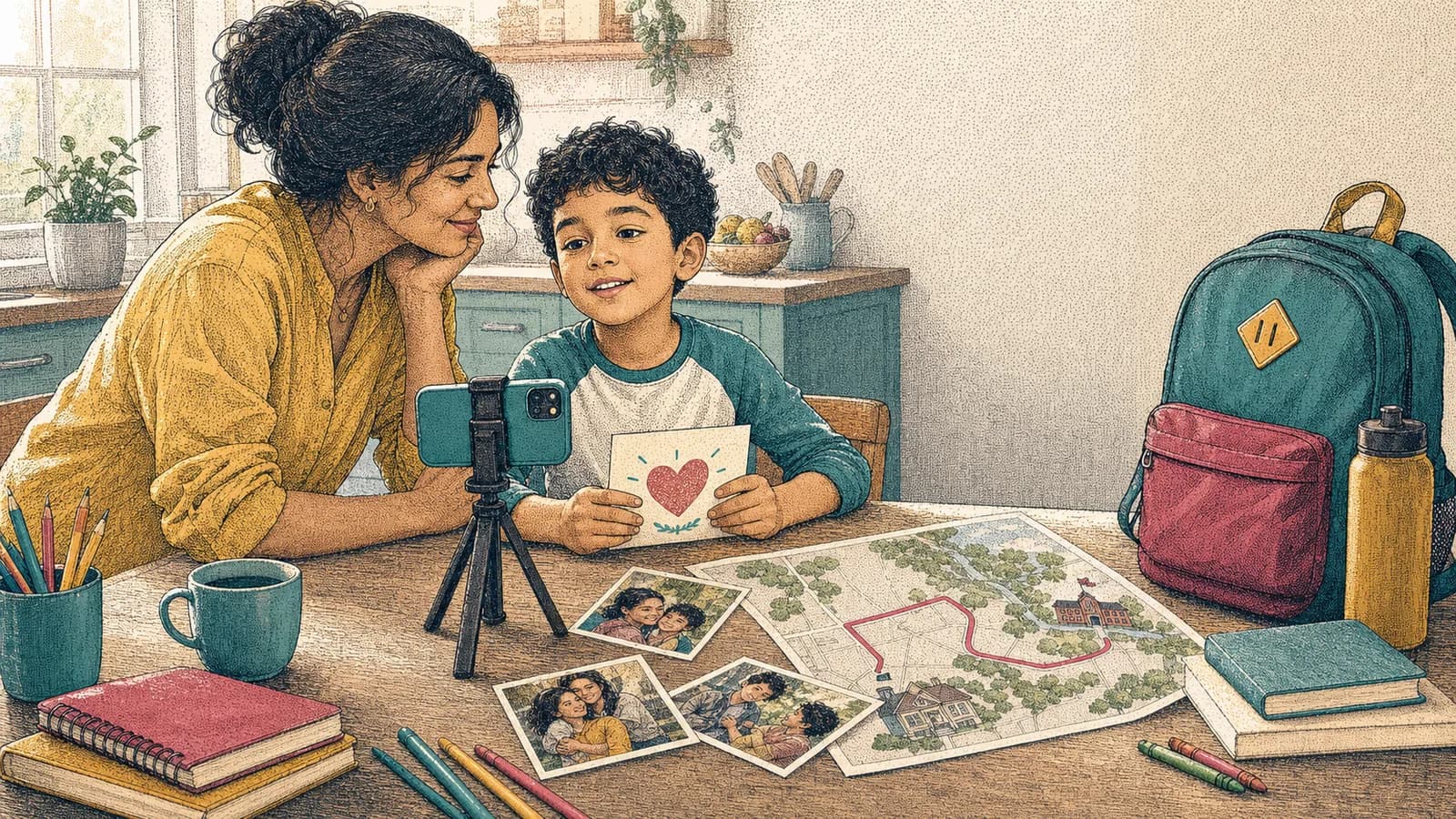
Place the phone on a shelf, tripod, or stable stack of books. Leave a little space above the person’s head. For costume clips, move farther back so the full costume stays inside the frame.
Record two seconds before the action and two seconds after it. That extra time helps the editor make clean cuts. Speak clearly and keep music off while recording spoken messages.
Use close shots for crafts, leaves, pumpkins, and food. Do not show sharp tools in a school demonstration. An adult should manage carving or cooking steps that are not safe for children.
Make the edit feel like one shared story
Choose the strongest opening clip. It might be a pumpkin passed into the frame, a student welcome, or a quick view of fall leaves. The first few seconds should show viewers what the video is about.
Keep most clips short. Trim long pauses and repeated lines. Use the same simple transition throughout the video instead of adding a different effect between every clip.
Music should support the mood without covering voices. Use original audio or a track you have permission to use. Captions can help viewers follow quiet speakers and make the video easier to enjoy without sound.
End with a clear final moment. A family can say one greeting across several clips. A class can hold up pieces of one picture. A map-based video can finish at the school, home, or gathering place that connects the group.
Protect privacy and keep school sharing safe
Ask permission before collecting or sharing a person’s image, voice, artwork, or name. For students, follow school policy and obtain the caregiver consent required by the school. Permission for an internal class viewing may not cover a public website or social post.
Give children a way to take part without showing their faces. They can film a drawing, hold a prop, record a sound, or help write a title card. Participation should not depend on public visibility.
Avoid full names, addresses, daily schedules, student numbers, and exact location details. Check the background for mail, street signs, name tags, uniforms, and computer screens.
Choose the sharing method before recording. A private family link, classroom screening, password-protected page, and public post have different risks. If the audience changes later, request fresh permission when required.
When a map-based group video adds meaning
Some seasonal videos are simple montages. Others become stronger when the clips are tied to places. AlbumMap can help connect photos, short videos, written messages, and locations in one cinematic map story.
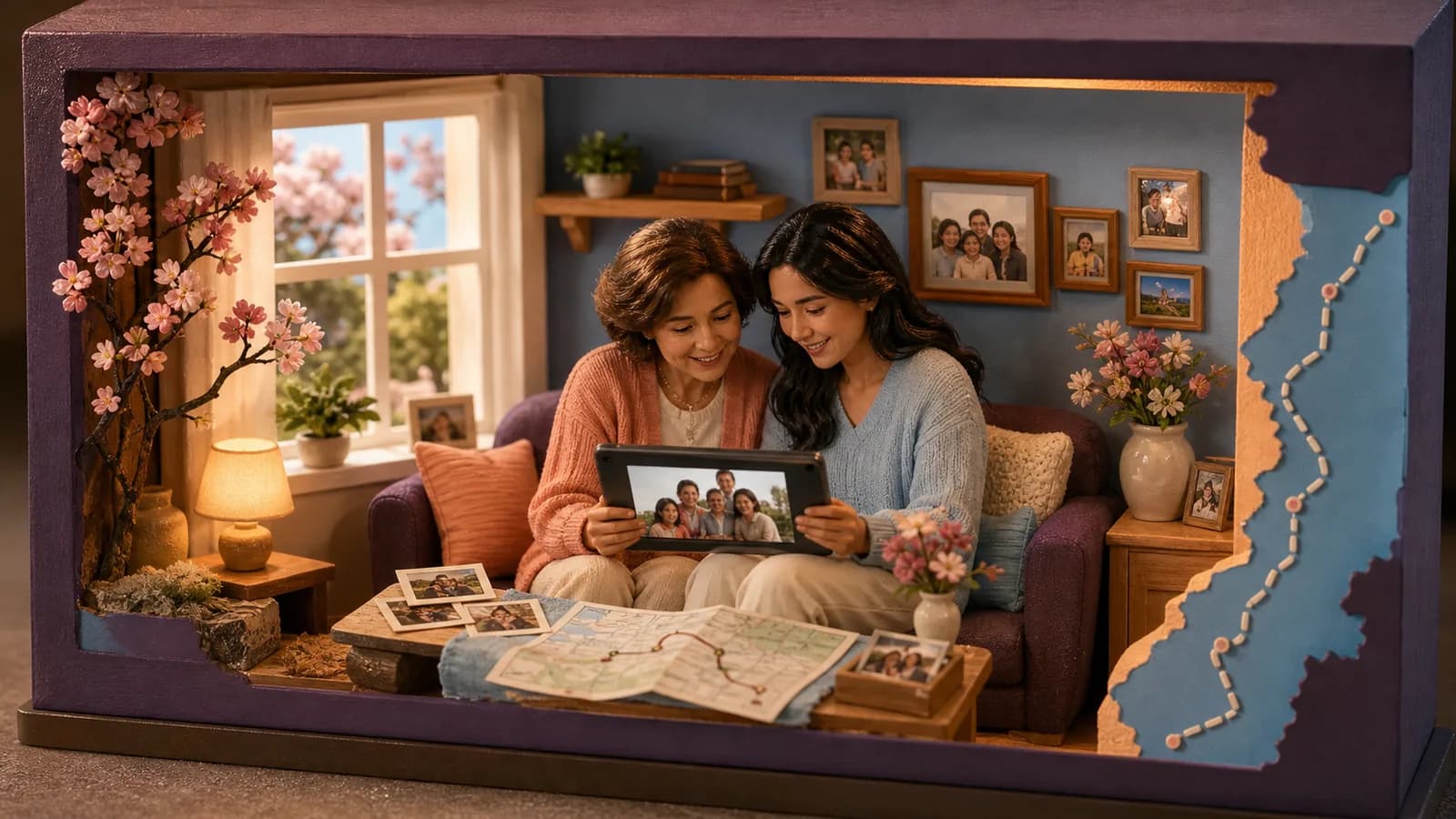
A family might follow a route from home to a pumpkin patch and then to a grandparent’s house. A school community might collect fall scenes from families in different neighborhoods. A reunion group could show how far each greeting traveled.
Use this approach only when place supports the story. Do not add exact home or student locations to public media. A town, park, region, or other broad approved location may provide enough context without exposing private details.
The goal is not to add a map to every video. It is to show how people and memories connect across places. That can make a seasonal greeting feel more like a shared journey.
A simple schedule for families and teachers
Start seven to fourteen days before you plan to share the video. Choose the theme and confirm permission first. Send the prompt after the audience and privacy level are clear.
Set the clip deadline a few days before the final viewing. This leaves time for reminders, editing, captions, and review. For a class project, allow extra time for absent students and school approval.
Do one full review on the device that will show the video. Test the classroom screen, family television, or private link. Keep a backup copy in an approved place, then enjoy the finished story together.
Examples You Can Copy
Copy-ready family invitation
We are making a private fall video for the family. Please record a horizontal clip under 10 seconds. Show one sign of fall where you live, then say, “Sending warm fall wishes from [city or region].” Please send your clip by October 20. The finished video will be shared only with invited relatives.
Copy-ready school contribution request
Our class is creating a short fall showcase for an approved classroom viewing. Students may share a drawing, craft, leaf, or spoken sentence. Clips should be 5 to 8 seconds and recorded horizontally in a quiet place. Participation is optional. Please return the required permission form and clip by the listed deadline.
Copy-ready prompt for younger children
Hold up your fall picture and finish this sentence: “My favorite thing about fall is…” You can show only your picture if you do not want to appear on camera.
Copy-ready costume parade script
Hi! I am dressed as [costume]. My character’s friendly superpower is [funny power]. Happy Halloween or happy fall!
Copy-ready fall memory prompt
Show a photo or object from a past fall day. In one or two sentences, tell us where you were and what made the moment special.
Copy-ready opening and ending
Opening: “Our families may be in different places, but we can still celebrate the season together.” Ending: “Thanks for joining our fall story. We hope your season is full of color, kindness, and good memories.”
Final Thoughts
The best seasonal group video has a clear purpose and an easy way for everyone to join. Choose one idea, keep each clip short, and explain how the finished video will be shared. Families can preserve traditions across distance. Schools can celebrate creativity while offering safe, inclusive choices. When the story is linked to several meaningful places, photos, messages, and clips can also become a map-based journey that the group can revisit later.
Helpful answers
Frequently asked questions
- How long should a Halloween or fall group video be?
- One to three minutes is often enough for a family or small group. A larger class may need three to five minutes. Ask for clips of about 5 to 10 seconds so every person has room to take part.
- What can a child contribute without appearing on camera?
- A child can show a drawing, craft, pumpkin, leaf collection, or other object. They can also record a sound, read a line off camera, help write the script, or choose the order of approved clips.
- How can a school make a seasonal video more inclusive?
- Offer a general fall theme alongside any Halloween option. Avoid required costumes, frightening images, and assumptions about family traditions. Give students several ways to participate, including choices that do not show their face or voice.
- What permission does a school need before sharing the video?
- The school should follow its own media and caregiver consent rules. Permission for classroom use may not allow public posting. Confirm the audience, platform, and use of names, voices, artwork, and faces before recording.
- What is the easiest group video idea for beginners?
- A prompt-based greeting or virtual costume parade is simple to organize. Give everyone the same camera direction, clip limit, and one-sentence prompt. Join the clips in order and use only a few basic transitions.
- Can relatives in different places join the same fall video?
- Yes. Send one clear recording prompt and submission deadline to everyone. Contributors can show local fall scenes or share a short greeting. A map-based story can connect those approved locations when distance is part of the meaning.
- Should the video use music?
- Music is optional. If you add it, choose original or properly licensed audio and keep it quiet under speech. For schools, use music approved under the school’s rules and intended sharing platform.