How to Make a Mother’s Day Video Gift
A Mother’s Day video can hold far more than a short greeting. It can bring together her favorite faces, family stories, old photos, and the places that shaped her life. The result feels personal because it is built from real moments. You do not need advanced editing skills or costly gear. A phone, a simple plan, and a few thoughtful messages can be enough. This guide walks you through the full process, from choosing an idea to sharing the finished gift. If your family lives in different places, you can also make the video as a group. Ask each person to send one short clip, photo, memory, or written note. AlbumMap can help when you want to connect those pieces through meaningful locations and turn them into one map-based story.
How to plan your Mother’s Day video
Start by deciding what you want your video to say. A clear theme will guide every photo, clip, and message you add. It will also keep the finished gift focused.
Think about the person you are celebrating. She may be your mother, grandmother, stepmother, mother-in-law, aunt, or another mother figure. Use the name and relationship that feel right to her.
Next, choose one simple theme. You could thank her for what she has taught you. You could tell the story of your family through places. You could collect funny memories from her children and grandchildren. You could also make a short timeline from early family photos to the present day.
Write your theme in one sentence. For example: “This video will show Mom how her care has shaped our family.” Use that sentence as a filter. If an item does not support it, save the item for another project.
1. Choose a format that fits her
A personal message is the easiest format. Record yourself speaking to the camera, then add a few photos. This works well when the gift comes from one person.
A family montage works better when several people want to take part. Each person records a short message based on the same prompt. You can place the clips between family photos and home videos.
A memory timeline tells a story in order. It may begin with her childhood, move through family milestones, and end with recent moments. Keep the timeline selective. A few strong memories are better than a crowded history.
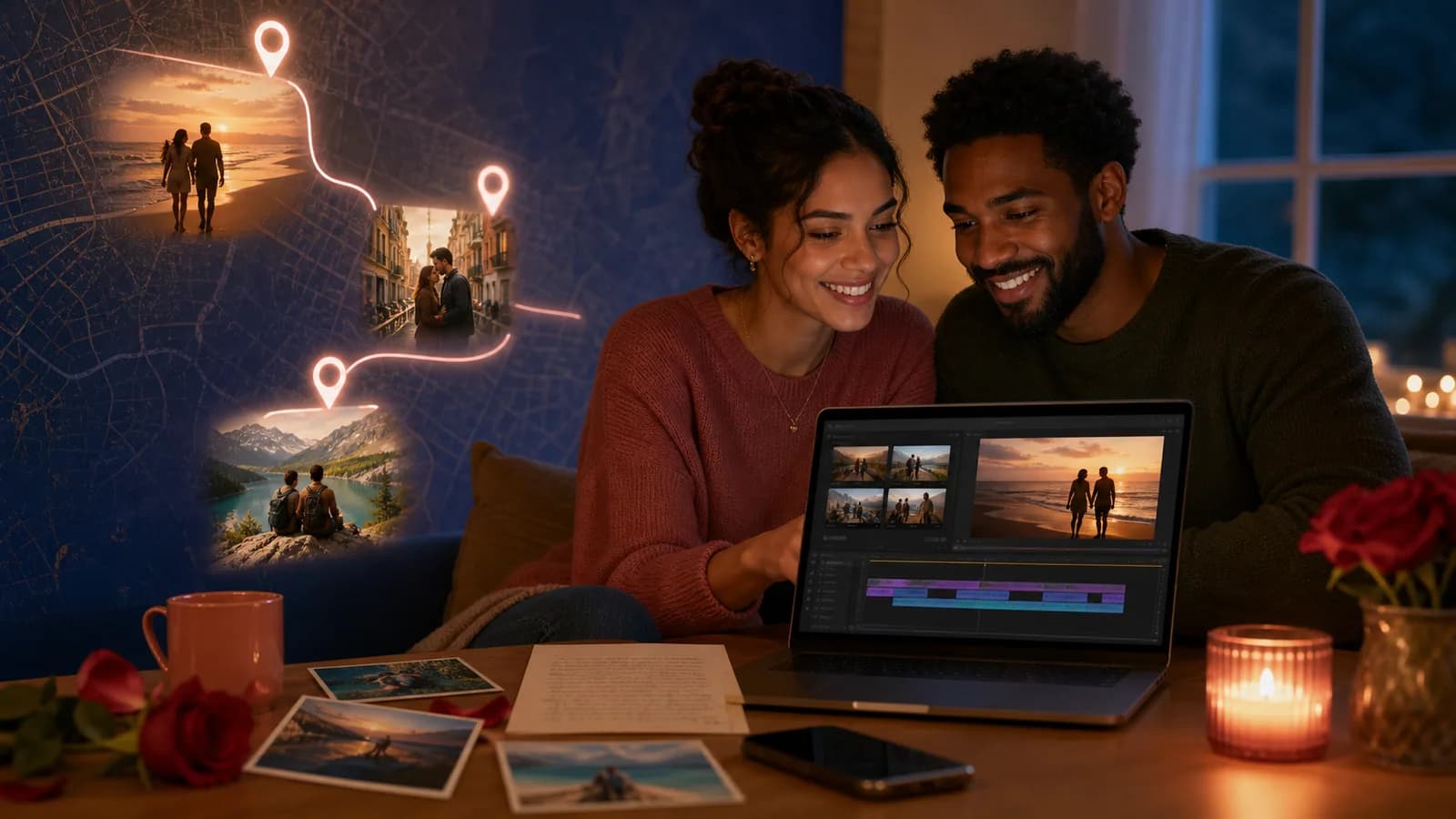
A map story is useful when places carry much of the meaning. You might move from her hometown to a first family home, favorite vacation spot, and the cities where her children now live. Photos, clips, and notes can appear as the story reaches each place.
Choose the format she will enjoy, not the one that looks most complex. A quiet two-minute message may mean more to her than a long production.
2. Gather photos, clips, messages, and locations
Create one collection list before you start editing. Include the photos, home videos, voice notes, written messages, and locations you hope to use. This step prevents a rushed search later.
Ask relatives for specific items. A broad request such as “send something for Mom” can be hard to answer. Instead, ask for one photo and a 20-second clip about a favorite memory. Give everyone a firm deadline that leaves time for editing.
For a location-led video, ask each person to name a meaningful place. It could be a childhood home, a park, a school, a vacation stop, or the city where they live now. Ask why that place matters.
Use a shared folder or collection tool so files stay together. Request original files when possible. Clips sent through some chat apps may lose detail after compression.
Include people who cannot record. A written note, scanned card, old photo, or short audio message can still give them a place in the gift.
3. Give contributors an easy recording guide
Simple directions help people send clips that fit together. Ask them to record in a quiet room and face a window or soft lamp. The camera should be steady and near eye level.
Tell everyone whether to hold the phone upright or sideways. Use one direction for all clips. A wide format often works well for a television or laptop. A vertical format may be better if the video will be watched mainly on a phone.
Suggest a clip length of about 20 to 40 seconds. This is enough time for one clear thought. Short clips also make a group video easier to watch.
Ask each person to pause for a moment before and after speaking. Those small gaps make editing easier. Clear sound matters more than a perfect background.
Offer one or two prompts so the messages do not all sound alike. Contributors can share something she taught them, a time she helped them, a habit that makes them smile, or a wish for the year ahead.
4. Build a simple story
A good video needs a beginning, middle, and end. It does not need a complex script. It only needs a clear flow.
Open with a title, one strong photo, or a short welcome from the organizer. Tell her who made the gift and why. Keep the opening brief so the first real memory arrives quickly.
Use the middle for stories, photos, and messages. Group similar moments together. Childhood memories may form one part. Family trips, lessons, and funny habits may form others.
If you use a map, let each place introduce the next memory. A route can show how the family grew or moved over time. It can also connect relatives who now live far apart.
End with the warmest message. You might use a group greeting, a recent family photo, or a short line about what she means to everyone. Leave the final image on screen for a few seconds.
5. Edit for warmth and clarity
Begin by placing the main clips in order. Remove long pauses, false starts, and repeated ideas. Do not cut every natural breath. Small imperfections can make a family video feel honest.
Add photos where they support the words. If someone talks about a beach trip, show one or two photos from that trip. Avoid adding a new image every second. Give each memory time to land.
Use short captions for names, dates, and places. Captions can also help when a speaker is quiet or the room has background noise. Choose large text with strong contrast.
Keep transitions simple. Fades and clean cuts are usually enough. Too many effects can distract from the people and stories.
Music should stay below the voices. Choose music you made, licensed, or have permission to use. A gentle track can support the mood, but silence is also fine during an important message.
Watch the full edit once without making changes. Notice any part that feels slow, confusing, or too loud. Then make one final round of edits.
6. Check the details before you share
Review every name, date, and caption. Make sure no contributor was left out by mistake. Check that photos are shown in the right direction and clips are not cut off too soon.
Listen with headphones and through regular speakers. Voices should be clear on both. If one clip is much louder, lower it to match the others.
Think about privacy before posting the video online. Family photos, children’s names, home addresses, and personal stories may not belong on a public page. A private link is often the better choice.
Export a test copy and watch it on the device she is likely to use. Text that looks clear on a computer may be too small on a phone or television.
Save a backup of the final video and the original files. A second copy protects the gift if a link expires or a device is lost.
7. Present the gift in a way she will enjoy
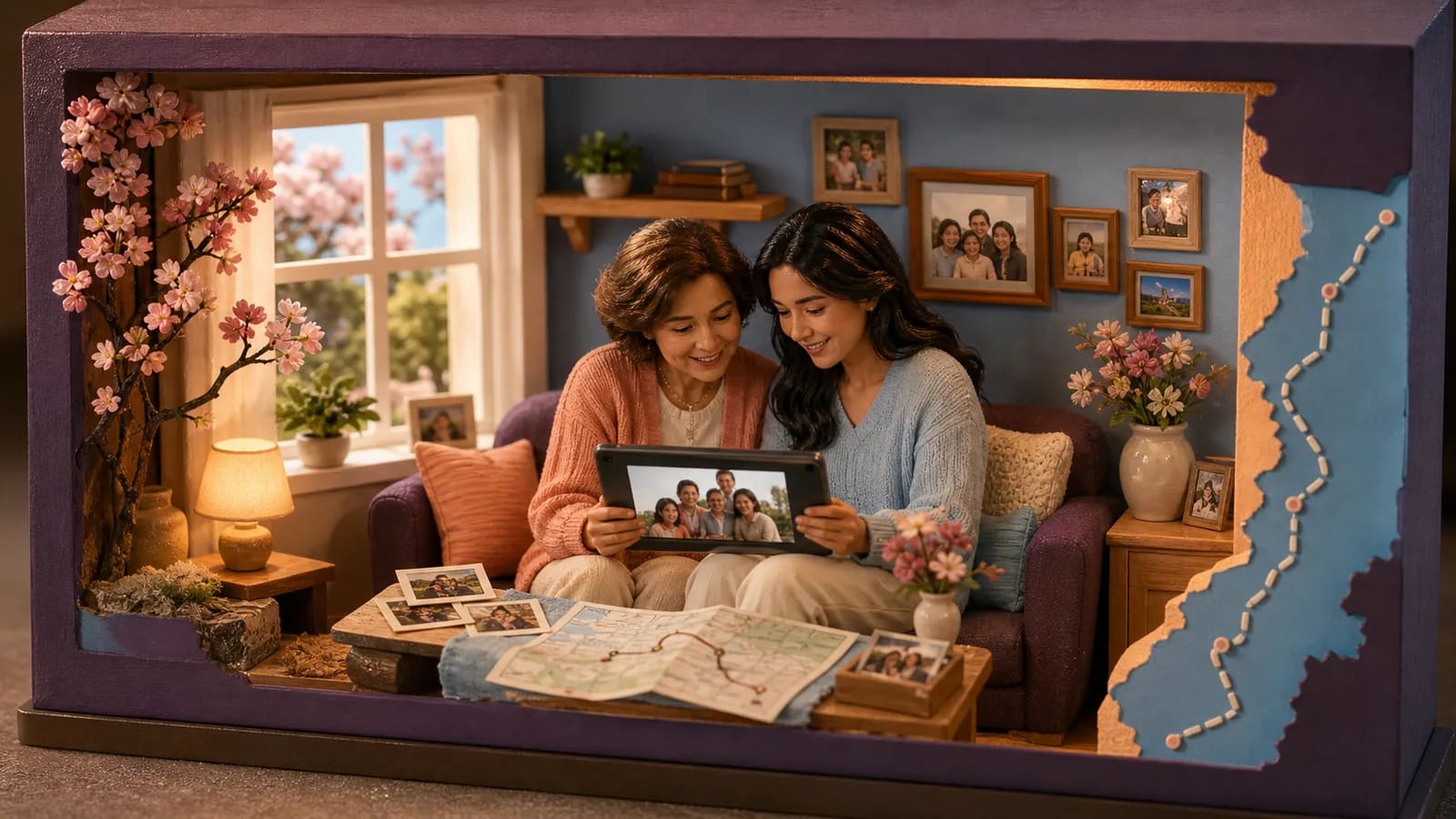
Choose a calm moment when she can watch without feeling rushed. You might play it after a meal, send a private link for a quiet viewing, or watch together on a family call.
A QR code inside a printed card can connect a physical gift to the video. Test the code on more than one phone before giving it to her. Keep the direct link as a backup.
Consider her comfort with attention. Some people enjoy watching a tribute with the whole family. Others would rather see it alone first. The kindest presentation is the one that suits her.
If relatives live far away, arrange a shared viewing. The video can become part of the visit instead of replacing it. Leave time afterward for people to talk about the memories.
Mother’s Day video ideas for different families
For young children, ask simple questions and keep their natural answers. A drawing, song, wave, or short thank-you can be enough. Do not force a polished speech.
For adult siblings, give each person a different prompt. One can share a lesson, another a funny story, and another a hope for the future. This creates variety without making the video feel random.
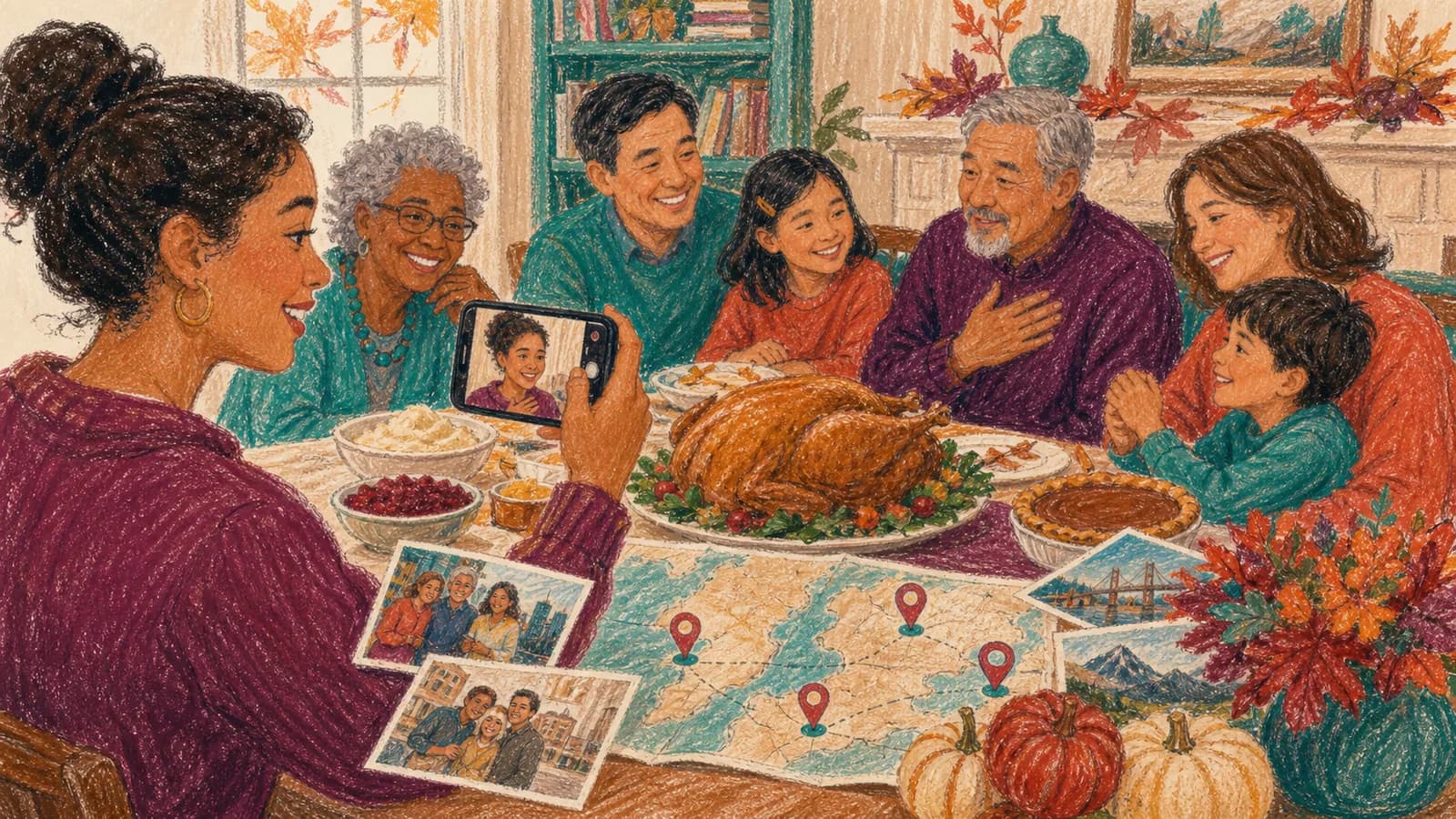
For a grandmother, invite several generations. Old photos can lead into new clips from children and grandchildren. A map can connect the family’s earlier homes with the places everyone lives today.
For a mother figure, use language that fits the relationship. Focus on the care, time, and support she gave. The gift does not need to follow a standard family story.
For someone facing grief or a hard year, keep the tone gentle. Ask what she would find comforting. It may be better to honor one safe memory than to build a large surprise.
How AlbumMap can add a sense of place
Some family memories are tied to a kitchen, a street, a school, or a faraway city. A standard slideshow can show the photos. A map-based story can also show how those places connect.
AlbumMap is most useful when several people contribute photos, short videos, written messages, and locations. The finished map video can follow a family route and reveal a memory at each stop.
For example, the story might begin where she grew up. It could move to the place where she met her partner, the homes where she raised her family, and the cities where loved ones live now. Each stop can hold a short message.
Use this approach only when location adds meaning. If one direct message says everything you need, keep the gift simple.
A quick schedule for making the gift
Two weeks before Mother’s Day, choose the theme and invite contributors. Set the collection deadline several days before you need the final video.
One week before, follow up with anyone who has not replied. Sort the files and draft the order. Ask for replacements if a clip has poor sound.
Two or three days before, finish the edit and check it on another device. Create the private link or QR code. Keep a backup copy.
If you start late, reduce the scope. Use one message, five favorite photos, and a clear ending. A short finished gift is better than an ambitious project that never gets shared.
Examples You Can Copy
Copy-ready invitation for family contributors
Hi! I’m making a surprise video for Mom for Mother’s Day. Please send one 20- to 40-second video by [date]. Share a favorite memory, something she taught you, or one reason you appreciate her. Please record in a quiet place with your phone held sideways. You can upload your clip and one favorite photo here: [link]. Thank you for helping!
Copy-ready message for your own clip
Happy Mother’s Day, Mom. I keep thinking about the day you [specific memory]. You made me feel [feeling], and I still carry that with me. Thank you for teaching me [lesson]. I love you, and I hope this video shows how much you mean to all of us.
Copy-ready location prompt
Choose one place that reminds you of her. Tell us the name of the place, what happened there, and why the memory still matters. If you have one photo or short clip from that place, please include it.
Copy-ready opening and closing lines
Opening: “Mom, these memories came from people and places you have filled with love.” Closing: “Wherever we live and wherever life takes us, your care remains part of our story. Happy Mother’s Day.”
Final Thoughts
The most meaningful video is not always the longest or most polished. It is the one that feels true to the person receiving it. Choose a clear theme, ask for specific memories, and give every clip enough space to be heard. When places are part of the family story, AlbumMap can connect them with shared photos, videos, and messages. Whether you make a map video or a simple phone recording, focus on what she will value most: familiar faces, honest words, and memories chosen with care.
Helpful answers
Frequently asked questions
- How long should a Mother’s Day video be?
- A video from one person can be two to four minutes. A group tribute may run five to ten minutes. There is no fixed rule. Keep each message focused, remove repeated ideas, and choose a length she will enjoy watching.
- What should I say in a Mother’s Day video message?
- Start with one specific memory or quality. Explain why it matters to you, thank her, and end with a direct wish. A real detail will feel warmer than a long list of general praise.
- How can I make a group video when relatives live far away?
- Send one upload link, a short recording guide, and a clear deadline. Ask each person for a brief clip and one photo. Collect everything in one place, then arrange the messages around a shared theme.
- Can I make the video without editing experience?
- Yes. Keep the structure simple: an opening photo, a few messages, supporting images, and a closing greeting. A basic editor or a video gift service can handle simple cuts and captions.
- How can locations become part of the video?
- Choose places connected to important memories, such as a hometown, family home, school, or vacation spot. Let each location introduce a photo, clip, or message. AlbumMap can help turn those stops into a map-based family story.
- What if a family member does not want to appear on camera?
- Invite them to send a written note, photo, drawing, or audio message. Their contribution can appear on screen or be read by the organizer. Participation should feel comfortable, not forced.