Kindergarten Graduation Slideshow Ideas for Families and Teachers
A kindergarten graduation slideshow can show how much children learned, tried, and changed during one school year. It can also give families a keepsake of small moments they may not have seen. The best version is not the one with the most effects. It is the one that feels fair, warm, and easy for young children to watch. This guide offers practical ideas for one child or a whole class. It also covers family contributions, privacy, timing, music, and presentation-day checks.
Choose the purpose before choosing photos
First, decide who the slideshow celebrates. A family version can follow one child from the first day to graduation. A teacher's version must represent the whole class with care. These projects need different plans.
For one child, ask relatives for early photos, short congratulations, and favorite memories. For a class, start with school-approved media. Decide how each child will be included before collecting extra material.
Also decide where people will watch. A short ceremony feature needs a clear beginning and ending. A slideshow running during refreshments can use a gentle loop. A private family keepsake can include more personal details than a school presentation.
Six kindergarten graduation slideshow ideas
1. The year in four chapters. Divide the story into meeting our class, learning together, trying new things, and moving up. This simple order works well for teachers because it covers the full year without needing a complex plot.
2. First day and graduation day. Pair an early photo with a recent one. Add one short line about a new skill or source of confidence. Families can use baby photos, but teachers should only use media cleared for the class project.
3. Every child shines. Give each student the same basic format: name or approved label, one photo, one strength, and one favorite memory. Equal space helps the class graduation slideshow feel fair.
4. Our favorite moments. Build short groups around art, reading, play, performances, field trips, classroom routines, and friendships. Mix special events with ordinary moments. The ordinary moments often feel most personal later.
5. Little voices, big plans. Record each child answering one easy prompt. Try, What did you enjoy learning? What made you laugh? or What would you like to learn next? A written answer or drawing can replace a recording.
6. Places from our year. Use school-approved locations such as the classroom, library, playground, garden, or museum visit. Connect each place to one photo and one sentence. Never map student homes or private family locations in a class project.
How to plan a kindergarten graduation slideshow step by step
Start with a short outline. A useful order is welcome, early days, learning, friendships, special events, each child, thanks, and moving up. Remove any section that does not support the main story.
Create a simple media list next. For a family project, this might include the first school photo, artwork, a performance clip, a family message, and graduation day. For a class project, list every student and track approved material beside each name.
Choose one person to manage the final version. Families can still contribute, but one organizer should check names, permissions, quality, and balance. This prevents several unfinished versions from circulating.
Collect more than you need, then choose with care. Clear, expressive photos are usually better than ten similar group shots. Include candid work, play, and creative projects alongside posed graduation pictures.
Arrange the media before adding decoration. Make sure the story works with plain slides first. Then add a small set of colors, one readable font family, and simple transitions. A consistent design is easier for young viewers to follow.
End with a clear closing moment. A class photo, teacher message, or simple moving-up wish works well. Leave the final slide on screen long enough for children and families to read it.
Collect family photos and messages without confusion
Send one request with a firm deadline. Explain what families may submit, where to send it, and how the slideshow will be shown. Include the privacy plan in the first message, not after files arrive.
Give families a small task. Ask for one photo, one sentence, or a clip under 15 seconds. A narrow request produces more useful replies than asking everyone to send anything they like.
Offer choices. Some families may not want to share a photo or record a child. They could submit artwork, an approved written memory, or nothing at all. Teachers should plan an equal alternative that does not draw attention to the choice.
Use a checklist to track permission, spelling, media received, and final placement. Store files only in a school-approved or family-approved location. Do not post the finished slideshow publicly unless every required permission covers public sharing.
Make the class version fair, private, and comfortable
Count each child's clear appearances before finishing a class version. A few children may appear often because they enjoy the camera. Others may appear less. Balance the final choices so no child seems forgotten.
Avoid awards, jokes, labels, or photos that could embarrass a child. Use kind facts about effort, curiosity, creativity, helpfulness, or growth. Check names and captions with another adult before the event.
Keep sensitive details off the screen. Do not show addresses, schedules, medical information, family circumstances, or unapproved school records. Crop or replace images that reveal private material in the background.
Accessibility matters too. Use large type, strong contrast, captions for spoken clips, and calm transitions. Keep music below any voices. Avoid fast flashes and crowded slides. Ask the school about any other needs in the audience.
Set a child-friendly pace and choose music carefully
Most photos need enough time for a child to find familiar faces. Start with about four seconds per photo, then adjust after a test. Keep captions short so adults and early readers can follow them.
Short video clips add energy, but they do not need to show a full performance. A clear five-to-ten-second moment is often enough. Trim long pauses and check that every voice can be heard.
Choose one or two cheerful, gentle tracks that fit the class. Use music from a source you have permission to use. School rules and sharing plans may affect which tracks are suitable.
Watch the full presentation without editing. If a section feels slow, remove repeated media before speeding everything up. If children cannot read a caption, shorten it or leave it on screen longer.
When a map-based story adds something useful
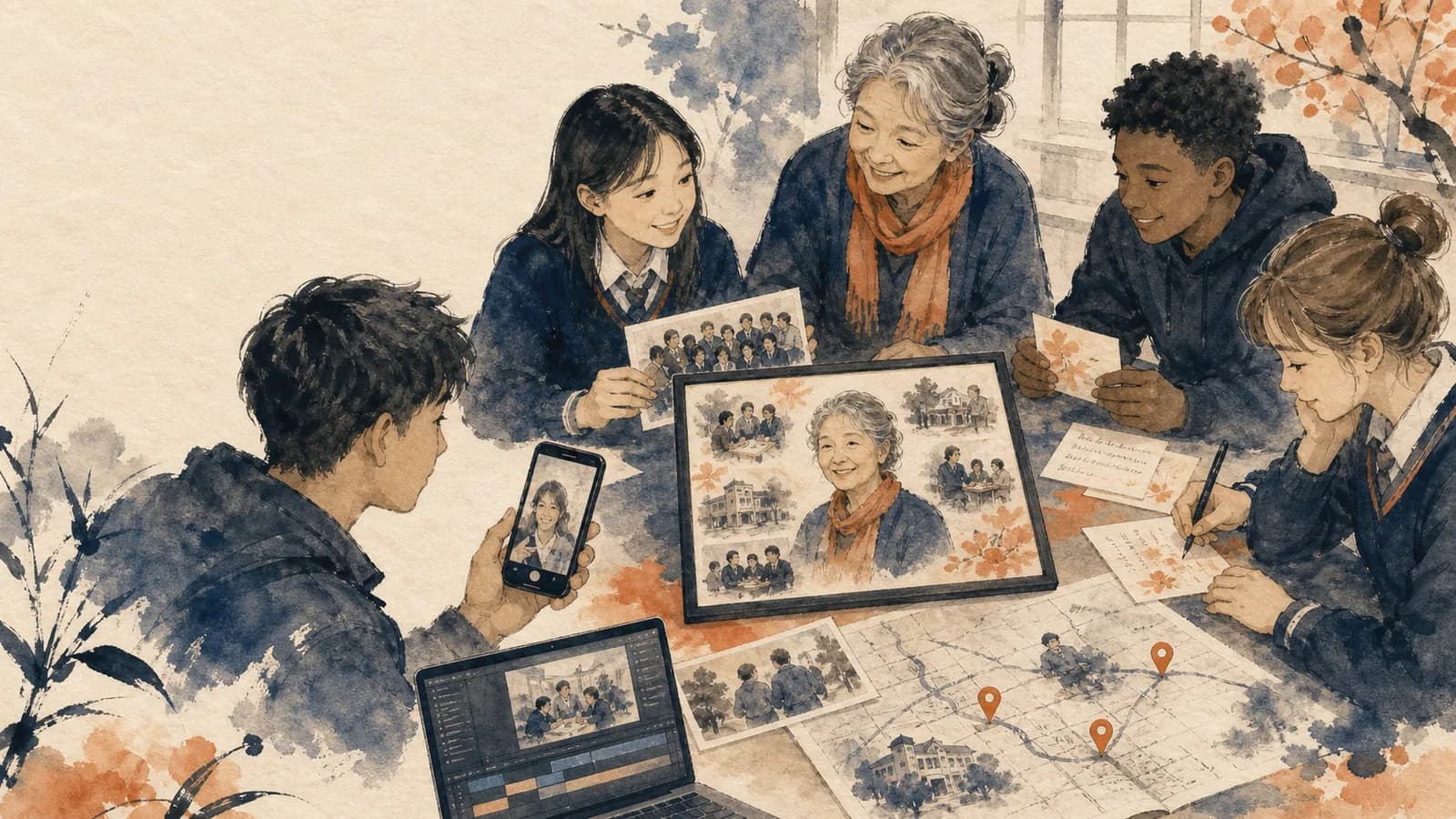
A normal presentation is enough when the story only needs class photos and captions. A map-based version can help when places are part of the memory. The route might move from the classroom to the library, playground, field-trip site, and graduation stage.
AlbumMap can bring photos, short videos, written messages, and places into one video flow. A family could also invite grandparents and relatives to contribute from different cities. The result can show both the child's school-year places and the people cheering from afar.
For a classroom project, use only public or school-approved locations. For a family keepsake, the organizer can choose more personal places after considering privacy. The map should clarify the story, not expose information.
Prepare for graduation day and sharing
Export or finish the presentation early enough to test it. Play it on the same computer, screen, speakers, and internet connection planned for the event. Check sound, picture shape, captions, and the final slide.
Keep a backup that follows school policy. If the presentation needs the internet, prepare a suitable offline option when possible. Turn off pop-ups and private notifications before families enter the room.
Decide whether the slideshow is a featured part of the ceremony or background media. A featured show should be brief and watched together. A loop can be longer, but its start and finish should still connect smoothly.
Share the finished version only through an approved method. Tell families whether they may download it, forward it, or post clips. A private link does not remove the need for clear permission.
A simple one-week plan
Seven days before the deadline, confirm the format, permission rules, and student list. Six days before, send the family request. During the next three days, collect media and update the checklist. Two days before, arrange the story and check that every approved child has fair space.
One day before, add captions and music, then review the full show with another adult. On presentation day, test the equipment again. Keep the final file or approved link easy to find so the celebration can begin without a search through messages.
Examples You Can Copy
Copy-ready request from a teacher
Hello families. We are creating a short kindergarten moving-up slideshow for our class celebration. If you would like to take part, please send one approved photo or a brief written memory by [date]. The slideshow will be shown [describe audience and setting]. Please review the attached permission details before sending anything. You may also choose the artwork or no-photo option.
Copy-ready request for one child
We are making a graduation keepsake for [Child's Name]. Please send one favorite photo, a short video under 15 seconds, or one kind sentence by [date]. You can answer this prompt: What made you proud of [Child's Name] this year? If a place is part of the memory, please include it only if you are comfortable doing so.
Copy-ready child prompt
My favorite part of kindergarten was [activity or memory]. I learned how to [new skill]. In first grade, I hope to [simple wish].
Copy-ready student spotlight
[First name or approved label] brought [kind quality] to our class. A favorite moment was [school-approved memory]. We are excited to see what comes next.
Copy-ready closing message
We learned, played, helped one another, and grew in many ways. Congratulations to our kindergarten class. Your next adventure is ready for you.
Final Thoughts
A good kindergarten graduation keepsake should help children feel proud and included. Begin with a clear purpose, keep the story short, and represent each approved child with care. Ask families for small, specific contributions. Then check privacy, captions, music, timing, and equipment before the event. If photos, messages, clips, and safe locations all matter to the story, AlbumMap can connect them in a map video that families can watch again.
Helpful answers
Frequently asked questions
- How long should a kindergarten graduation slideshow be?
- For a featured part of a ceremony, aim for about three to six minutes. A small family keepsake can be longer. A large class may need extra time to represent each child fairly. Test the full show with another adult and remove repeated photos before making every slide faster.
- How many photos should be included?
- Use only enough photos to tell the story clearly. A family version might use 25 to 50 strong images. A teacher should plan by student and section instead of using one fixed total. Count each child's appearances so the class version stays balanced.
- What should teachers include in a class graduation slideshow?
- Useful sections include the first weeks, learning activities, play, artwork, class routines, special events, friendships, individual spotlights, a teacher message, and a closing class photo. Include only material covered by school policy and the required permissions.
- What can a family submit if it does not want to share a child's photo?
- Offer an equal alternative, such as artwork, an approved written memory, a teacher-selected classroom image, or no individual slide. Explain the choices privately and avoid language that makes a child or family feel singled out.
- What music works for a kindergarten graduation video?
- Choose cheerful or gentle music that does not overpower the children. Use a track you have permission to include. Consider the lyrics, audience, school rules, and sharing method. Instrumental music can make spoken clips and captions easier to follow.
- Can families share the finished class slideshow online?
- Only when school policy and every required permission allow that form of sharing. A presentation approved for a private ceremony may not be approved for social media. Teachers should state the sharing rules clearly before collecting media.
- How can AlbumMap fit a kindergarten graduation project?
- AlbumMap is useful when the story includes shared photos, short clips, written messages, and meaningful places. A family can also collect wishes from relatives in different cities. Class organizers should use only school-approved locations and media, with the required permissions.