Introduction
A guess the location quiz turns travel photos into a small game people can play together. Show one image, share one clue, give people a short pause, then reveal the place on a map. It works for a family trip, a classroom warm-up, a reunion, or a group chat that needs a fun reason to revisit old photos. You do not need hard trivia. You need clear pictures, fair clues, and a simple answer key. This guide shows how to make a ten-question version that feels playful instead of stressful.
Start with a simple quiz promise
Tell players what they are guessing before question one. For example: “Can you name these ten real places from one photo and one clue?” This makes the rules clear. It also helps you avoid a quiz that mixes landmarks, countries, and personal memories without warning.
Choose one lane for all ten questions. You might use places from one trip, places with surprising colors, coastal views, mountain scenes, or destinations that remind people of somewhere else. A focused lane makes your travel map quiz easier to follow.
Set a fair pace. Give five to eight seconds for an easy photo. Give ten to fifteen seconds when the clue needs thought. If people are playing in person, let them write answers. If they are watching a video, add a quiet pause card before each reveal.
How to build a guess the location quiz
Make a short question sheet before you start designing slides. For each question, choose one strong image, one clue, the exact answer, and a map pin. Then ask one person who was not on the trip to test it. If they cannot make a reasonable guess, the clue may be too vague.
Use clues that describe what viewers can see. Good clues mention a color, shape, weather pattern, coastline, bridge, street, or mountain outline. Avoid clues that require people to know a private joke or a fact they could not see in the image.
Keep the reveal respectful. Say “has a Swiss-Alps feel” or “shares a canal scene that may remind viewers of Venice.” Do not say that one place is another place. The real location deserves its own name and context.
Ten prompt formats for your travel map quiz
1. The close crop: Show only one small part of a photo, such as a blue wall, lantern, roofline, or cliff edge. Prompt: “What kind of place do you think this is?” Reveal the full photo after the answer.
2. The three-clue ladder: Start with a broad clue, then add two more clues if needed. Prompt: “Clue one: this place is known for bright water. Clue two: it is part of an island setting. Clue three: the shoreline is the star.” This format lets everyone stay in the game.
3. The map silhouette: Show a simple outline or a nearby region without the place name. Prompt: “Which part of the map should we zoom into?” Use this when the map itself is part of the fun.
4. The sound-off photo: Use a photo with no caption and ask players to name the mood first. Prompt: “Does this scene feel alpine, coastal, historic, or tropical?” Then ask for the location. It lowers the pressure for people who do not know the answer.
5. The before-and-after reveal: Begin with a tight photo. Then show a wider view with one extra clue. Prompt: “What changed your mind after you saw the wider scene?” This makes the answer feel earned.
6. The familiar-feeling comparison: Pair a real place with a careful visual reference. Prompt: “This scene may remind you of a Greek island because of its white and blue colors. Where is it really?” Keep the comparison to visible features only.
7. The route stop: Show a map line with one stop hidden. Prompt: “Which stop belongs between these two points?” This works well for a road trip, train trip, or multi-city holiday.
8. The memory voice note: Play or read a short message from someone on the trip. Prompt: “I remember lanterns, narrow streets, and dinner after dark. Where were we?” Use this only when the message gives a fair clue.
9. The two-photo match: Put two photos side by side. One is a detail and one is a wide view. Prompt: “Do these belong to the same place?” Ask for the location after players decide.
10. The final-round collage: Combine four small images from one destination. Prompt: “Mountains, water, old streets, and a map pin: where are we?” Save this format for the last question because it feels like a celebration of the whole game.
Use an answer-key layout that is easy to host
Keep the answer key separate from the player slides. Number each answer to match the question. Then include four small fields: the real location, the visual clue, the map reveal, and a short note. The short note can explain why the clue worked or share one memory from the trip.
A good answer reveal has three beats. First, say the real location. Second, show the map zoom or pin. Third, name the visible feature that guided the guess. For example: “Answer: [real location]. The blue-and-white color pair was the clue. Here is where it sits on our route.”
Do not make the answer card too busy. One photo, one map moment, and one or two sentences are enough. If someone guessed wrong, they should still learn why the answer makes sense.
Thumbnail ideas that invite a click
Use one bold image with a little mystery. A close crop of a blue street, mountain ridge, canal, or bright shoreline works better than a crowded collage. Leave open space for the page title that the website adds outside the image.
Try a split scene: a cropped travel photo on one side and a clean map line on the other. Another option is ten small unlabeled photo cards scattered around a folded map. Keep location names out of the image so the answer stays hidden.
For a video thumbnail, choose the question with the clearest visual clue. Add a simple visual cue, such as a map pin shape or a question-mark icon, only if it remains readable on a phone.
Turn the quiz into a map video
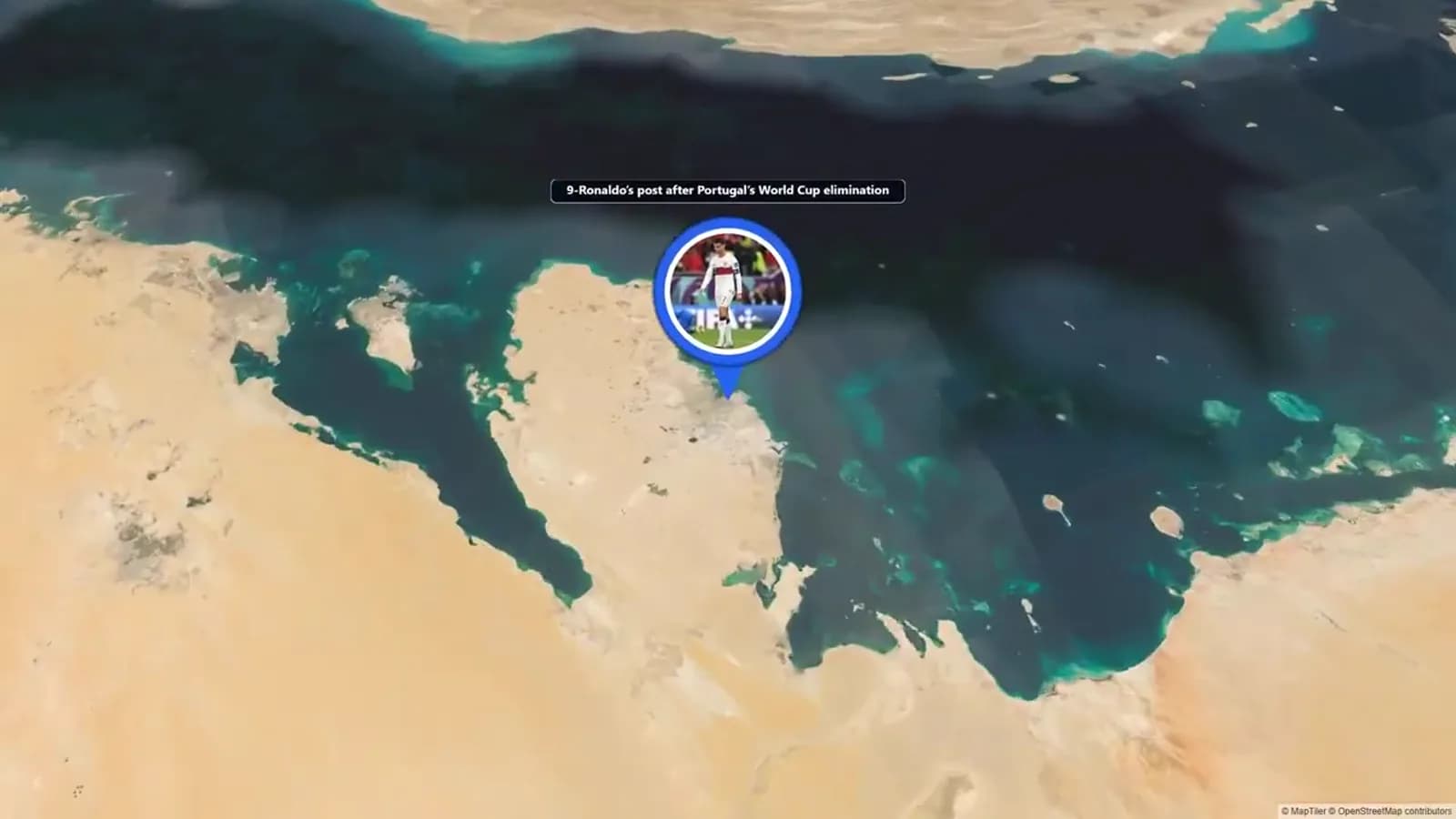
Once the quiz works as slides, it can become a map video. Start with a title card that explains the game. Then repeat one dependable sequence: photo, clue, pause, answer, map transition, and short memory note. Repeating the sequence helps viewers know when to guess.
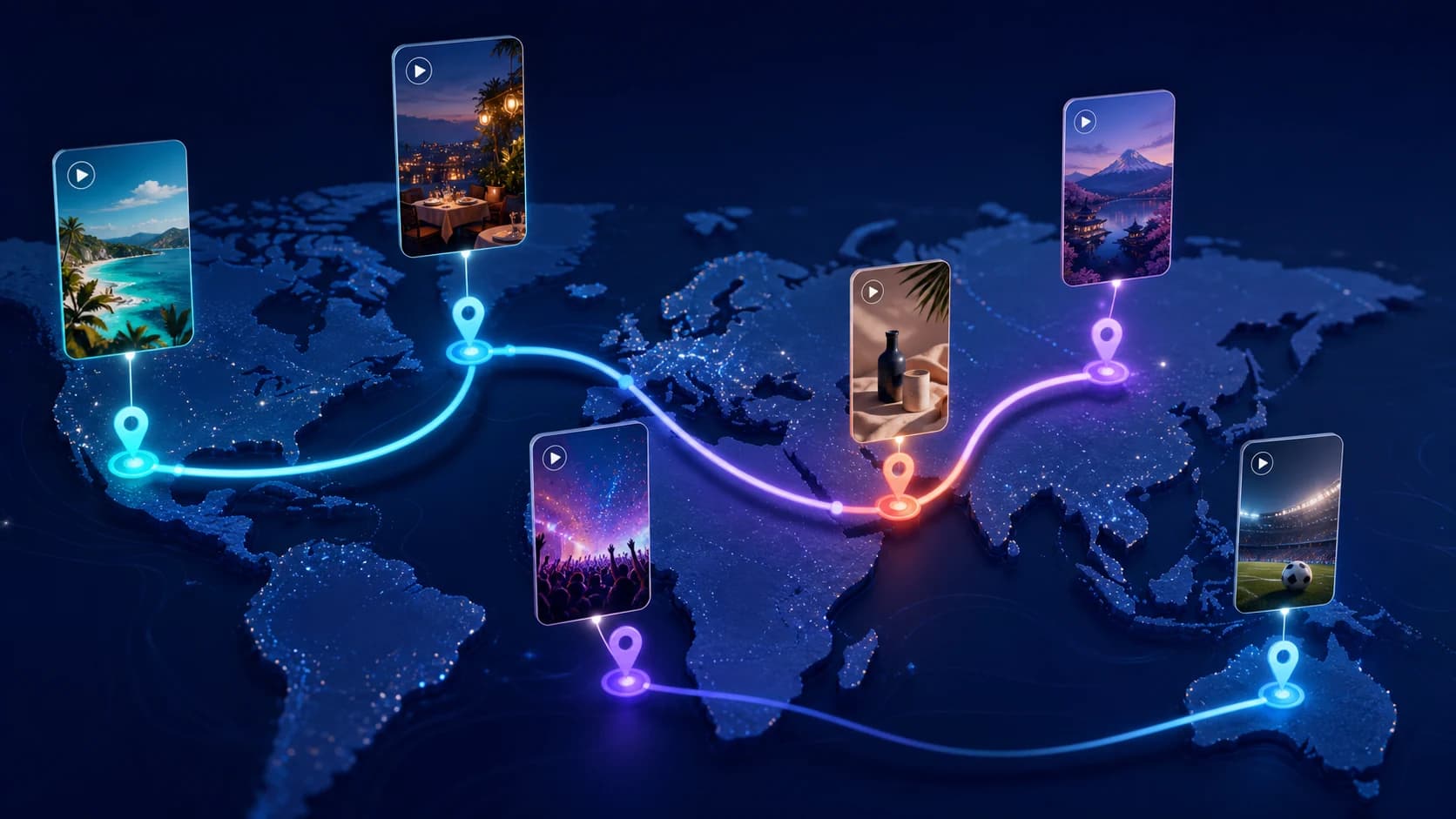
AlbumMap is useful when the quiz belongs to a shared trip. Gather each person’s best photo or short clip, their location, and one sentence about the moment. Then arrange the answers along a route or across a world map. The finished video can play at a reunion, in a group chat, or as a travel memory people revisit later.
Keep the personal material optional. A quiz can use public-facing scenery only. If you add group photos or messages, ask contributors what they are comfortable sharing. Do not include a private location or a child’s identifying detail without permission.
Copy-ready examples
Opening line: “Ten photos. Ten real places. You get one clue before the map reveals the answer. How many can you name?”
Easy clue: “This waterfront scene has bright blue water and a row of small boats. Which stop on our trip was it?”
Answer reveal: “Answer: [location]. The water color was the first clue, but the map pin shows the real place. Add your score before we move on.”
Group request: “Send one travel photo, the place it was taken, and one detail that would help friends guess it. We will turn the best ones into a ten-question map quiz.”
Final thoughts
The best location guessing game gives people a real chance to notice, guess, and learn. Start with ten clear questions. Use an answer key that explains the clue. Then, if the photos tell a shared travel story, turn the reveals into a map video that brings the route back to life.
Ten-Question Map Quiz Template
Copy this table into a document or spreadsheet before building slides. Replace the bracketed text with your own trip details. Keep the answer key hidden until the reveal.
| No. | Prompt format | Photo or clip | Fair clue | Answer-key reveal | Map moment |
|---|---|---|---|---|---|
| 1 | Close crop | [Blue wall or painted doorway] | What color detail stands out? | Answer: [real location]. The blue palette was the clue. | Zoom from region to location pin. |
| 2 | Three-clue ladder | [Mountain landscape] | Clue 1: alpine feel. Clue 2: in Canada. Clue 3: wide valley view. | Answer: [real location]. The mountain setting created the comparison. | Move from Canada map to the stop. |
| 3 | Lantern-lit streets | [Historic street at dusk] | Look at the lamps and street shape. | Answer: [real location]. The lantern-lit historic streets were the clue. | Follow a short street-to-pin transition. |
| 4 | Color comparison | [Blue-toned city photo] | Which color appears again and again? | Answer: [real location]. The blue-toned scene guided the guess. | Reveal the city pin after a color fade. |
| 5 | Cliff scene | [Coastline or cliff] | Does this feel calm, steep, or coastal? | Answer: [real location]. The cliff drama was the clue. | Trace the coast toward the pin. |
| 6 | White and blue | [White buildings and blue accents] | What familiar island color pair can you see? | Answer: [real location]. The colors may recall a Greek island, but this is its own place. | Use a short island map zoom. |
| 7 | Water-color clue | [Bright water scene] | What does the water color suggest? | Answer: [real location]. The bright water created the visual reference. | Reveal the shoreline on the map. |
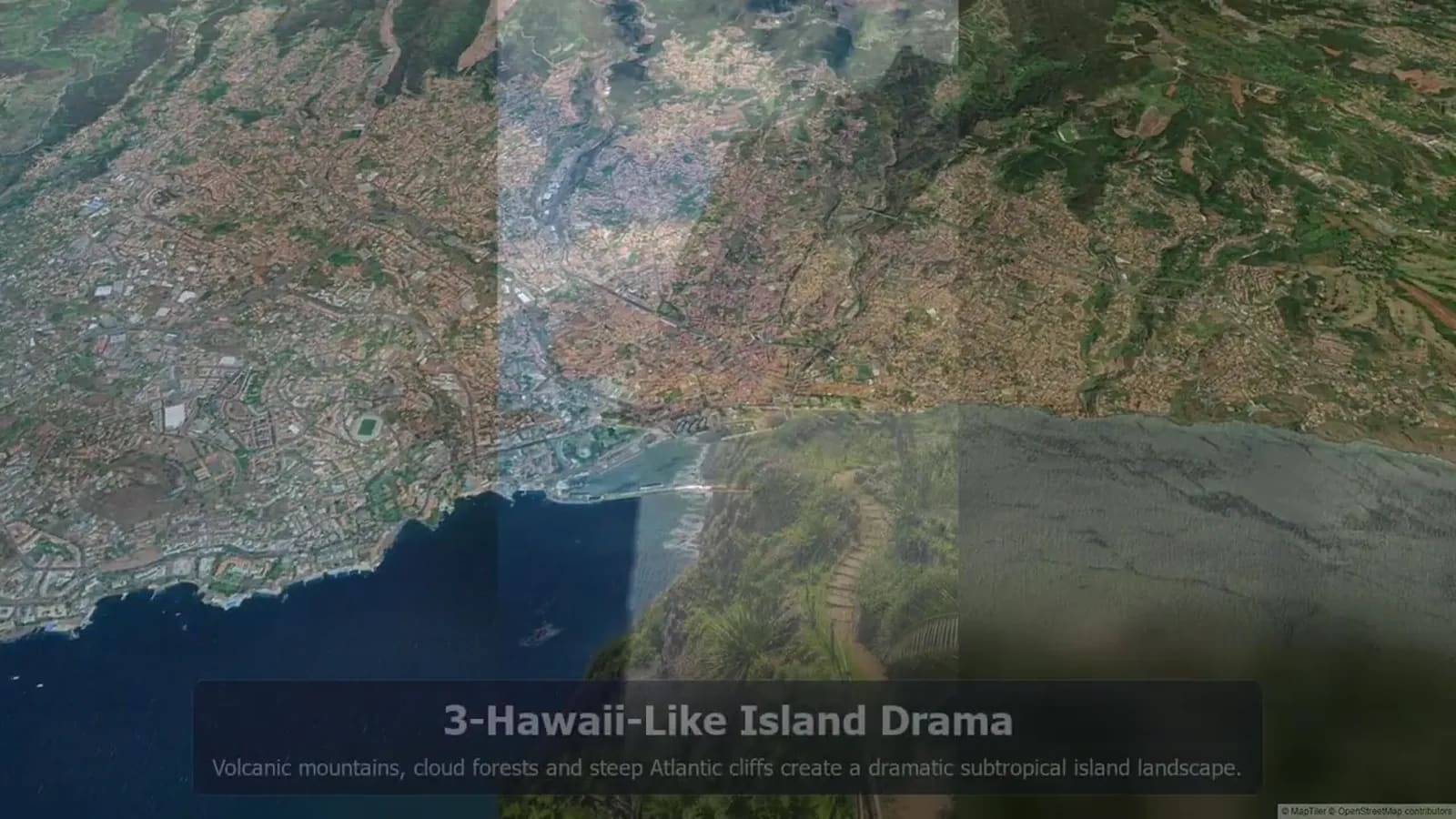
| 8 | Island drama | [Island landscape] | What land-and-water shape can you spot? | Answer: [real location]. The island scenery was the clue. | Animate a route to the island. |
| 9 | Bay shape | [Bay or inlet] | Does the bay look long and enclosed? | Answer: [real location]. Its fjord-like shape guided the guess. | Zoom from coast to bay. |
| 10 | Canal finale | [Canal scene] | What city do the canals remind you of? | Answer: [real location]. The canals may recall Venice, while the place has its own story. | End on the final pin and score card. |
Examples You Can Copy
Copy-ready opening voiceover
Ten photos. Ten real places. You get one clue before the map reveals the answer. How many can you name?
Copy-ready answer card
Answer: [real location]. The [visible feature] was your clue. Here is where it sits on our map.
Copy-ready group request
Send one travel photo, the place it was taken, and one fair clue. We will choose ten for a location guessing game.
Final Thoughts
Create the quiz on paper first, then build the slides or video. A clear clue and a kind reveal will do more for the game than a difficult question ever will.
Helpful answers
Frequently asked questions
What is a guess the location quiz?
It is a game where players use a photo, clip, map detail, or short clue to identify a real place before the answer is revealed.
How do I make a travel map quiz without making it too hard?
Choose clear images, give one fair visual clue, and test the questions with someone who was not on the trip. Let players see why the answer fits.
What should an answer key include?
Include the question number, the real location, the clue that mattered, a map pin or zoom, and a short note or memory.
Can a travel quiz become a group video?
Yes. Repeat a photo, clue, pause, answer, and map-reveal pattern. Add shared photos, clips, messages, and locations only when contributors are happy to share them.