Valentine’s Day Video Ideas for Sharing Your Story
A Valentine’s Day video can say more than a card because it brings your voice, memories, and shared story together. It does not need professional cameras or complex editing. A few honest clips, favorite photos, and specific details can make it personal. The best approach is to choose one story before collecting media. You might show how you met, revisit places you love, celebrate everyday moments, or invite friends and family to add short messages. This guide will help you choose a format and finish it without making the project feel overwhelming.
Start with the story you want to tell
Before opening an editor, decide what your partner should feel. Do you want them to laugh, remember, feel close, or look forward to what comes next? One clear feeling will help you choose every photo and clip.
Write your idea in one sentence. For example: ‘This video shows how a chance meeting became our favorite life.’ Another option is: ‘This is a thank-you for the small things you do every day.’ If a photo does not support that idea, you can leave it out.
Think about your partner’s comfort too. A private video can be tender and detailed. A social post may need fewer personal moments. You are making something for them, so their preferences matter more than trends.
7 Valentine’s Day video ideas for sharing your story
1. Make a simple love story timeline. Start with the earliest photo you have. Move through the first date, early trips, ordinary weekends, milestones, and a recent moment. Add short captions with dates or one-line memories. This format works well when you have many photos but only a few video clips.
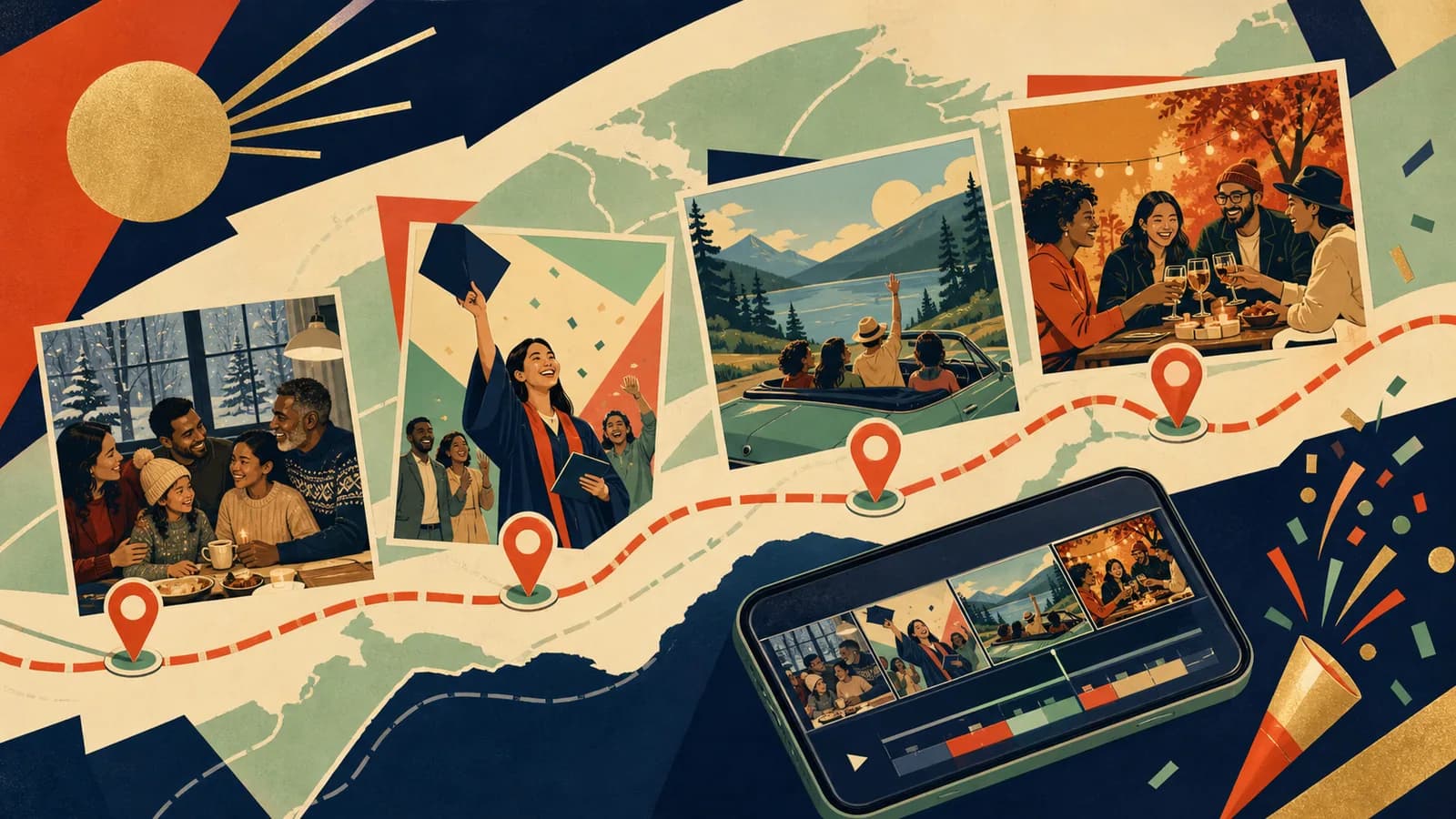
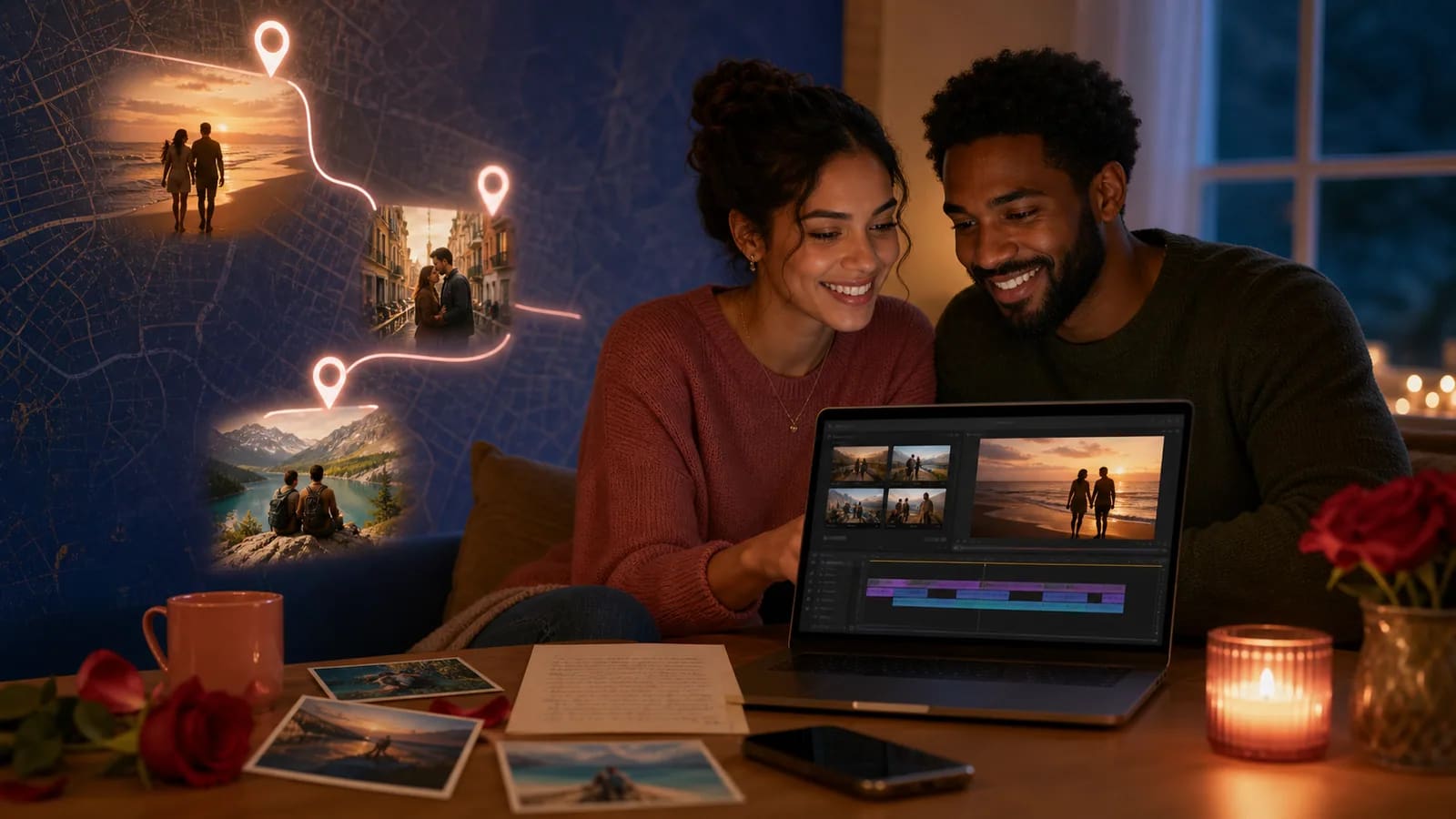
2. Build the story around meaningful places. Use the café where you met, the park from your first date, your first home, a favorite trip, or a place you hope to visit. Each stop can include one photo, clip, or note. If places are central to the story, AlbumMap can turn them into a map-based video journey.
3. Celebrate ten small things you love. Record one short section for each habit, quality, or shared ritual. Choose details that only the two of you would recognize. Morning coffee, bad puns, rainy walks, and late-night snacks often feel more personal than broad praise.
4. Record a video love letter. Speak directly to the camera and use photos as brief breaks between parts of your message. Explain what you remember about the beginning, what you value now, and what you hope to share next. Keep your tone natural. You do not need to sound like a movie script.
5. Tell a long-distance story. Show both locations, the ways you stay connected, and the moments you are waiting to share. Include screenshots only when both people are comfortable with them. A map route can connect the cities without making distance the whole focus.
6. Invite your circle to add a chapter. Friends, children, or relatives can share how they saw the relationship grow. Give each person one clear prompt and a short time limit. AlbumMap is useful when contributors need one place to add photos, videos, written messages, and locations.
7. Make a next-chapter video. Mix favorite memories with plans for the coming year. End with a date idea, a trip clue, a shared goal, or a promise to protect more time together. This gives the video a warm ending without requiring a grand surprise.
Give the video a beginning, middle, and end
A clear shape will make a short video feel complete. Begin with a title and one opening line. The middle should contain three to five chapters. End with your direct message or a look toward the future.
You can arrange the middle by time, place, or theme. A timeline follows the relationship from then to now. A place-based story moves through meaningful locations. A themed story may use chapters such as laughter, courage, home, and adventure.
Keep the strongest memory near the end. This creates a natural build. Your final words should explain why those moments still matter today.
What to collect before you begin
Create one folder for the project. Add 15 to 30 strong photos, several short clips, your planned message, and any music you are allowed to use. You may not need every file, but gathering them first makes editing easier.
Look for variety. Mix close-up photos, wider scenes, quiet moments, and images from different years. Short phone clips are enough. A laugh, wave, toast, street view, or quick view from a trip can add movement.
If other people are helping, ask for their material several days early. Give them a deadline, a prompt, and a suggested clip length. Ask permission before using private messages, screenshots, or sensitive photos.
How to make a Valentine’s Day video step by step
Step 1: Pick one format. Choose a timeline, love letter, list, place-based journey, group montage, or next-chapter story. Combining too many formats can make the video feel unfocused.
Step 2: Write a small outline. Plan an opening, three to five story beats, and an ending. A five-line outline is enough. It will show you which photos or clips are still missing.
Step 3: Select only the strongest media. Remove blurry duplicates and images that need a long explanation. Choose items that reveal a person, place, or change in the story.
Step 4: Record your message. Face a window or another soft light. Place the phone at eye level. Record in a quiet room and speak a little slower than usual. Make two or three takes, then keep the most natural one.
Step 5: Put everything in story order. Start with your opening line. Add the photos and clips in short chapters. Use captions when a date, place, or detail helps the viewer understand the moment.
Step 6: Add restrained music and transitions. Music should support the message, not cover it. Use simple cuts or fades so the viewer notices the memories instead of the effects. Confirm that you have permission to use the track wherever you plan to share the video.
Step 7: Watch the full video twice. First, check the story and pacing. Then check names, dates, captions, sound levels, and privacy. Export it and test the finished file on the device you will use for the reveal.
Keep recording simple and comfortable
Clean the phone lens before recording. Use a stable surface or tripod. Film horizontally for a television or laptop reveal. Use a vertical frame if the final video is only for a phone-based social platform.
Aim for clips of about 10 to 30 seconds. A direct message can be longer, but it should still have one main point. If someone feels nervous, let them answer a prompt instead of memorizing a speech.
Natural delivery matters more than perfect delivery. A pause, smile, or small laugh can make the message feel real. Remove long empty sections, but do not edit away every human moment.
Edit for feeling, not for effects
A romantic video montage should be easy to follow. Keep captions short and readable. Use one or two type styles, strong contrast, and enough time for each line to be read. Avoid filling every screen with hearts or moving graphics.
Let important images stay on screen a little longer. Faster cuts can work for funny or active moments. Slower pacing suits a letter, a quiet memory, or the final message.
Video length depends on the format. A private story can run for several minutes if each part adds something. A simple message may need less than one minute. When a section repeats the same idea, shorten it.
Make it personal without making it uncomfortable
Specific details usually feel more sincere than dramatic claims. Instead of saying ‘You are perfect,’ describe the Sunday breakfast they make or the way they call after a hard day. Kind truth is stronger than borrowed romance.
Use humor only when it feels safe for your partner. Avoid private jokes that could embarrass them during a group reveal. If the story includes other people, ask whether the recipient would enjoy those contributions or prefer a message from you alone.
Do not feel pressure to publish the video. Sending a private link, watching it together, or saving it on a shared device can make the experience more meaningful.
Plan a simple reveal
Test the sound and screen before the moment arrives. You can play the video during a quiet evening, send it at the start of a long-distance call, or include a private link in a handwritten card.
If the video follows your story through places, invite your partner to watch the route unfold without explaining every stop first. The memories can carry the surprise. Afterward, ask which moment they would add to the next chapter.
Examples You Can Copy
Copy-ready request for friends or family
Hi! I’m making a short Valentine video for [Name]. Please send one 15- to 30-second clip by [date]. Share a favorite memory of us, something you value about our relationship, or a wish for our next chapter. A simple phone recording is perfect.
Copy-ready opening for a love story video
Our story was not built from one grand moment. It grew through small days, unexpected turns, and places that became ours. I made this so we could take a short trip through a few moments I never want to forget.
Copy-ready place-based outline
Chapter 1: where we met. Chapter 2: our first favorite place. Chapter 3: the trip that changed us. Chapter 4: the place that feels like home. Chapter 5: where I hope we go next.
Copy-ready message for a long-distance partner
We may be watching from different places today, but these memories still belong to both of us. Thank you for finding ways to feel close across the distance. I cannot wait to add our next place to this story.
Copy-ready lighthearted message
I love our big memories, but I also love the tiny ones: your snack choices, your terrible impressions, and the way every short errand becomes an adventure. Life is more fun because I get to share it with you.
Copy-ready closing message
These are only a few parts of our story. My favorite part is that we are still making it. Happy Valentine’s Day, [Name]. Thank you for where we have been, where we are, and whatever comes next.
Final Thoughts
A thoughtful video does not need a large budget or perfect footage. It needs a clear story and details that feel true to your relationship. Choose one format, use your best memories, and finish with words you would really say. If your story is closely tied to places, AlbumMap can bring photos, short clips, messages, and locations into one cinematic map video. It can also keep group contributions together when several people want to help tell the story.
Helpful answers
Frequently asked questions
- How long should a Valentine’s Day video be?
- Use the shortest length that tells the story well. A direct message may take 30 to 90 seconds. A photo timeline or group montage may need three to six minutes. Remove repeated ideas and keep the strongest memory near the end.
- What can I use if we do not have many video clips?
- Photos, short captions, a new camera message, and views of meaningful places can carry the story. You can also record an object connected to a memory, such as a ticket, recipe, postcard, or small gift.
- What should I say in a Valentine video message?
- Start with one specific memory. Explain why it still matters, name something you value about the person, and finish with a hope for your next chapter. Speak in your normal voice instead of trying to sound formal.
- Can friends and family contribute to the video?
- Yes, if your partner would enjoy a group surprise. Send contributors one clear prompt, a deadline, and a suggested clip length. AlbumMap can collect their photos, videos, written notes, and locations through one shared project.
- How can I share the finished video privately?
- Watch it together on your own device or send a private link with limited access. Review the privacy settings before sharing. Ask permission before posting personal clips, messages, or photos on social media.