New Year Memory Video: Turn the Past Year Into a Map Story
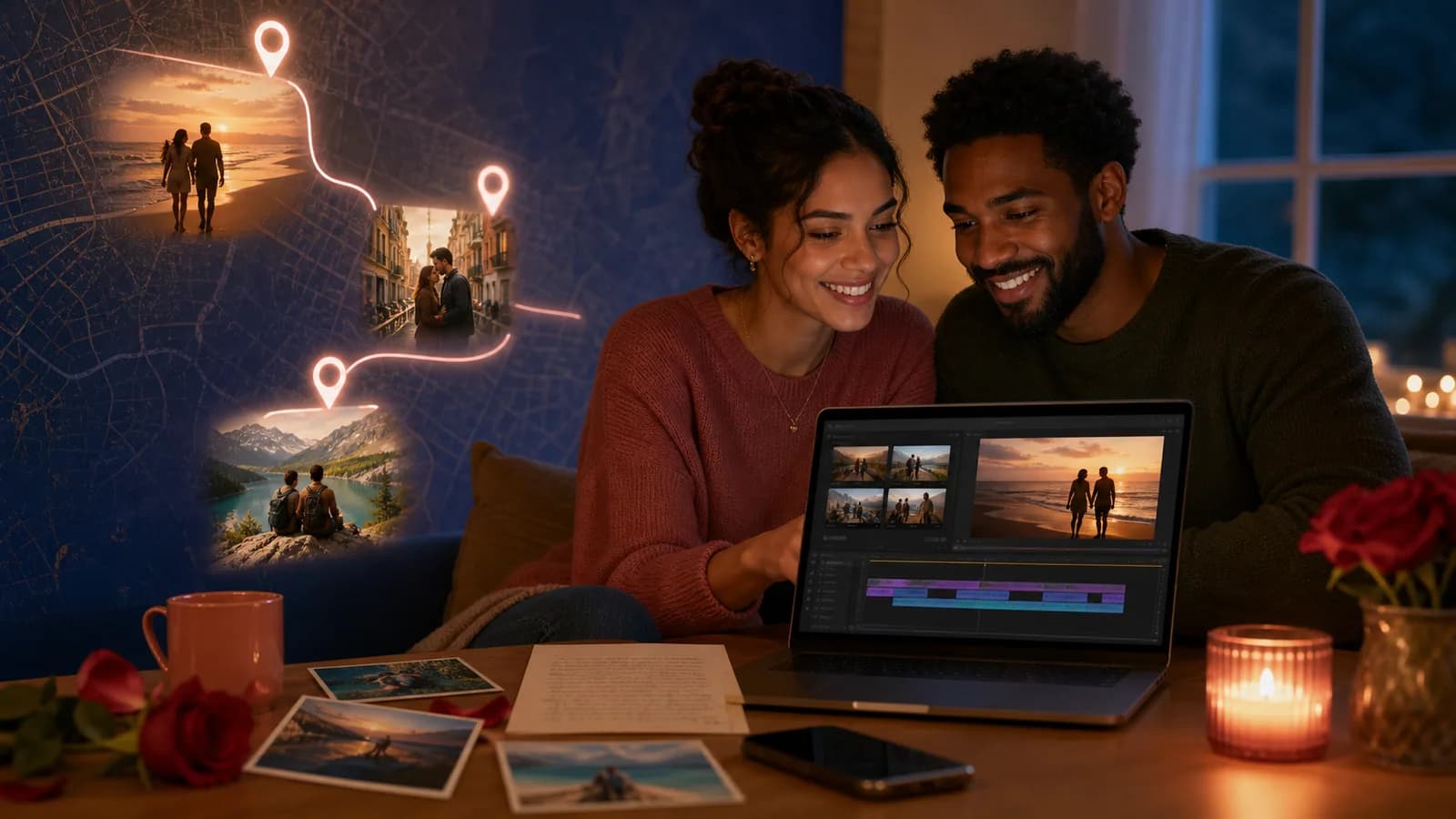
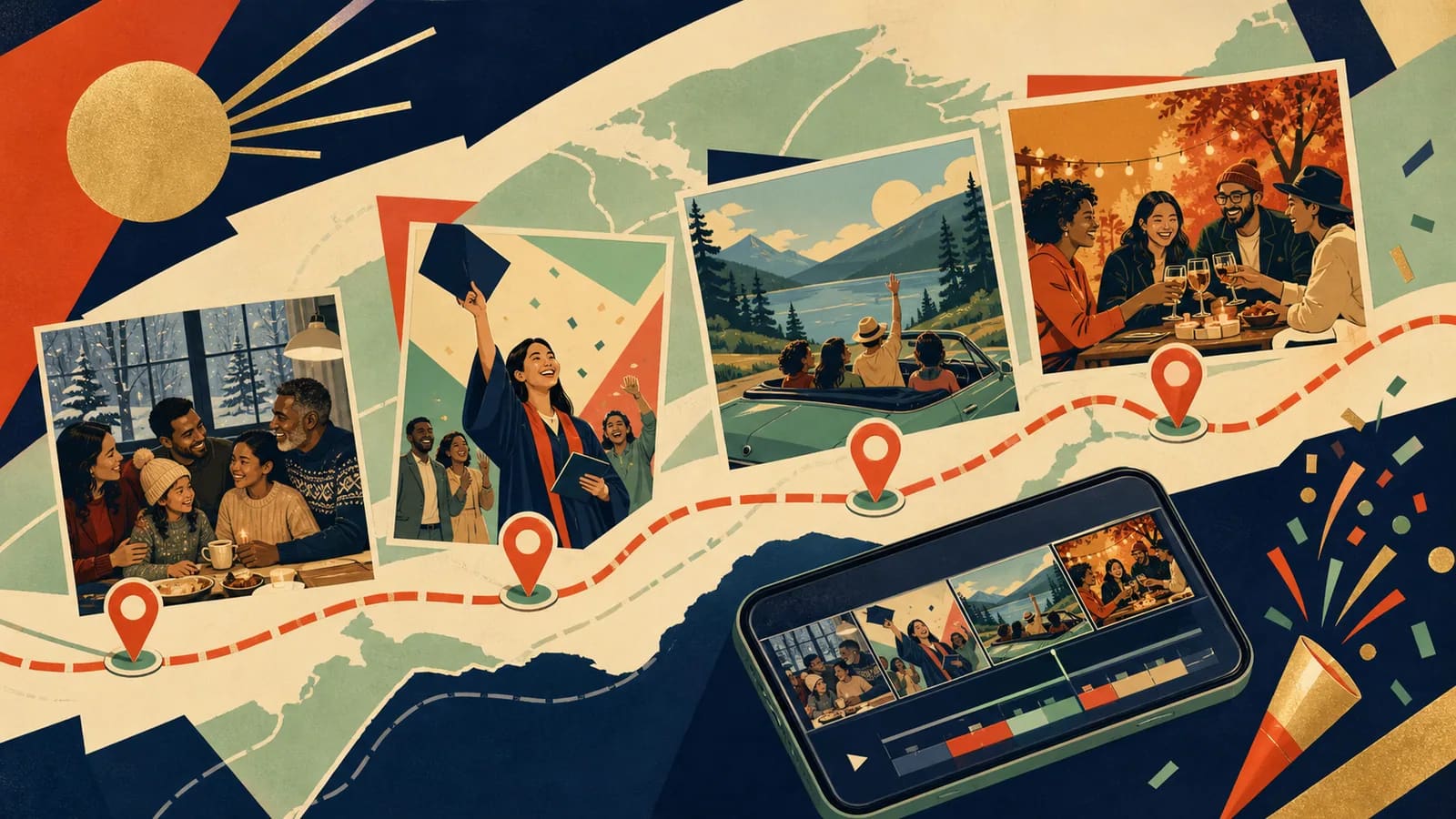
A New Year recap video can do more than place twelve months of photos in a row. It can show where your year took you, who shared it, and which small moments still matter. You might begin at home in January, travel to a new city in summer, and end at the table where everyone met in December. Photos, short clips, written notes, and locations can turn that route into a simple memory story. This guide walks you through the process without asking you to become a professional editor. You will choose a theme, gather the right memories, plan the route, and make a video that feels personal rather than crowded.
Why a map story works for a year in review
A camera roll records moments, but it does not explain how they connect. A map gives those moments a simple frame. Each place becomes a chapter in the year. The viewer can follow the move from one home, city, school, workplace, or travel stop to the next.
The places do not need to be famous. A local park may hold a better memory than a major landmark. The useful question is not, “Was this place impressive?” Ask, “Did something meaningful happen here?”
A map also helps when the year involved change. A move, a new job, a long trip, a graduation, or regular visits with family all have a natural route. Even a quiet year can work. Your stops might be a home, a favorite trail, a relative’s kitchen, and the café where a new friendship began.
How to plan a New Year recap video in seven steps
Start with the story before choosing music or transitions. A clear plan will save time when you open your folders. It will also help you leave out files that do not support the main idea.
The seven steps are simple: choose a point of view, collect memories, select places, build the route, match media to each stop, edit for clarity, and finish with a closing message. You can complete them with a basic editor or use a map-based video tool when locations are central to the story.
Step 1: Choose one point of view
Decide what the video should say about the year. “We grew closer” is a point of view. So are “a year of firsts,” “the places that felt like home,” and “small adventures close to home.” This choice becomes your filter.
Write the idea in one sentence. For example: “This was the year our family found new ways to be together.” Another option is: “This year took me from a nervous beginning to a proud finish.” Keep the sentence nearby while selecting files.
You do not need to hide difficult parts of the year. A gentle mention of change, distance, or loss may make the story more honest. Use care when another person appears in a sensitive memory. Ask before sharing anything private.
Step 2: Gather the moments before you edit
Create one folder for the project. Add smaller folders for each month, season, event, or location. Copy possible photos and clips into them. Keep the original files in their usual storage so you do not lose anything.
Look beyond polished pictures. A short clip of laughter, a handwritten note, a voice message, or a photo of an ordinary meal can carry more feeling than a posed image. Screenshots can help mark a milestone, but crop private details before using them.
Choose a limited set for the first draft. Try one to three strong items per stop. A balanced year-in-review video may include people, places, celebrations, daily life, travel, and one or two quiet moments. It does not need every event from the calendar.
If several people shared the year, invite them to help. Ask each person for one favorite photo or clip, one location, and one sentence about why it matters. A small request is easier to answer than “send everything from this year.”
Step 3: Select places that move the story forward
Make a rough list of locations connected to your chosen memories. A city or neighborhood is often enough. You do not need to publish a home address. For a private family video, you may choose a more exact place only when everyone is comfortable with it.
Give every place a job. It might introduce a person, show a change, mark a milestone, or provide a calm pause. Remove locations that only repeat a point you have already made.
Five to ten stops can create a clear route for many personal videos. Use fewer stops for a short social edit. A longer keepsake can hold more, but each stop should still have time to breathe.
Step 4: Build a route viewers can follow
A calendar route starts in January and moves toward December. It is the easiest choice when time is the main story. Add a short month or season label when the order might not be obvious.
A travel route follows movement between places. It works for a road trip, a move, a study term, or a year spent visiting family. Start where the journey began and end at the place that best represents the present.
A theme route groups memories under ideas such as home, family, friends, work, and adventure. This structure helps when the year did not follow a neat path. You can still arrange the places within each theme.
Sketch the route before editing. Write each stop on a card or note. Under it, list the photo, clip, message, and transition you may use. Move the cards until the order feels natural.
Step 5: Match each stop with the right media and message
Give each stop one main image or clip. Add a second item only when it adds new information. Too many files can make an important moment pass before the viewer understands it.
Use short text to provide context. A useful location card might read, “Halifax — March. Our first weekend in the new home.” A message should add feeling rather than describe what the viewer can already see.
Mix motion with still images. A gentle pan or slow zoom can give a photo room to live on screen. Keep movement simple. The memory should remain the focus.
Written messages can include people who do not want to record. A voice note can also work over a photo. Check that every name and place is spelled correctly. Add captions when a person speaks so the story remains clear without sound.
Step 6: Edit for feeling, not speed
Begin with a moment that makes the theme clear. It could be the year’s most expressive clip, a wide view of the first place, or a short line of narration. You do not have to open with January if another moment creates a stronger invitation.
Let important scenes stay on screen long enough to understand. Fast cuts suit lively sections, while a slower pace can support a reunion or reflective message. Use the rhythm of the story instead of applying one speed to every memory.
Choose simple transitions. A clean cut, fade, or map movement is often enough. If an effect draws more attention than the memory, remove it. Use one or two type styles and keep text large enough for a phone screen.
Pick music that matches the emotional path. Use music you own or have permission to use. Lower the track under spoken clips, and listen with headphones before exporting. Check for sudden volume changes, background noise, and hard-to-hear words.
Step 7: End with the year’s meaning
The closing should answer one question: why did these memories belong together? Return to the point of view you wrote at the start. A family video might end with, “Different places, one year we shared.” A personal recap might close with, “I did not end where I expected, but I found good people along the way.”
Add one final photo, a short group clip, or a quiet map view. Then leave enough time for the last line to be read. Avoid filling the ending with several new ideas.
You can also invite the viewer into the next chapter. Keep it gentle: “Here is to more dinners around the same table,” or “Next year, we keep exploring.” The goal is a warm finish, not a dramatic slogan.
A simple map-story storyboard
Opening: Show a clean map view or one strong image. Add the line, “One year, seven places, and the people who made them matter.” Keep the opening brief.
Beginning: Use the home, school, or workplace where the year started. Add one photo and a sentence that sets the mood. Then move to the first event that changed the year.
Middle: Alternate larger milestones with ordinary memories. A new job can sit beside a weekly walk. A long trip can lead into a quiet visit with a grandparent. This contrast helps the video feel like a life rather than a list of achievements.
Ending: Arrive at the final meaningful place. Add one message about what changed or what stayed steady. Finish with a photo or clip that points toward the coming year.
How to collect memories from other people
Send one clear request with a real deadline. Tell contributors who the video is for, what to send, how long a clip should be, and where to upload it. Give yourself several extra days to review late or unclear files.
Offer a choice. Someone can send a photo, a short clip, a written note, or a voice message. Ask for a location connected to the memory, but explain that a city or general place is enough.
Keep the files in one collection when possible. A single upload link is easier to manage than a mix of texts, emails, and social messages. Review each submission as it arrives. Ask for a replacement early if the sound is missing or the wrong file was sent.
When AlbumMap fits the idea
AlbumMap is useful when the locations are part of the meaning, not just background details. It can bring photos, videos, written messages, and places into a story that moves across a map.
It also helps when several people want to contribute. Instead of asking everyone to use the same editing software, you can collect their parts in one project. A friend might add a summer trip photo, while a relative adds a message from the family home.
You do not need a map for every recap. A simple video montage may suit a single event or a short social post. Choose a map story when the route helps the viewer understand how the year unfolded.
Common mistakes to avoid
Do not use every file. Repetition weakens strong moments. Keep the item that best shows each part of the story and save the rest in your main photo archive.
Do not let the template choose the meaning. A template can help with timing and layout, but your memories should decide the order. Change any section that forces an important clip into the wrong pace.
Do not reveal exact addresses, private conversations, school details, or personal news without consent. Check the audience before sharing. A keepsake for family may contain different details from a public social post.
Do not wait until export to check the video. Preview it on a phone and a larger screen. Read every caption, listen to every voice, and confirm that portrait clips have not been cropped in an awkward way.
Ways to share and keep the finished video
Choose the format for the intended audience. A vertical cut can work for phone viewing, while a horizontal version may feel better on a television or laptop. You can make one full keepsake and a shorter preview instead of forcing one edit to serve every setting.
Share privately when the video contains personal family moments. If you plan to post it publicly, ask the people who appear in it first. Keep a full-quality copy in at least two safe places.
Save the project notes with the finished file. A list of names, dates, and locations will make the video more useful years from now. It can also help you begin the next annual recap without rebuilding your process.
Examples You Can Copy
Copy-ready contributor request
Hi! I am making a private year-in-review video about the places and people that shaped our year. Please send one favorite photo or short clip, the city or place connected to it, and one sentence about why it matters. A 10- to 20-second clip is plenty. Please upload it here by [date]: [link].
Copy-ready follow-up reminder
Quick reminder: memories for our New Year video are due on [date]. One photo, short clip, written note, or voice message is enough. Please include a city or general place if you can. Upload it here: [link]. Thank you!
Copy-ready map stop
Place: Vancouver. Date: July. Message: We planned this weekend for months, but the unplanned picnic in the rain became the part we still talk about.
Copy-ready opening narration
This year did not happen in one place. It began close to home, carried us through new streets and familiar rooms, and ended with more people in the story than we expected.
Copy-ready closing narration
These places look far apart on the map, but each one brought us closer. Thank you for being part of the year we will remember.
Final Thoughts
A good New Year memory video does not need perfect footage or every event from the calendar. It needs a clear idea and a small set of honest moments. Choose the places that shaped the year. Pair each one with a photo, clip, or message that explains why it mattered. Then give the story a beginning, a path, and a calm ending. If your memories come from several people or locations, AlbumMap can help you collect them and turn the route into one map-based keepsake.
Helpful answers
Frequently asked questions
- How long should a New Year recap video be?
- A short social version may run for 30 to 60 seconds. A private keepsake can be two to five minutes when it includes several places or messages. The best length is the shortest one that lets each important moment feel clear.
- How many photos and clips should I include?
- Start with one to three strong items for each story stop. Five to ten stops are enough for many personal videos. Remove repeated images and any clip that does not add a person, place, feeling, or change.
- Should I organize a year-in-review video by month or by place?
- Use months when the passage of time is the main story. Use places when travel, moving, family visits, school, work, or long-distance relationships shaped the year. You can combine both by placing the route in time order.
- Can other people contribute to the memory video?
- Yes. Ask each person for one photo or short clip, one location, and one sentence about the memory. Give them a clear deadline and one upload link. Written notes and voice messages are useful alternatives for people who do not want to appear on camera.
- What if most of my memories happened close to home?
- A meaningful map does not require long trips. Use the home, park, school, café, workplace, walking route, or relative’s house that shaped your year. A few nearby places can still tell a full story.
- Do I need special editing skills to make a map story?
- No. Begin with a written route and a small set of media. Keep transitions, captions, and music simple. A basic editor can create a montage, while a map-based tool such as AlbumMap can help when locations and group contributions are central to the story.