Birthday Video Ideas for Mom, Dad or a Grandparent
A birthday video for parents can be much more than a row of people saying happy birthday. It can show Mom, Dad, or a grandparent how their care has shaped the family. The best videos mix warm messages with real memories, familiar faces, and a little humor. You do not need advanced editing skills or a large budget. Start with one clear idea, ask contributors for short clips, and arrange everything into a simple story. This guide will help you choose a format and make the video from start to finish.
The quick answer: what makes this birthday video special?
Choose a theme that fits the person, not just their age. A funny family video may suit a playful dad. A story built around old homes and trips may suit a mom who saves every photo. A grandparent may enjoy seeing messages from children, grandchildren, old friends, and distant relatives.
Specific details make the gift feel personal. Ask people to name a lesson, habit, place, or memory. A true story about Sunday dinners will usually mean more than a polished but general compliment.
Choose one main birthday video idea
A clear format makes the project easier for everyone. It also keeps the final video from feeling like a random folder of clips. Choose one main idea, then add photos or short surprises around it.
Good options include a life-in-chapters video, a collection of lessons, a family traditions video, or a story about meaningful places. You can also build a simple group montage if time is short. The next ideas work for Mom, Dad, or a grandparent.
1. Tell their story in chapters
Divide the video into parts such as childhood, early adulthood, family life, favorite adventures, and today. Add a few photos from each period. Invite people connected to each chapter to share a short memory.
Keep the story focused on moments that still matter. A childhood friend might describe a harmless adventure. An adult child could share a family tradition. A grandchild can end the video with a wish for the next chapter.
2. Make a video about what they taught you
Ask each person to finish one sentence: “You taught me…” The answers can be sincere, funny, or both. Someone may mention patience, courage, cooking, fixing things, or always calling family back.
This format works well when contributors do not know one another. Everyone receives the same simple prompt, yet the answers stay personal. Arrange the clips by theme, then close with a direct thank-you from the organizer.
3. Build a story around meaningful places
Some family memories are tied to a home, town, school, cottage, park, restaurant, or travel route. Ask contributors to record near those places when possible. They can also send a photo and explain why the location matters.
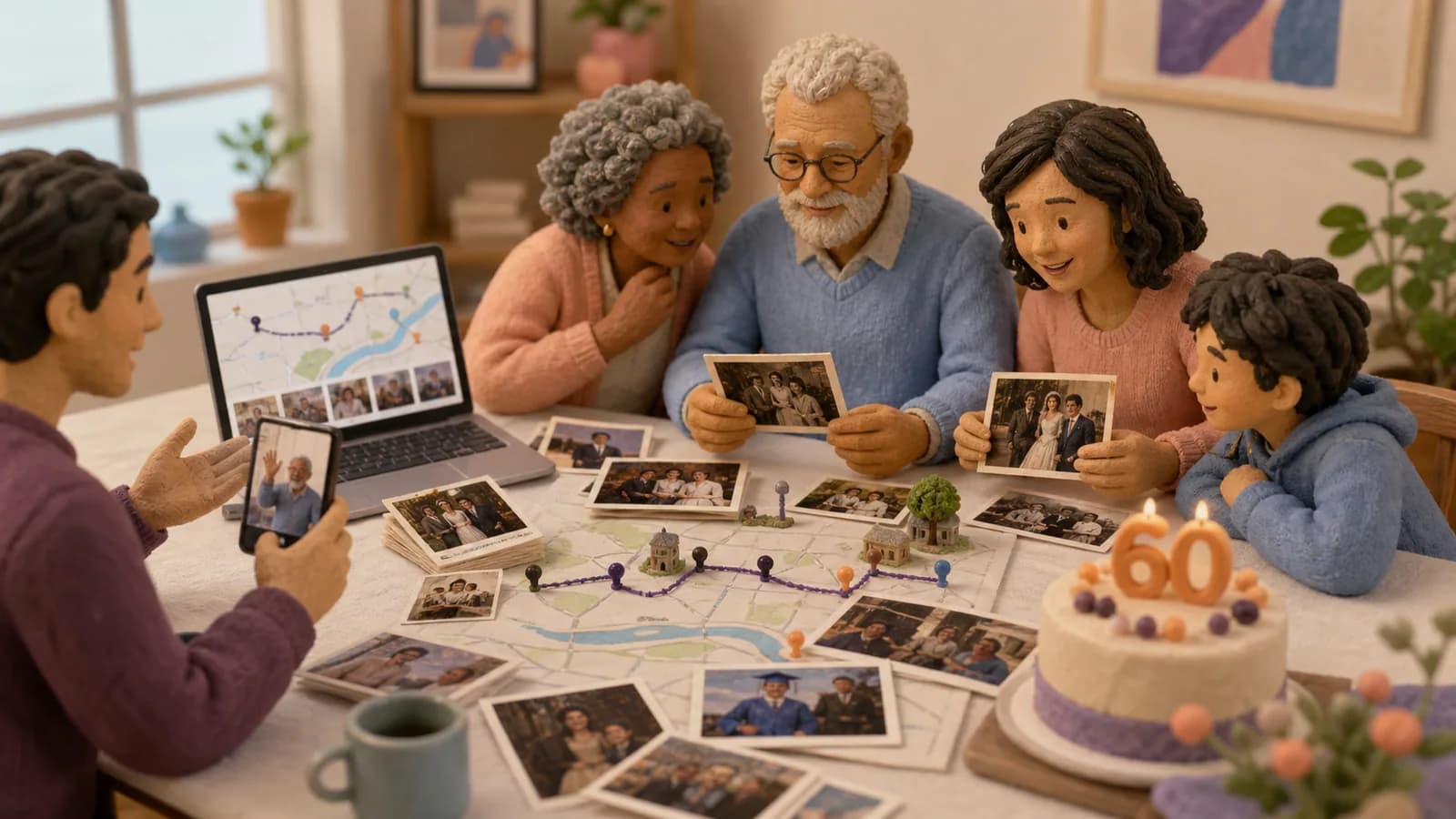
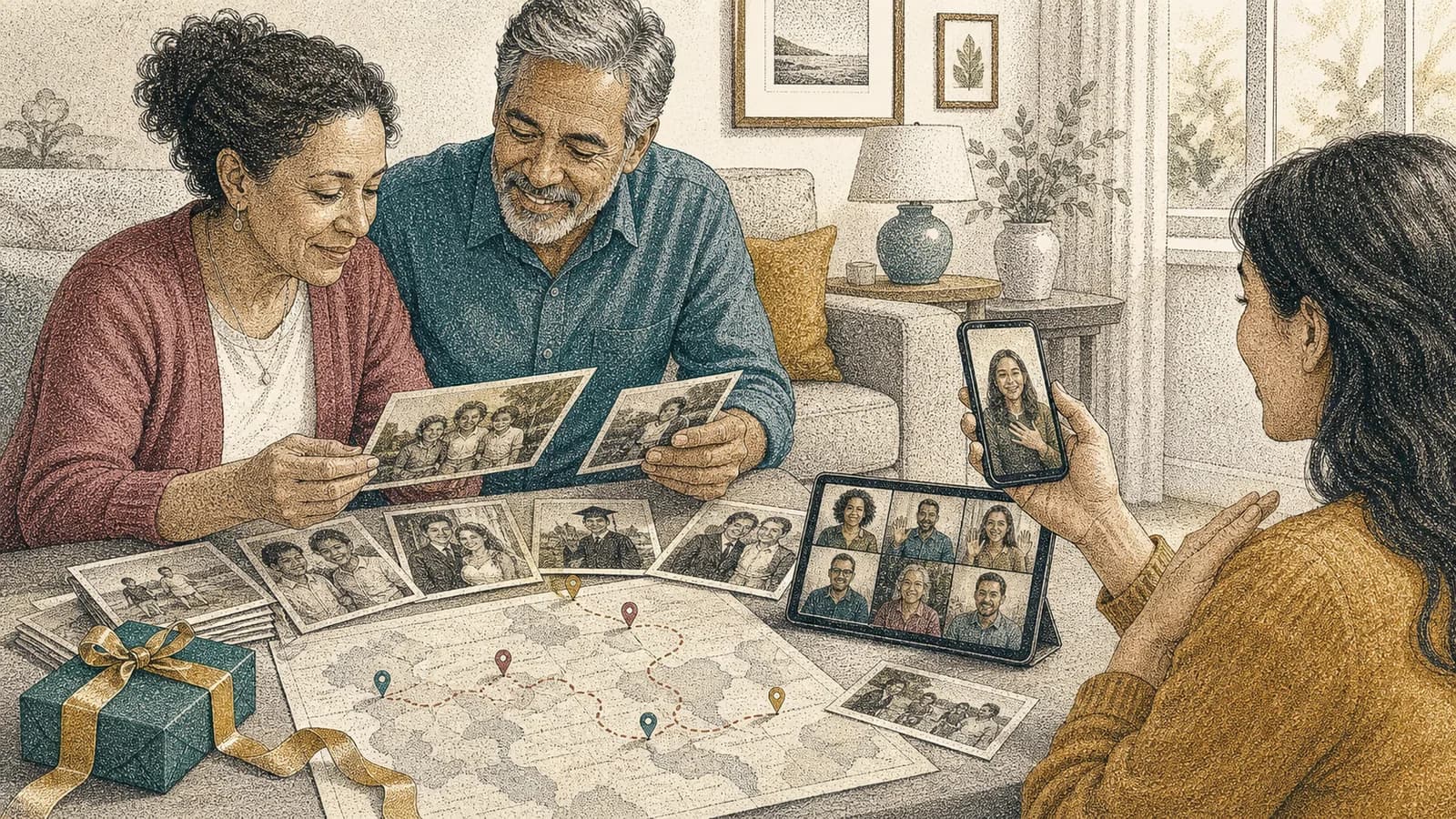
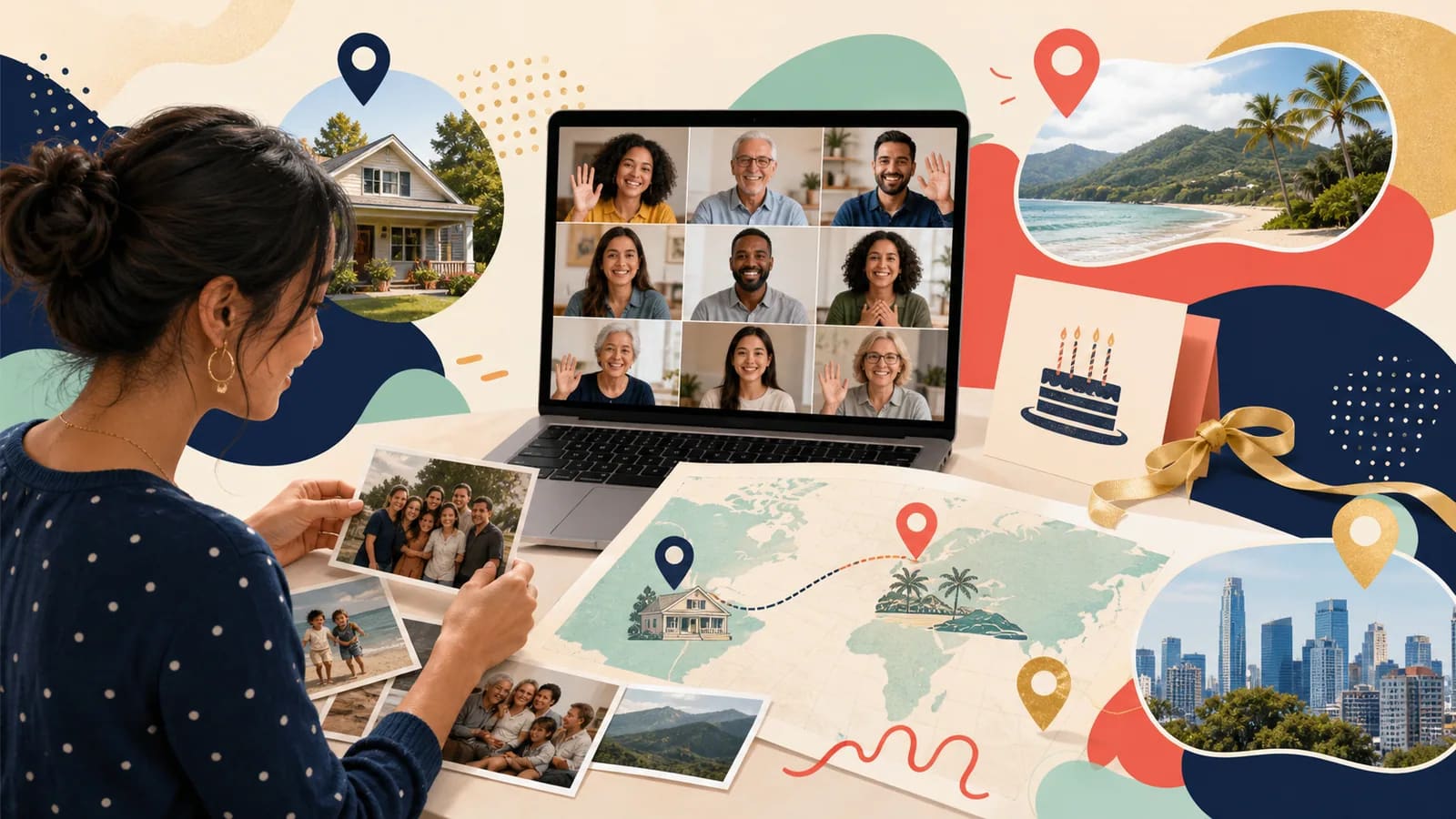
This is where an AlbumMap video can add a useful layer. Photos, clips, written notes, and locations can follow a map-based route. The finished video can move from where the family began to the places that shaped it. Use this idea only when locations are a real part of the story.
4. Celebrate family traditions and everyday moments
Big events are not the only memories worth saving. Build the video around small things the birthday person does: a holiday recipe, a favorite saying, a weekly call, a garden tour, or a game they always win.
Ask relatives to recreate a tradition or show an object connected to it. These clips add movement and humor. They also show how one person's habits became part of family life.
5. Mix then-and-now photos with new messages
Pair an older photo with a new clip from someone shown in it. The contributor can explain what happened that day and what the relationship means now. This creates a natural link between the past and present.
Do not fill the whole video with old photos. Include recent hobbies, friendships, and plans too. A milestone birthday should honor the past without making life feel finished.
6. Let grandchildren lead one section
Children do not need a perfect script. Give them one easy prompt, such as “What do you love doing with Grandma?” or “What is Grandpa really good at?” Short, honest answers often become favorite moments.
Young children can draw a picture, sing a short greeting, show a shared activity, or wave to the camera. Keep their natural pauses and laughter when the sound is clear.
Adjust the idea for Mom, Dad, or a grandparent
For Mom, consider care she gave, traditions she created, places she made feel like home, and interests that belong to her. Avoid making the whole video only about what she does for other people.
For Dad, mix appreciation with details about his humor, advice, hobbies, or quiet ways of helping. For a grandparent, include memories from more than one generation. Old friends and relatives can show parts of their story that younger family members have never heard.
How to plan a birthday video for parents in seven steps
First, choose the theme and target length. A focused video of five to ten minutes is often easier to enjoy than a long collection with repeated messages. A larger milestone video can run longer when the stories stay varied.
Second, list contributors from different parts of the recipient's life. Third, send one clear request with a deadline. Fourth, ask for clips of a similar length. Thirty to sixty seconds works well for most people.
Fifth, collect useful extras such as photos, written notes, dates, and locations. Sixth, arrange the material into a beginning, middle, and ending. Seventh, watch the full video twice: once for the story and once for sound, spelling, and missing names.
Give contributors prompts that lead to better stories
A broad request to “say something nice” can leave people stuck. Offer two or three choices. Ask for a favorite memory, a lesson they learned, a quality they admire, or a wish for the year ahead.
If you want a location-led story, ask where the memory happened. You can also ask for one related photo. Make it clear that contributors only need to answer one prompt, not every question.
Simple recording tips for every generation
Ask contributors to record in a quiet place and face a window or soft lamp. The camera should be steady and close enough for clear sound. Looking at the lens makes the message feel more direct.
Tell people to pause for a second before and after speaking. This gives the editor room to cut the clip. A small mistake is fine if the message still feels natural. Clear sound and honest words matter more than a perfect take.
Use simple privacy rules. Get permission before including sensitive stories or posting the finished video publicly. Keep the sharing link private if the family wants the gift to stay within a small group.
Arrange the video so it feels like one story
Open with a recent photo, a short greeting, or a title showing the birthday and name. Follow with a lively or funny clip so the video begins warmly. Place deeper messages in the middle, with lighter moments between them.
Group related clips together. Lessons can follow lessons, while place-based memories can move in a clear route. Use short title cards only when they help the viewer understand a date, person, or location.
End in the present. Show a recent photo, a family group message, or wishes for the coming year. This keeps the birthday video hopeful and celebrates who the person is now.
How to present the finished birthday video
At a party, test the screen, speakers, and internet connection before guests arrive. Keep a downloaded backup when possible. Choose a quiet point in the celebration so people can hear the messages.
For a long-distance birthday, send the private link during a video call and watch together. You can also add a QR code to a printed card. Test the code on more than one phone before giving it.
Common mistakes to avoid
Do not invite so many people that the video becomes repetitive. A smaller group with specific stories can feel more personal. Give contributors a firm deadline several days before you plan to edit.
Avoid using every photo you receive. Pick images that support the theme and can be seen clearly. Keep transitions simple, check music volume under speech, and confirm that names and dates are correct.
Most of all, do not make the whole video about age. Celebrate the person's current life, interests, relationships, and plans. The goal is to help them feel known, not placed in an archive.
Examples You Can Copy
Birthday message for Mom
Happy birthday, Mom. I still think about our Saturday walks to the little library when I was young. You made ordinary afternoons feel like adventures. Thank you for teaching me to stay curious and make time for people I love. I hope this year brings you many new places to explore.
Birthday message for Dad
Happy birthday, Dad. You have helped me through more problems than I can count, usually with calm advice and one very bad joke. I am grateful for the way you always show up. I hope your next year includes more fishing, more family dinners, and fewer things for us to ask you to fix.
Birthday message for a grandparent
Happy birthday, Grandma. My favorite memory is making your apple pie together and pretending we did not eat half the filling. You have given our family so many traditions and stories. I love you, and I cannot wait for our next afternoon in the kitchen.
Group video invitation
Hi everyone. We are making a surprise birthday video for Dad. Please send a 30- to 60-second clip by July 30. Share one memory, one lesson he taught you, or one wish for his next year. Record somewhere quiet with the phone held steady. If your story connects to a photo or place, please send that too.
Place-based contributor prompt
Choose one place that reminds you of Mom. It could be a home, town, park, school, restaurant, or travel stop. In your clip, tell us what happened there and why you still remember it. Please include one photo if you have one.
Final Thoughts
A meaningful birthday video does not need complex effects. It needs a clear idea and details that could only belong to your family. Choose one format, give contributors useful prompts, and keep the story moving. If the memories connect to homes, trips, or other important places, AlbumMap can bring the photos, messages, clips, and locations into one map-based video gift. The result can celebrate not only how old someone is, but the people and places that shaped their life.
Helpful answers
Frequently asked questions
- How long should a birthday video for a parent be?
- A focused video of five to ten minutes works for many families. A larger milestone video can be longer if the clips are varied. Ask most contributors to record for 30 to 60 seconds, then remove repeated ideas during editing.
- What should I ask family members to say?
- Ask each person for one favorite memory, one lesson they learned, one quality they admire, or one wish for the next year. Specific prompts are easier to answer than a general request for a birthday greeting.
- How far ahead should I start collecting clips?
- Start two to four weeks before the birthday when many people will contribute. Set the submission deadline several days before you need the final video. That leaves time for reminders, editing, and technical checks.
- Can I make a good birthday video without old photos?
- Yes. Use new video messages, stories, drawings from grandchildren, short clips of familiar places, or scenes from current family life. A strong theme and honest details matter more than having a large photo archive.
- How can I include relatives who are not comfortable with technology?
- Offer simple choices. They can record with help from a nearby relative, send a written message, provide a photo, or join a short call that you record with permission. Explain only the step they need to complete.
- When does a map-based birthday video make sense?
- It works best when family memories connect to meaningful locations. These may include a childhood home, a hometown, a school, a favorite holiday spot, or places visited together. The locations should help tell the story rather than act as decoration.