Long-Distance Family Video Ideas That Bring Everyone Together
A long-distance family video can turn scattered updates into time spent together. It can include a live call, recorded messages, old photos, or a story told across several places. The best idea is not always the most polished one. It is the one your family will actually enjoy making and watching. This guide offers simple formats for children, grandparents, busy adults, and relatives in different time zones. You will also find recording prompts, copy-ready invitations, and a clear plan for bringing every contribution together.
Why family video works across long distances
Texts and group chats are useful, but they can move quickly. A video lets everyone see a face, hear a voice, and notice the small details that written updates miss. It also gives children a clearer sense of relatives they do not see often.
Live calls create an immediate connection. Recorded clips solve a different problem. People can contribute when they are free, even if the family is spread across many time zones. The final video can then be watched together or saved for later.
You do not need to choose between live and recorded video. Many of the best family video ideas use both. Record short clips during the week, then play them during a relaxed family call on the weekend.
Choose the purpose before choosing the format
Start by deciding what the video should do. It might help relatives share everyday news, welcome a new baby, celebrate a family milestone, preserve stories, or support someone through a hard season. A clear purpose makes every later choice easier.
Next, decide whether the video will be live, recorded, or a mix. Live video suits games and natural conversation. Recorded video gives people time to think and makes scheduling easier. A mixed format lets everyone take part in a way that feels comfortable.
Keep the first project small. Ask for one clip from each household instead of trying to document the whole family history. A finished three-minute video creates more connection than an ambitious project that never gets completed.
Long-distance family video ideas for everyday connection
A weekly family newsreel is an easy place to begin. Each household records one short update about its week. Children can show a drawing, a new skill, or something they found outside. Adults can share a meal, a small win, or a funny moment.
Try a show-and-tell exchange for younger children. Ask each person to bring one object and explain why it matters. A grandparent might show an old photo. A cousin might introduce a pet. The objects give everyone something concrete to discuss.
You can also make a family question of the month. Choose one prompt, such as “What meal reminds you of home?” or “What did you enjoy at my age?” Collect the answers and watch them together. Over time, the clips become a simple family archive.
For a lighter idea, record the same small challenge in every home. Families might cook one recipe, sing one chorus, complete a scavenger hunt, or show the view from their window. The shared task creates a sense of doing something together.
Ideas for milestones and family changes
A new baby video can introduce distant relatives before an in-person visit is possible. Ask family members to say their name, explain their relationship, and share one gentle wish. These clips can later help the child connect names with familiar faces and voices.
For a graduation, retirement, move, or new job, ask each person for one memory and one hope for the next chapter. Specific stories will feel warmer than a line of similar congratulations. Photos from earlier years can help show what changed.
A reunion countdown video can build excitement before the gathering. Each household can introduce who is coming, share a travel update, or name one activity it hopes to do. Relatives who cannot attend can still send messages for the group to watch.
During a difficult period, keep the project calm and private. Ask for brief messages of support, familiar stories, or quiet everyday updates. Do not pressure the recipient to respond on camera. The video should offer connection without creating another task.
Build a family memory video around places
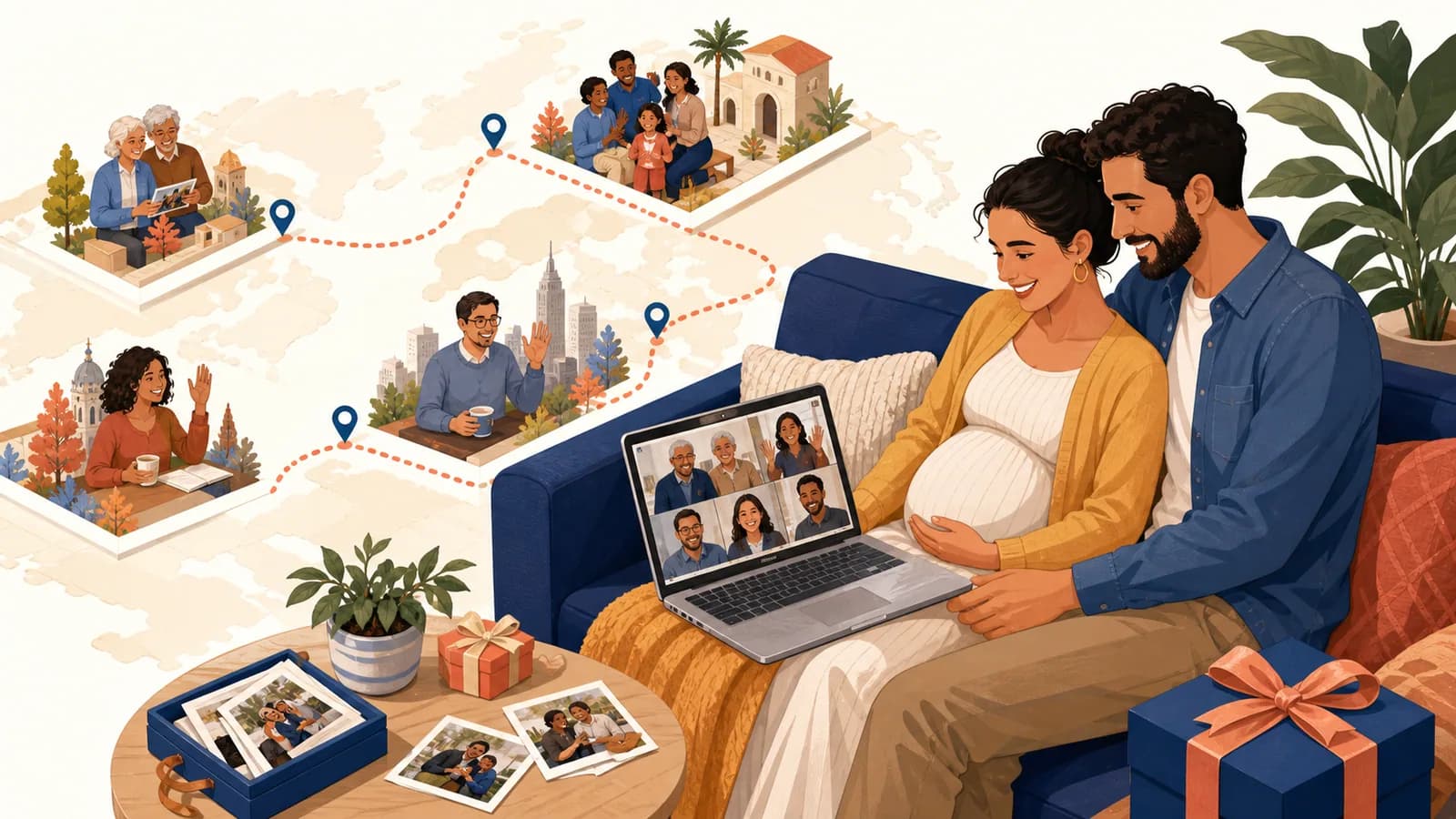
Places can give a group video a clear structure. Start with a family home, then move through schools, neighborhoods, vacation spots, and the cities where relatives live now. Each stop can hold a photo, a short clip, or a written note.
This approach is helpful when the family has moved many times or lives across several countries. Instead of treating distance as a problem, the video shows the full shape of the family. A message from each city becomes part of one shared route.
AlbumMap can help when you want to collect photos, videos, messages, and locations through one project. The finished map video can move between meaningful places, making the connection between each memory easier to follow. Use this option when location adds something real to the story, not just as decoration.
Give everyone one clear recording prompt
People often delay because they do not know what to say. A short prompt removes that pressure. Ask for one idea per clip and give a suggested length. Twenty to forty seconds is enough for most updates, memories, and greetings.
Useful prompts include: “Show us one part of your day,” “Share a memory from our old family home,” and “Tell us what made you laugh this week.” For a family milestone, try: “What do you admire about this person?” or “What do you hope they enjoy next?”
Children may find a task easier than a question. Invite them to draw a picture, perform a dance, read a short page, or show a favorite toy. Older relatives may prefer telling a story or describing an old photograph.
Tell contributors that natural clips are welcome. They do not need a speech, special equipment, or a perfect background. A clear voice and a specific thought matter more than polished production.
Make recording easy for every generation
Send simple instructions in the same message as the prompt. Ask people to face a window or lamp, hold the phone steady, and record in a quiet room. They should leave a short pause before and after speaking. These small steps make editing much easier.
Choose one phone direction before anyone starts. Horizontal clips often suit a television or laptop. Vertical clips may suit a phone-first project. Consistency helps, but do not exclude an important family message because its shape is different.
Offer another way to contribute. Someone who dislikes recording can send a written note, photo, or voice recording. A family member can also help an older relative record. Inclusion matters more than making every clip match.
Avoid sending files through many separate chats and email threads. Use one upload link or one shared collection point. Name the deadline and include the time zone so nobody has to guess.
Create a simple order that feels like a story
A clear order keeps the video from feeling like random clips. For a weekly update, arrange households by location or family branch. For a memory project, move from older stories to newer ones. For a celebration, begin with energy and end with a close relative.
Use short title cards only when they help. A name, city, year, or family connection may be enough. Avoid long blocks of text that viewers must pause to read.
Mix talking clips with photos and small details. A picture of the old family kitchen can lead into a grandparent's story. A photo from a first school day can introduce a graduation message. This variation gives the viewer a moment to breathe.
Keep repeated thoughts to a minimum. If five people give the same general greeting, save the clearest versions and look for specific details in the others. Every section should add a new face, memory, place, or feeling.
Plan a viewing that includes everyone
For a live viewing, send the call link and time early. If relatives live across many zones, choose the least difficult option and share a recording with anyone who cannot join. Do not make one household attend at an unreasonable hour every time.
Keep the call simple. Welcome everyone, explain what they will see, play the video, and leave space for conversation afterward. Use screen sharing with computer audio enabled. Test the video with one relative before the full call.
An asynchronous viewing can work just as well. Send the video with a warm note and invite people to reply when they have time. Families can post reactions in the group chat or schedule a shorter follow-up call.
For a gift or milestone, pair the link with a printed card or private message. A QR code can make the video easy to open, but include a normal link as a backup. Always think about who should have access before sharing it widely.
Keep the project private and comfortable
Ask permission before using sensitive photos, children's clips, medical updates, or personal stories. Tell contributors who will see the final video and where it will be stored. A family project should not become a public post by accident.
Let people skip a prompt or submit a different kind of message. Some relatives enjoy being on camera, while others do not. A written memory or photograph can be just as meaningful.
Check every contribution before the group viewing. Remove private details that were shared by mistake. Make sure names are correct and the sound is clear enough to understand. Add captions when they will help relatives follow the video.
Save the finished file in a place the family controls. Keep a backup if the video holds important stories. You may also save the original clips, especially when they include grandparents, young children, or memories that cannot be recorded again.
A simple seven-day family video plan
On day one, choose the purpose, prompt, and final format. On day two, make the contributor list and send one clear invitation. Give everyone four days to respond, with the exact deadline and time zone.
On days three and four, review contributions as they arrive. Thank each person and request a new clip only when the sound or content cannot be used. On day five, send one kind reminder to anyone who has not responded.
On day six, arrange the clips, photos, and notes. Add only the titles and music that support the story. On day seven, check the full video on the device you will use and share it with the family.
If the project feels too large, reduce the number of prompts. One thoughtful answer from each household is enough. You can always make a second video later.
Examples You Can Copy
Copy-ready invitation for an everyday family update
Hi everyone! We are making a short family update video so we can feel closer between visits. Please record a 20- to 40-second clip showing one thing from your week. A meal, pet, view, drawing, or quick story is perfect. Upload it here by [date and time zone]: [link]. Natural phone videos are welcome.
Copy-ready family memory prompt
Please choose one family place and share a short memory from it. It could be a home, school, park, restaurant, vacation spot, or hometown. Send one photo if you have one, plus a short video or written note explaining why the place matters. Please add everything here by [date]: [link].
Copy-ready milestone request
We are making a family video for [person and occasion]. Please record one brief message with a favorite memory, something you admire about them, or a hope for their next chapter. Aim for 30 seconds, but do not worry about making it perfect. Upload your clip here by [date and time zone]: [link].
Copy-ready reminder
Friendly reminder that our family video clips are due on [date]. A short, natural phone recording is all we need. If recording is difficult, you can send a photo or written note instead. Add your contribution here: [link]. Thank you for being part of it.
Final Thoughts
Distance changes how families spend time together, but it does not have to remove the small moments that build closeness. Start with one clear purpose and one easy prompt. Make room for live calls, recorded clips, photos, stories, and written notes. Keep the project short enough to finish and personal enough to matter. When your family's story is tied to many homes, cities, or meaningful places, a map-based video can help everyone see how those separate points still belong together.
Helpful answers
Frequently asked questions
- How long should a long-distance family video be?
- For a simple update, aim for three to six minutes. A larger milestone video may run longer if every section adds something new. Ask each household for a 20- to 40-second clip. Trim long pauses and repeated greetings before removing unique stories.
- What can relatives say if they feel awkward on camera?
- Give them one specific prompt. They can share a small update, describe an old photo, tell a favorite memory, or offer one wish. Let them send a written note, photo, or voice recording if video feels uncomfortable.
- How can we include relatives in different time zones?
- Collect recorded clips first so people can contribute at a convenient time. If you plan a live viewing, include the time zone in every invitation and send the finished video to anyone who cannot attend.
- What is the easiest way to collect family video clips?
- Use one upload link or collection point for everyone. Send the prompt, clip length, deadline, time zone, and link in one message. Review clips as they arrive so there is time to solve any problems.
- Can children and grandparents take part?
- Yes. Give children a simple show-and-tell task. Invite grandparents to tell a story or explain an old photo. A relative can help with recording, and written notes or photos can replace video when needed.
- When does a map-based family video make sense?
- A map-based video is useful when relatives live in different places or memories are tied to homes, schools, trips, and hometowns. The map gives the video a clear path and helps viewers understand how the separate stories connect.
- How should a family protect privacy?
- Tell contributors who will see the video and ask permission before including sensitive material. Review every clip, use a private sharing method, and avoid posting children's videos or personal family updates publicly without clear consent.