How to Make a Baby Shower Video for the Parents-to-Be
A baby shower video can give the parents-to-be something that diapers and blankets cannot. It lets them hear support from the people who care about them. Friends can share kind wishes, grandparents can tell family stories, and distant relatives can join from anywhere. The result does not need studio-quality filming. It needs clear prompts, honest messages, and a simple plan. This guide will help you choose contributors, collect clips, shape the story, and share the finished gift at the right moment.
Why this gift can mean so much
Many shower gifts focus on what the baby will need. A video can focus on the two people preparing for a major change. It gives friends and family room to encourage them, make them laugh, and remind them that help is nearby.
Video also preserves details that a card cannot. The parents can hear a grandparent’s voice or see a friend’s familiar smile. They can replay those messages after the party, including on a difficult day when support matters most.
This idea is especially useful when loved ones live far away. They do not need to join one scheduled call. Each person can record when it suits them, and the organizer can bring every contribution together.
How to plan your baby shower video
Begin with one sentence that explains the purpose. For example: This video will remind Sam and Jordan that their family and friends are ready to support them. A clear purpose helps you decide which messages, photos, and jokes belong.
Next, choose a tone. It might be gentle, funny, hopeful, or a mix of all three. Think about the parents rather than the crowd. A public, emotional surprise may suit one couple, while another couple may prefer to watch in private.
Set a target length before inviting anyone. A focused video is easier to watch than a long stream of similar wishes. You might ask for clips of 15 to 30 seconds, then use a few longer messages from close relatives.
Choose one organizer to collect files and answer questions. Give that person a deadline, a contributor list, and control of the final order. This prevents several versions from appearing in different chats.
Choose contributors who know the parents well
You do not need to invite every shower guest. Start with people whose faces will bring comfort or a happy surprise. This may include siblings, grandparents, close friends, cousins, coworkers, neighbors, and relatives who cannot attend.
Aim for a mix of relationships. A sibling may remember the parents before they met. A longtime friend may share a story about their relationship. A coworker can offer a short message about the care or patience they see each day.
Include both parents when that fits the family. Ask contributors to speak to them as people, not only as future caregivers. The gift should celebrate the family in the way they describe and understand themselves.
A small group with specific things to say can be stronger than a large group repeating congratulations. If only three people want to take part, make those three messages thoughtful. Add a few photos or written notes to create variety.
Give everyone an easy message prompt
A blank request can make people nervous. Send one or two prompts with the invitation. Contributors will sound more natural when they know where to begin.
Useful prompts include: What do you admire about the parents-to-be? What is one wish you have for their growing family? Which memory shows that they will make a caring team? What practical help would you be glad to offer after the baby arrives?
Ask for advice with care. Parenting advice can sound like criticism when it is too firm or personal. Invite people to share something that helped them, not a rule the parents must follow.
You can also ask for a message the couple may need later. A friend might remind them that asking for help is normal. A relative might promise to bring a meal, run an errand, or listen without judging.
Avoid prompts about medical choices, birth plans, feeding, names, or other private details unless the parents have asked for them. Kind support is safer than a debate about what they should do.
Help contributors record clear, relaxed clips
Simple phone videos are enough. Ask each person to face a window or another soft light. They should place the phone near eye level and choose a quiet room.
Tell contributors whether to record vertically or horizontally. Choose one format for the final video and mention it in the invitation. A consistent direction makes the finished piece feel calmer.
Ask people to look at the camera and leave a short pause before and after speaking. Those pauses make editing easier. They should speak clearly, but they do not need to memorize a speech.
Suggest one quick test before they send the file. They should check that their voice is easy to hear and their face is not hidden in shadow. A natural clip with clear sound is better than a perfect-looking clip with poor audio.
Do not ask contributors to record children or share personal family images without the right permission. Tell everyone who will see the finished gift and whether it may be shown at the shower.
Collect messages without chasing files across several apps
Send one request with the purpose, prompt, recording length, format, deadline, and upload method. Keep every detail in the same message. People are more likely to help when the task feels small and clear.
Set the deadline several days before you need the finished video. This leaves time for one reminder and a few late clips. State the actual deadline instead of saying soon or whenever you can.
Use one shared collection method when possible. Email attachments and group chats can lower video quality or separate files from names. A contribution link can keep clips, photos, written notes, and contributor details together.
Track only the people who agreed to join. Send one friendly reminder before the deadline. If someone cannot record, offer a written message or photo as an easier option.
Build a simple beginning, middle, and ending
Open with a short title, a calm photo, or a message from the organizer. Explain that the gift comes from people who want the parents to feel supported. Keep this opening brief so familiar faces appear quickly.
In the middle, vary the mood and the speakers. Place a warm message beside a light joke. Add photos between groups of clips. If several people give advice, spread those messages through the video instead of placing them together.
You can organize the middle by relationship. Start with friends, move to relatives, then end with the closest family. Another option is to follow the parents’ story, from childhood and the place they met to their home today.
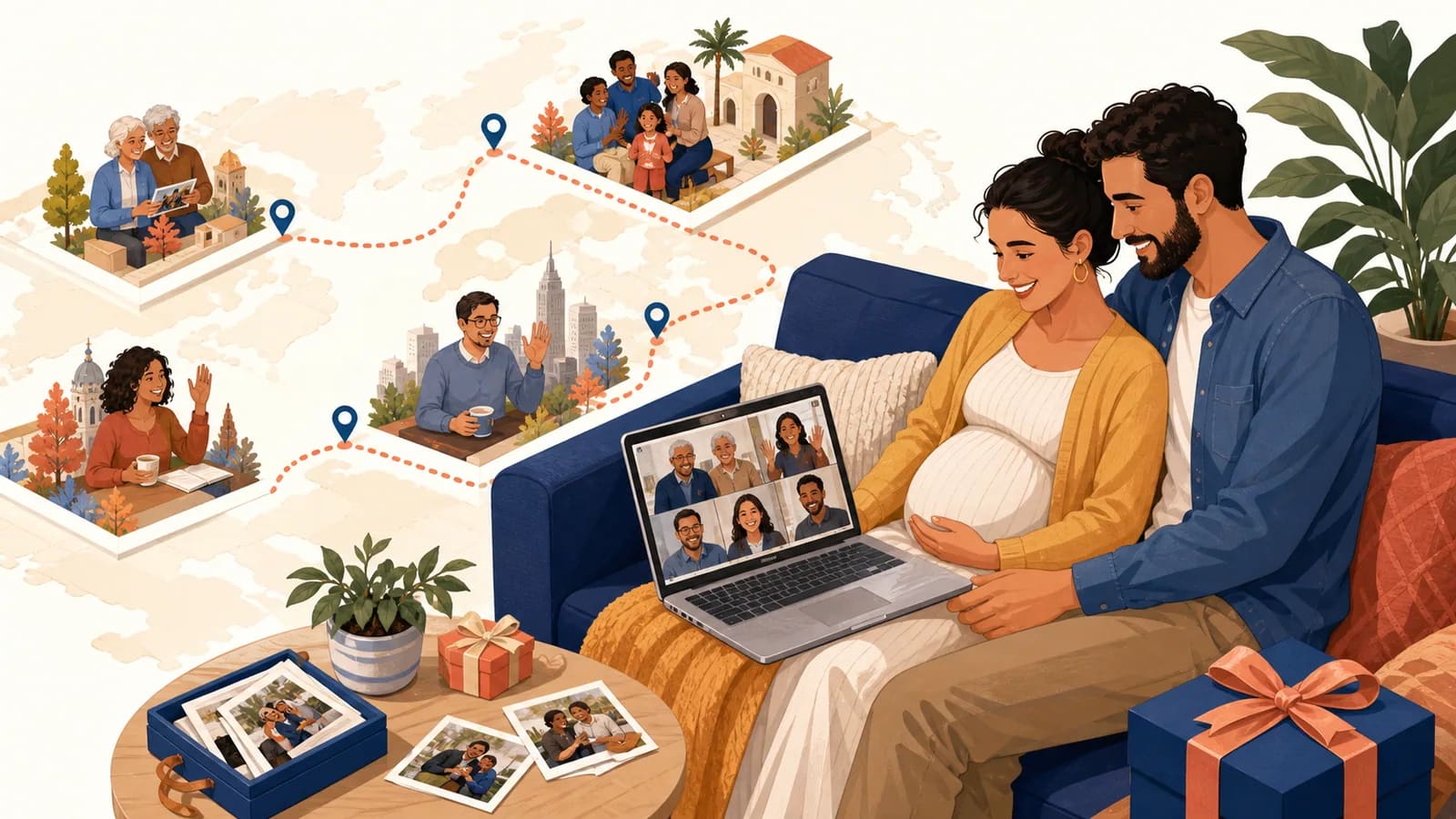
A place-based order can work well for a family spread across different cities. The video might begin at each parent’s hometown, visit a shared school or trip, and finish at the home where they are preparing for the baby. Each stop can hold a photo, clip, or note.
End with a message that includes both celebration and support. A close friend might thank everyone for taking part, then remind the couple that the same people will be there after the shower. Leave the final frame on screen long enough to read.
When a map-based story adds meaning
A standard montage works well when the main focus is the faces and voices. A map-based version is useful when the family story is tied to places. These places may include childhood homes, the city where the couple met, a favorite trip, or the cities where relatives now live.
AlbumMap can collect photos, short videos, written messages, and locations in one project. The finished video can move between those places. This creates a path through the family story instead of showing unrelated clips in a row.
Keep the map focused. Choose places that explain a relationship or memory. A pin should add context, not act as decoration. Three meaningful stops can tell a clearer story than twenty weak ones.
For example, begin in each parent’s hometown. Move to the place where they met, then to a family gathering spot. Finish with messages arriving from the cities where grandparents, siblings, and friends are cheering them on.
This approach is not needed for every shower. Use it when locations help the parents understand why each memory matters. If the places do not add to the story, a simple group montage may be the better choice.
Edit with warmth, not clutter
Start by trimming long pauses and repeated lines. Keep the strongest part of each message. Do not cut so tightly that people sound rushed or unnatural.
Use simple transitions. Flashy effects can compete with the speakers. Photos, short title cards, and gentle changes between clips are often enough.
Choose music that fits the parents and does not cover anyone’s voice. Lower the music during spoken sections. Confirm that you have permission to use the chosen track in the way you plan to share the video.
Add captions when possible. They help people follow quiet clips and make the gift easier to enjoy in a busy room. Check every name and caption before exporting.
Watch the full video once on the device you will use at the shower. Check sound, picture quality, and the ending. Keep a backup copy available in case the venue has weak internet.
Choose a reveal that feels right for the parents
You can play the gift during the shower, send it after the event, or share it privately before the baby arrives. The best choice depends on how the parents feel about attention.
For a public reveal, choose a calm point in the schedule. Test the screen and speakers first. Ask guests to pause their conversations so the messages can be heard.
A private reveal may be kinder if the messages are emotional or the parents dislike being watched. Send the link with a short note and let them choose when to press play.
Ask before posting the finished gift on social media. A shower invitation does not equal permission to publish every face, message, location, or family detail. Private sharing can make the gift feel more personal and secure.
A practical seven-day schedule
Seven days before editing, create the project and make the contributor list. Send one copy-ready request with the prompt, deadline, clip length, format, and upload link.
Four days before editing, check what has arrived. Send one friendly reminder to people who agreed to take part. Offer a written message if recording feels difficult.
On the deadline, sort each contribution by speaker, relationship, or place. Mark any clip with unclear sound or a private detail that needs approval.
During the next two days, build the opening, middle, and closing. Add only the photos, captions, music, and locations that support the story. Then watch the full piece without stopping.
One day before the reveal, export and test the video. Save a backup copy. Confirm that the chosen sharing method respects the parents’ wishes.
Examples You Can Copy
Copy-ready contributor invitation
We are making a surprise video for [Parents’ Names]. Please record a 15-to-30-second horizontal clip by [date]. Share one thing you admire about them, one warm wish for their growing family, or one offer of support. Upload your clip here: [link]. The video will be shown [privately/at the shower] and will not be posted publicly without permission.
Copy-ready message for a friend
[Names], I have seen how you listen to each other and make hard days lighter. Your growing family will be surrounded by so much care. I am excited for you, and I am always available for a meal, an errand, or a quiet cup of coffee.
Copy-ready message from a grandparent
We are so happy to welcome this new chapter. I chose this photo from [place] because it reminds me how our family keeps growing while staying connected. We love you both, and we cannot wait to share more family stories with the little one.
Copy-ready map story note
We began this video in [Parent One’s Hometown], traveled to [Parent Two’s Hometown], and stopped at [Place They Met]. Now messages are arriving from every city where someone is cheering for your family.
Copy-ready private reveal note
A few people who love you made this for the days ahead. Watch it together whenever you have a quiet moment. Every message is here to celebrate you and remind you that you have support.
Final Thoughts
A meaningful video gift does not need perfect speeches or complex editing. Give contributors one clear prompt, collect everything in one place, and keep the parents’ comfort at the center of each choice. Use real voices, useful support, and a few strong memories. If those memories connect to family homes, shared trips, or loved ones in many cities, AlbumMap can turn the photos, messages, clips, and places into one map-based story. The finished gift can then remind the parents-to-be that they are entering this new chapter with a whole circle behind them.
Helpful answers
Frequently asked questions
- How long should a baby shower video be?
- Keep it focused enough to watch in one sitting. The right length depends on the number of contributors and the parents’ preferences. Short clips of 15 to 30 seconds help prevent repeated or unfocused messages. Trim pauses while keeping each person’s natural voice.
- What should people say in baby shower video messages?
- Give each person one simple prompt. They can share something they admire about the parents, a warm wish for the growing family, a helpful offer, or a short memory. Ask people to avoid private questions and firm parenting advice.
- How far in advance should I collect the clips?
- Start at least one week before you plan to edit. Use an earlier deadline for a large group or a complex video. Leave time for one reminder, late contributions, editing, captions, and a full test before the reveal.
- Can relatives who cannot attend the shower take part?
- Yes. A shared upload link lets distant relatives record on their own schedule. Ask them to say where they are recording if that detail adds meaning. Their city can also become part of a map-based family story.
- Should the video be shown at the shower or sent privately?
- Choose the option that suits the parents. A public showing can create a warm group moment. Private viewing may be better for emotional messages or parents who dislike attention. Ask before sharing the video beyond its intended audience.