Virtual Baby Shower Alternatives for Long-Distance Families
Virtual baby shower alternatives can feel warmer than one long, crowded video call. They also give relatives in different time zones more ways to take part. Some people may enjoy recording a message. Others may prefer sending a card, joining a short call, or contributing a family photo. The best plan is not the one with the most activities. It is the one that supports the parents-to-be without adding stress. Use this guide to choose a simple format, invite distant relatives, and create a celebration that fits your family.
Start with what the parents-to-be actually want
Before choosing a format, ask the parents what would feel good. Some people love surprises and group attention. Others would rather receive messages in private. They may want practical help, a keepsake, or a quiet chance to speak with family.
Ask three simple questions. Would you enjoy a live event? Do you want gifts, messages, or both? Would you rather celebrate before or after the baby arrives? Their answers will narrow the choices quickly.
A relative or friend should manage the details when possible. The parents can approve the plan without chasing replies, tracking packages, or teaching guests how to use new tools.
Privacy matters too. Ask before sharing pregnancy news, registry details, a due date, or images. Do not post submitted photos and videos on social media without clear permission.
How to choose between virtual baby shower alternatives
Choose an asynchronous message shower when guests live across several time zones. It works well for people with changing work hours or limited energy. Everyone contributes before a deadline instead of attending one event.
Choose a baby shower by mail when the family enjoys cards and physical keepsakes. Choose mini calls when the parents want real conversations without managing a large group. A hybrid plan can combine these formats.
If the main goal is practical support, organize meal deliveries, gift cards, or a small care-package circle. If the main goal is connection, collect stories, wishes, photos, and short recordings.
You do not need to copy every part of a traditional shower. Keep the part that matters most, such as support, advice, gifts, or family stories. Let the rest go.
1. Hold an asynchronous message shower
An asynchronous baby shower lets each person contribute when it suits them. Guests can send a short video, voice note, written message, or photo. The host gathers everything and presents it on one chosen day.
Give contributors two or three clear prompts. Ask them to share one wish for the growing family, one kind memory, or one practical offer of help. A prompt leads to more personal replies than a general request to “say something nice.”
Set one deadline and send one friendly reminder. Offer a written option for guests who dislike recording themselves. This keeps the activity welcoming for older relatives, shy guests, and people with limited internet access.
The finished collection can be shared privately with the parents. They can enjoy it at their own pace and return to it during the first months with the baby.
2. Plan a baby shower by mail
A baby shower by mail can feel personal without requiring a shared screen. Ask relatives to send cards, family recipes, small gifts, or notes for the parents to open on one day.
A themed card set gives the collection some structure. One group might send encouragement for difficult days. Another might share simple family traditions. Grandparents could write stories about the parents when they were young.
Avoid making gifts a condition of joining. Some guests may have tight budgets or high shipping costs. A handwritten note, email, drawing, or printed photo can carry just as much care.
The host can number the envelopes or arrange them by location. The parents can open them during a private evening, a short recorded reveal, or several quiet days.
3. Replace one large call with several mini calls
A large online shower can be hard when guests talk over one another. Smaller calls create room for real conversation. Divide relatives into groups of four to six people and plan calls lasting about 20 minutes.
Groups can be based on family branch, friendship group, or time zone. Each call needs only a welcome, a simple prompt, and time to talk. Games and decorations are optional.
Give the parents space between calls. Two calls on one weekend may be enough. Spread the rest across another weekend if the guest list is large.
Record only with everyone’s permission. A screenshot may be a nice keepsake, but ask first. Some relatives may want to join without having their image saved.
4. Create a map-based family message story
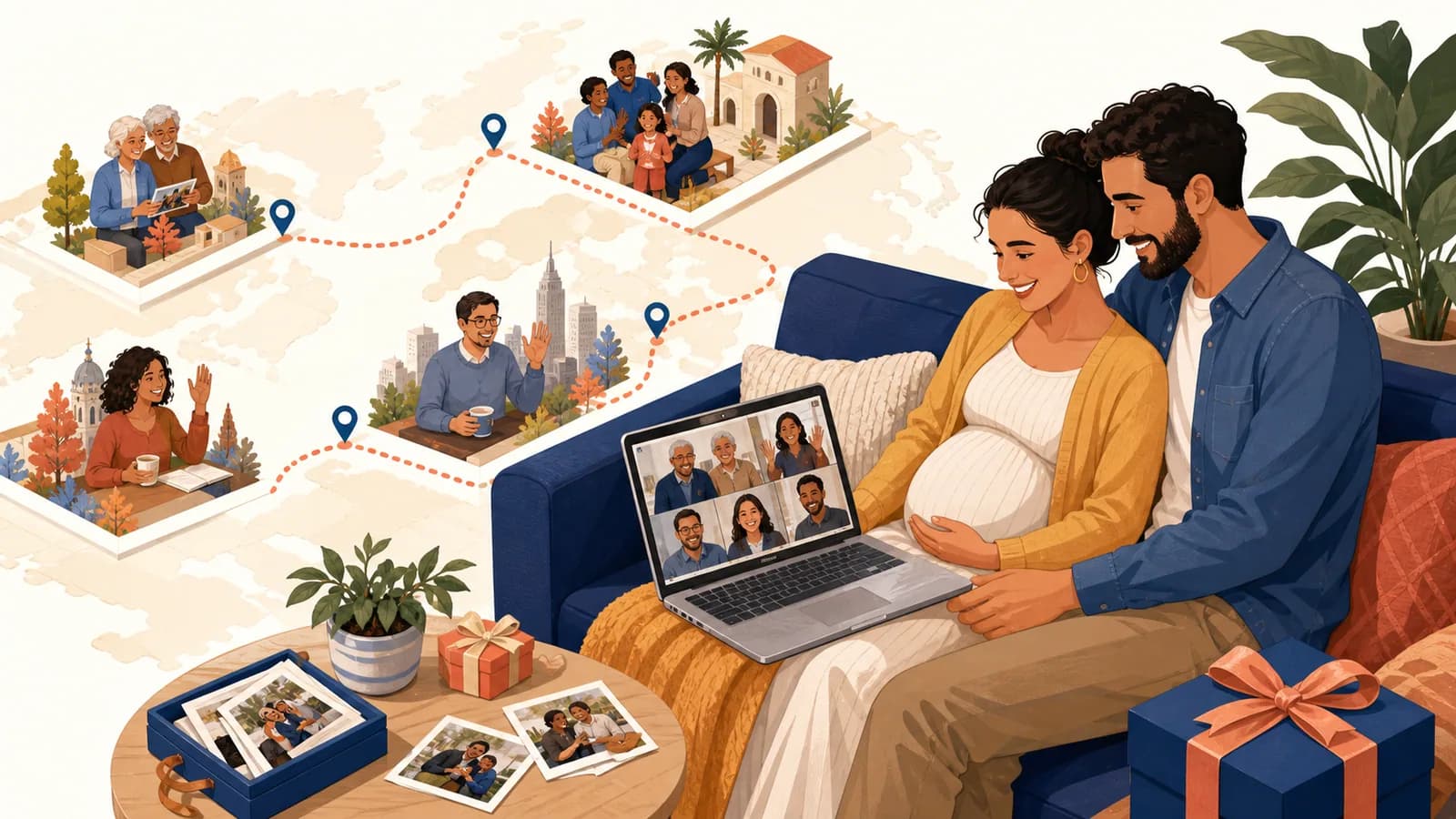
A map-based story works when relatives live in several cities or family memories are tied to places. Each person can contribute a photo, short clip, written message, and location. The final story can move from one place to the next.
For example, a grandparent might add a message from the family hometown. A sibling could share a photo from the parents’ first home. A distant friend might record a wish from the city where the friendship began.
AlbumMap fits this version because it can bring shared photos, videos, messages, and locations into one map video gift. The map gives the contributions an order and shows how many places are connected to the growing family.
Keep the request small. Ask each person for one contribution and one location. This is easier to manage than collecting large folders of unrelated files. Guests who avoid cameras can send a written note or photo instead.
5. Send a shared care package with a remote reveal
A care-package shower turns many small contributions into one delivery. Guests can send a favorite children’s book, freezer-meal voucher, useful household item, or note. The host packs the items together and includes a list of contributors.
Choose a theme that serves the parents. A “quiet evening” box might include snacks, tea, and supportive notes. A “first weeks” box could focus on meal help, errands, and practical offers.
The reveal does not need a full party. The parents can open the box during a ten-minute family call or send a thank-you photo later. Tell guests what to expect so nobody waits for a live event that was never planned.
Check the parents’ preferences before sending food, scented items, clothing, or bulky products. When unsure, choose a flexible gift card and a personal message.
6. Make a family storybook, recipe book, or advice collection
A shared book gives distant relatives a calm way to contribute. It can hold family recipes, short stories, wishes, photos, or practical promises of help. Use a digital document, printed binder, or simple photo book.
Give the project a narrow theme. “Meals our family makes when someone needs care” is easier than “send anything.” Another useful theme is “Stories about the parents before they became parents.”
Advice should be optional and kind. Avoid turning the collection into a list of rules. Prompts about encouragement, family history, and useful support often feel warmer than firm parenting opinions.
Leave a few blank pages for memories after the baby arrives. The parents can add a first family photo, a short note, or details from a later welcome gathering.
7. Celebrate later with a sip-and-see or welcome gathering
Some families would rather wait until travel is easier. A later welcome gathering can replace a pre-baby event. It may be in person, hybrid, or split into small family visits.
Do not promise access to the new baby before speaking with the parents. They may need time, privacy, or health precautions after the birth. Let them choose the date, guest list, and rules.
Distant relatives can still contribute beforehand. They might send a note for the parents or a short story for the child. Those messages can be saved for the later gathering.
It is also fine to skip an event. Family support can be a meal, an errand, a check-in, or respect for the parents’ need to rest.
A simple two-week planning timeline
Fourteen days before the deadline, confirm the format with the parents. Make a guest list and choose one place for replies. Write down what guests should send, where to send it, and when it is due.
Ten days before the deadline, send the invitation. Include the time zone for any live calls. Explain whether gifts are optional and give at least one no-cost way to participate.
Five days before the deadline, send one short reminder to people who have not replied. Do not shame late guests. If someone needs help, offer a written-message option.
Two days before the reveal, arrange the cards, files, or package. Test private links and check names. On the chosen day, keep the focus on the parents rather than the technology.
Afterward, thank contributors and protect the files. Ask the parents before sharing screenshots, recordings, or baby-related details beyond the invited group.
Copy-ready invitations and message prompts
Asynchronous invitation: “We would love to surround Maya and Jordan with messages from family near and far. Please send one short video, voice note, photo, or written wish by August 10. Gifts are optional. Your message is the celebration.”
Mini-call invitation: “Instead of one large online shower, we are planning a few relaxed family calls. Your group will meet on Sunday at 2:00 p.m. Eastern for about 20 minutes. Bring one wish or favorite family story.”
Mail-shower invitation: “Help us create a bundle of support for the parents-to-be. Mail a card, recipe, photo, or small note by September 4. Please share encouragement rather than parenting rules. No gift is required.”
Memory-story request: “Please send one photo or short clip, a message for the growing family, and the city connected to your memory. If you prefer not to record, a written note is perfect.”
Contributor prompt: “Share one thing you admire about the parents, one family memory you hope they pass on, or one practical way you would be glad to help.”
Make the plan easier across time zones and abilities
Write every live time with its time zone. If guests live in several countries, include a conversion link or list the local time for each family group. Confirm the date as well as the hour.
Keep live events short and leave extra time for connection problems. Send dial-in or written options when available. A guest should not need a new account just to send a kind message.
Use captions on edited videos when possible. Read written messages aloud only with permission. Use large, clear text in digital invitations and avoid placing key details inside a busy image.
Offer several ways to join. Video, audio, text, mail, and a short call can all belong to the same celebration. Flexible choices help the family hear from more people.
Common problems to avoid
Do not schedule a long event simply because that is what an in-person shower would use. Screen time can feel tiring, especially when one person must respond to every guest.
Do not ask contributors to use several apps or send the same file twice. Choose one organizer and one main collection method. Clear instructions reduce missed messages.
Avoid public surprises when the parents dislike attention. A private message collection may feel more caring than a live reveal. Ask about boundaries before inviting a large group.
Do not make every contribution about advice. Mix encouragement, memories, humor, practical help, and hopes for the family. This creates a warmer and more balanced keepsake.
Finally, do not measure success by attendance. A thoughtful note from a distant relative may matter more than a crowded call. The goal is to help the family feel supported.
Examples You Can Copy
Asynchronous invitation
We would love to surround Maya and Jordan with messages from family near and far. Please send one short video, voice note, photo, or written wish by August 10. Gifts are optional. Your message is the celebration.
Mini-call invitation
Instead of one large online shower, we are planning a few relaxed family calls. Your group will meet on Sunday at 2:00 p.m. Eastern for about 20 minutes. Bring one wish or favorite family story.
Mail-shower invitation
Help us create a bundle of support for the parents-to-be. Mail a card, recipe, photo, or small note by September 4. Please share encouragement rather than parenting rules. No gift is required.
Memory-story request
Please send one photo or short clip, a message for the growing family, and the city connected to your memory. If you prefer not to record, a written note is perfect.
Final Thoughts
A long-distance baby shower does not need to copy an in-person party. Start with the kind of support the parents want. Then choose one simple way for relatives to take part. Mail, mini calls, shared stories, and flexible message collections can all feel personal. If people and memories span several places, AlbumMap can turn their photos, clips, written wishes, and locations into one map-based keepsake. Whatever format you choose, keep the plan kind, private, and easy for the parents.
Helpful answers
Frequently asked questions
- What can I do instead of a virtual baby shower?
- Try an asynchronous message shower, baby shower by mail, several mini calls, a care package, or a later welcome gathering. Choose the format that gives the parents the support they want.
- How can long-distance relatives join without a video call?
- They can mail a card, send a written message, record a voice note, share a photo, contribute a recipe, or add to a private memory project. Offer more than one option.
- How do you plan a baby shower across several time zones?
- Avoid one long call when possible. Collect messages before a deadline or arrange small calls by region. Always write the time zone beside a live event time.
- Are gifts required for a remote baby shower?
- No. State clearly that gifts are optional. A kind note, family story, photo, or offer of practical help can be a meaningful contribution.
- How far ahead should I plan an alternative baby shower?
- Two to four weeks is helpful for mailed items or group contributions. A simple message collection may need less time, but set the deadline before the reveal date.
- Can AlbumMap be used for a long-distance baby shower?
- AlbumMap fits when several people want to share photos, short videos, written messages, and meaningful locations. Those contributions can become a cinematic map video for the growing family.
- What if the parents do not want a shower?
- Respect their choice. Ask whether a meal, errand, private note, or later check-in would be welcome. Support does not require an event.