Introduction
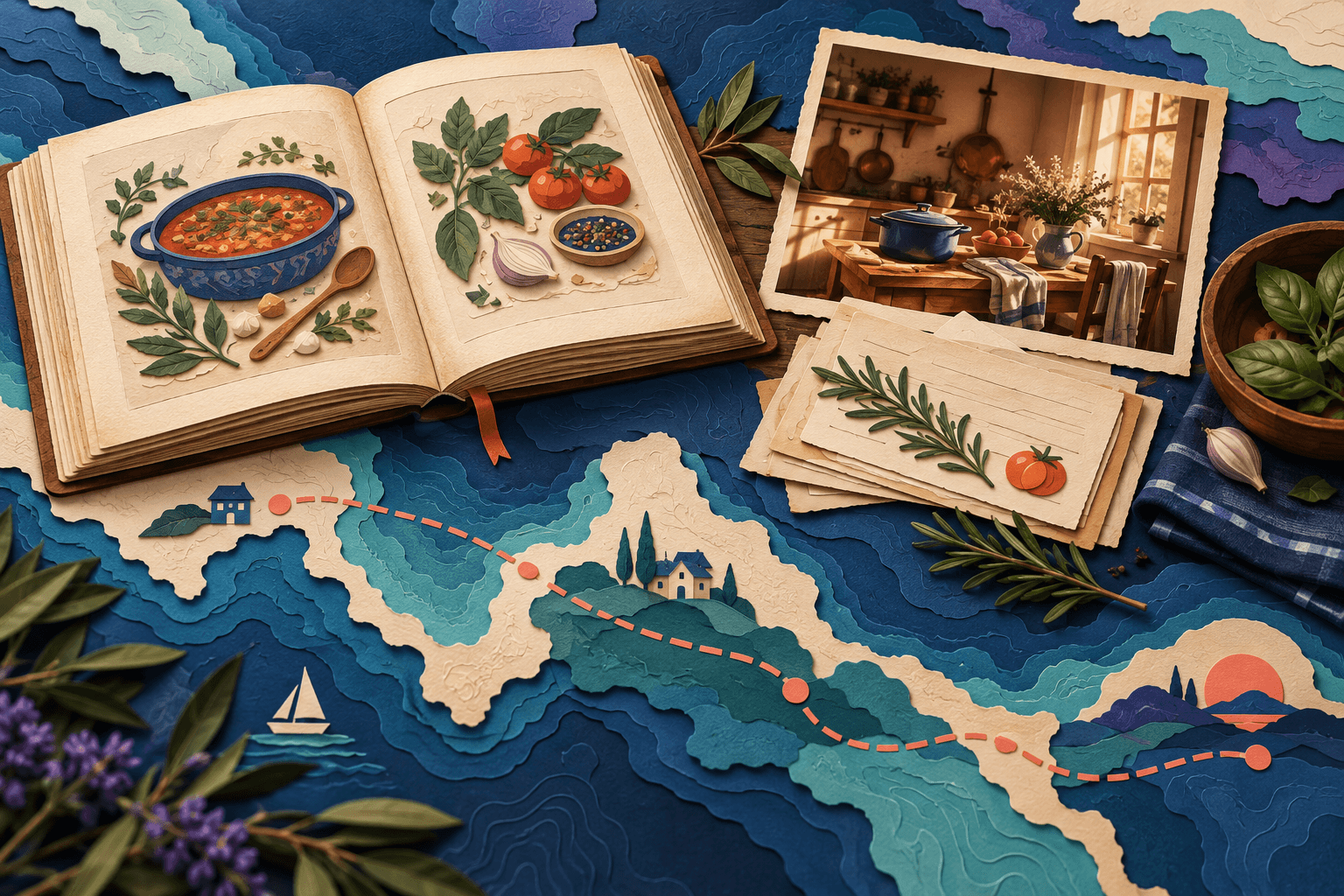
A family recipe video can preserve more than ingredients and instructions. It can show who taught the recipe, where people made it, and how the dish became part of family life. For a map-based version, choose one dish and connect two or three meaningful kitchens with photographs, short recordings, and a few lines of context.
This is a story about the recipe's place in your family, not a claim about where the dish was first invented. That distinction keeps the project personal and manageable. You do not need to settle a question of culinary history to remember a relative's Sunday lunch.
Explore a family map story with AlbumMap, then start with the person whose voice you most want to preserve.
Choose one recipe with a story attached
A useful starting dish has more than a recognisable name. There is a person, a habit, or an occasion attached to it: the cake made for every move, the soup someone brought after a long journey, or the bread a relative taught you to shape.
Ask which recipe would make someone say, “That reminds me of…” The answer is often more helpful than choosing the most impressive dish in the family collection.
You can make a separate film for each recipe later. Trying to include an entire cookbook in one short video makes both the food and the people harder to remember.
The family-memory service Family Tree Video discusses preserving recipes alongside family history. The map approach here adds a specific organising idea: follow the households where your family's version was remembered, taught, or changed.
Decide what the map represents
Use the map to connect genuine family associations. A pin might mean “where this relative learned the recipe” or “where we now make it together.” Label that meaning rather than leaving viewers to assume an origin story.
For example, “Auntie's kitchen, remembered from the 1990s” is different from “the birthplace of this dish.” The first can be supported by a family memory. The second may need historical research beyond the scope of your film.
You can use city-level locations rather than exact homes. A map does not become more meaningful just because it exposes a street address. If everyone lived in the same town, use chapter labels and family names to show the handover instead of forcing a long route.
Record the conversation before the cooking
Talk while the person is comfortable, not while they are trying to manage several tasks. Begin with a familiar photograph or recipe card and ask one question at a time.
Useful prompts include: “Who showed you how to make this?”, “What did their kitchen feel like?”, “When did you start making it your own way?”, and “Who always asked for it?” Follow the answer that contains a scene, not just a date.
An answer such as “Your uncle used to stand by the door waiting for the first piece” gives you a person, an action, and a possible visual. It is more useful in a short film than several minutes of unrelated family chronology.
Keep the complete recording separately, even if the edited video uses only a sentence. Ask the speaker to review the chosen excerpt so the edit does not change what they meant.
Gather a small, specific media set
Aim for one portrait of the cook, one image of the recipe or dish, one family-table photograph, and a short present-day clip. Treat that as a starting collection rather than a minimum requirement.
Photograph handwritten notes without covering the original wording. Save an unedited copy before cropping or adding labels. If a recipe has several versions, identify them honestly: “Mum's version” and “the version we make now” are useful captions.
Missing photographs are not a reason to invent old scenes. Record the person describing the kitchen, show an object they still use, or present the memory as text. A labelled contemporary image is preferable to an unlabeled reconstruction that looks like documentary evidence.
For broader place-based memories beyond food, use the separate childhood neighbourhood video guide.
A three-chapter family recipe video plan
The following fictional example follows one family's celebration cake through three households. It does not describe the historical origin of a real recipe.
| Chapter | Place and material | Story question | Possible on-screen line |
|---|---|---|---|
| Learned | A relative's former hometown, portrait, and recorded memory | Who first taught it? | “This is where our family remembers learning it.” |
| Adapted | Another household, recipe card, and family-table photo | What changed as it was passed on? | “A different tin, the same birthday request.” |
| Continued | The current kitchen and a new cooking clip | Who is making it now? | “Now we make it together.” |
Use a brief map scene between chapters, then give the person or food most of the screen time. The moving line shows a connection between family chapters. It should not suggest that you have documented an exact journey of ingredients or a complete historical migration.
A two-minute first cut is a useful creative target: a short introduction, three compact chapters, and a closing message. Make it longer only when the extra material adds a distinct memory.
Separate the keepsake from the practical recipe
A family film and a usable recipe have different jobs. The video preserves the voice, occasion, and small details. A separate written recipe preserves quantities, steps, and any information someone needs to reproduce the dish reliably.
Do not crowd ingredient lists over an interview. Instead, end with a line such as “The written recipe is saved with this video.” Use a stable folder or family archive, not an unexplained link that only the organiser can access.
If the cook measures informally, write down what they actually demonstrate and ask them to review your transcription. Do not silently turn an uncertain family note into a precise instruction.
Finish with a handover, not a summary
Give the closing line to the next person who will make the dish. An original example might be: “I still call you when I forget the last step. Now we have your answer saved, but I will probably call anyway.”
That ending brings the film back to a relationship. It also gives the present-day footage a purpose: the recipe is still being used, not simply displayed.
For a gathering, pair the finished film with a family reunion map video. Keep the recipe story as its own short chapter rather than placing a long cooking sequence inside every relative's introduction.
Save one recipe's story first
Choose the dish, the speaker, and the first meaningful kitchen. The rest of the structure can grow from that conversation. Bring the approved photos, messages, and places into an AlbumMap story while keeping the complete recipe and original recordings separately.
Helpful answers
Frequently asked questions
Can I make this without an old recipe card?
Yes. Record someone explaining the dish and why it matters. A contemporary photograph or a familiar kitchen object can support the story without pretending to be an original document.
What happens when relatives remember the recipe differently?
Keep the differences visible. Label each person's recollection or version. A disagreement about ingredients can be part of the family story rather than a problem the video must resolve.
Should the map show the dish's country of origin?
Only when that claim is relevant and supported. For a family keepsake, it is usually enough to show where your relatives learned, made, or shared their version.
Can the finished video accompany a family cookbook?
Yes. Give the film and written recipe matching titles so people can find both. Check the viewing link and access settings before distributing the cookbook.