Collection 1 of 5
Start with one familiar photograph and a place
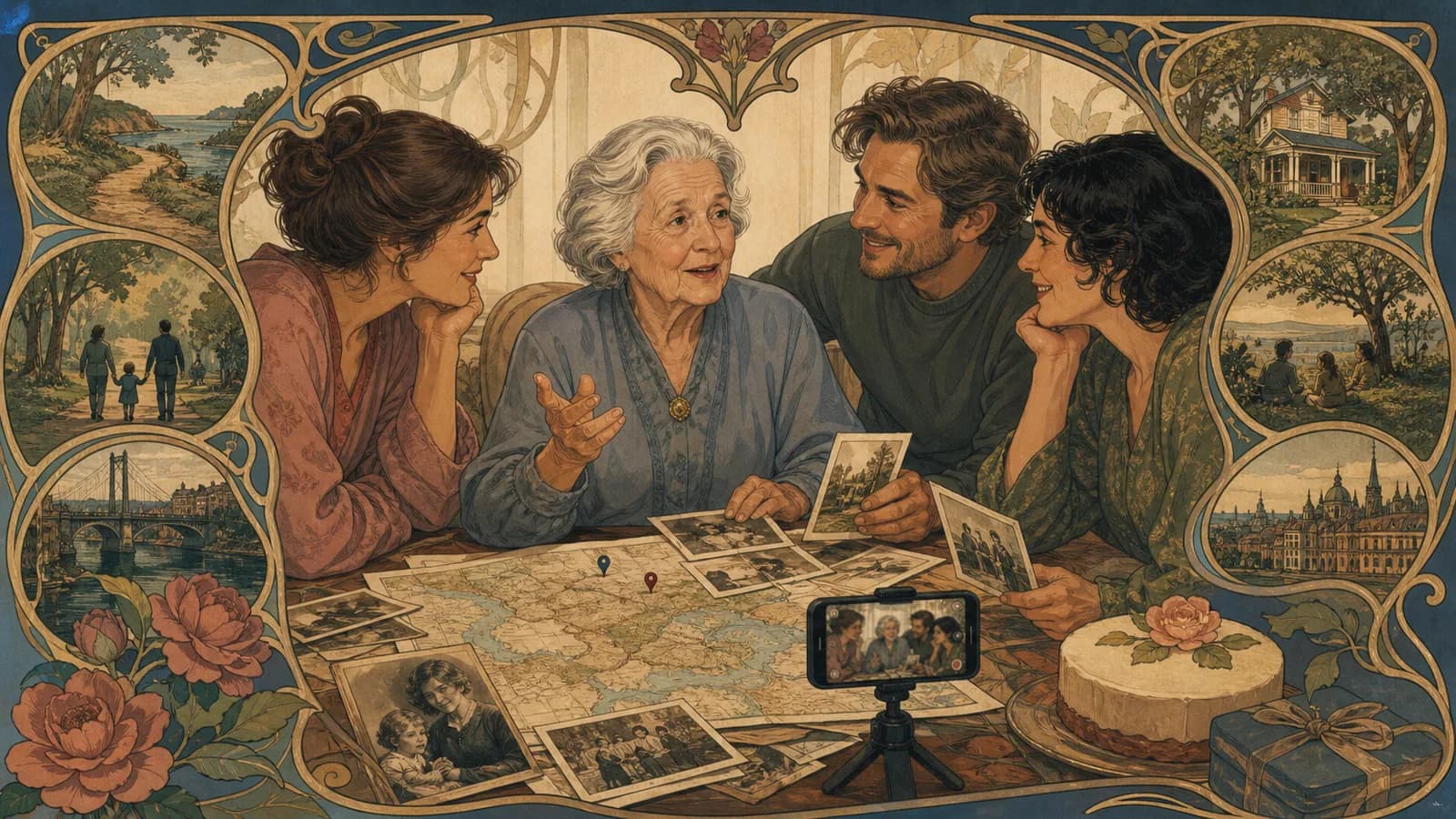
A useful family history interview asks for a particular scene rather than an entire life story at once. Start with a photograph, a room, a journey, or a person the relative remembers clearly. Ask permission to record and explain who will see the result. Let the conversation follow their comfort and energy.
The questions below are original prompts for a family keepsake. They are not a test of dates or memory. StoryCorps provides additional interview resources if you want to explore oral history more deeply. A short conversation with a clear story is easier to preserve than a rushed list of answers.
Collection 2 of 5
Questions about places and everyday life
Tap a message to select all of it, then copy.
If we could walk through the home you grew up in, what would you show me first?
Where did everyone gather when there was something to celebrate?
What sound or smell takes you back to your old neighborhood?
Which journey changed what home meant to you?
Is there a place you would like the younger family members to understand?
What ordinary weekly routine do you wish someone had filmed?
Follow an answer with 'What happened next?' or 'Who else was there?' Use approximate places on a family map when a precise address would expose something private. Do not turn an uncertain date into a confident caption.
Collection 3 of 5
Questions about people and turning points
Tap a message to select all of it, then copy.
Who taught you something you still use, and can you remember the moment?
Which family member made an ordinary day feel special?
What did your first close friend know about you that others did not?
When did you feel proud of a decision that seemed small at the time?
What changed after you moved, started work, or became a parent?
Is there a family tradition you adapted rather than following exactly?
Leave room for silence. A pause can mean the person is finding the detail that matters. If a subject feels painful or unwelcome, move on without asking them to explain why. They should be able to decline a question or stop the recording.
Collection 4 of 5
A flexible 30-minute recording plan
| Time | Focus |
|---|---|
| First 5 minutes | Explain the plan, confirm permission, and test sound with one easy question. |
| Next 15 minutes | Explore two or three stories with follow-up questions. |
| Next 5 minutes | Ask about a photograph, place, object, or tradition connected to those stories. |
| Final 5 minutes | Ask what they want to add and agree on review and sharing. |
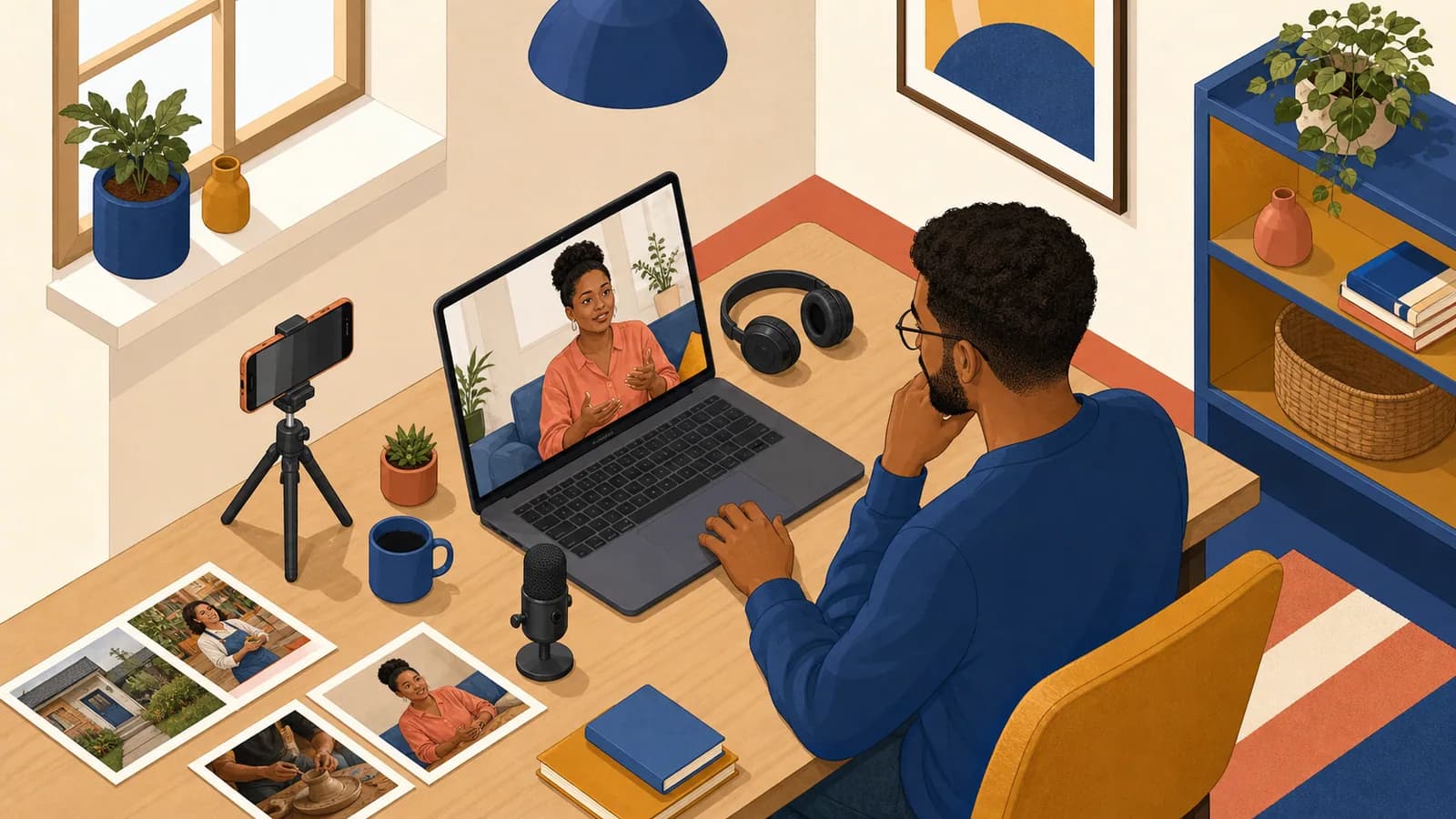
Treat these times as a planning example. A shorter session may be better. Place the phone securely near enough to record clear speech, reduce background noise, and make a short test before the main conversation. An audio-only conversation is also worthwhile if a camera feels intrusive.
Collection 5 of 5
Turn the recording into a keepsake without rewriting the story
Keep the full original recording. Make a separate short edit that preserves the speaker's meaning. Add names, approximate dates, and places only after checking them. Mark an uncertain detail as uncertain. Ask the speaker to review the selected clips before sharing them beyond the agreed audience.
A family history map can connect these stories with places. Our guide to scanning old family photographs helps prepare the images. AlbumMap can bring selected photos, messages, clips, and locations together; retain the complete interview separately for future generations.
Sources and further reading
Before you send it
Make it sound like you
- Swap in one real detail only the two of you share.
- Read it aloud once; cut any line you would never say.
- Sign it with the name they actually call you.
Helpful answers
Frequently asked questions
How many questions should I prepare?
Choose a handful of prompts and expect to use only some of them. One story with useful follow-up detail can be more valuable than twenty brief answers.
What if a relative cannot remember dates?
Record the story without pressuring them for precision. Use approximate dates or leave a date out, then distinguish later research from what the person actually said.
Can I share the interview publicly?
Agree on the audience before recording and ask again before expanding it. Permission for a private family video does not automatically mean permission for a public social post.