Introduction
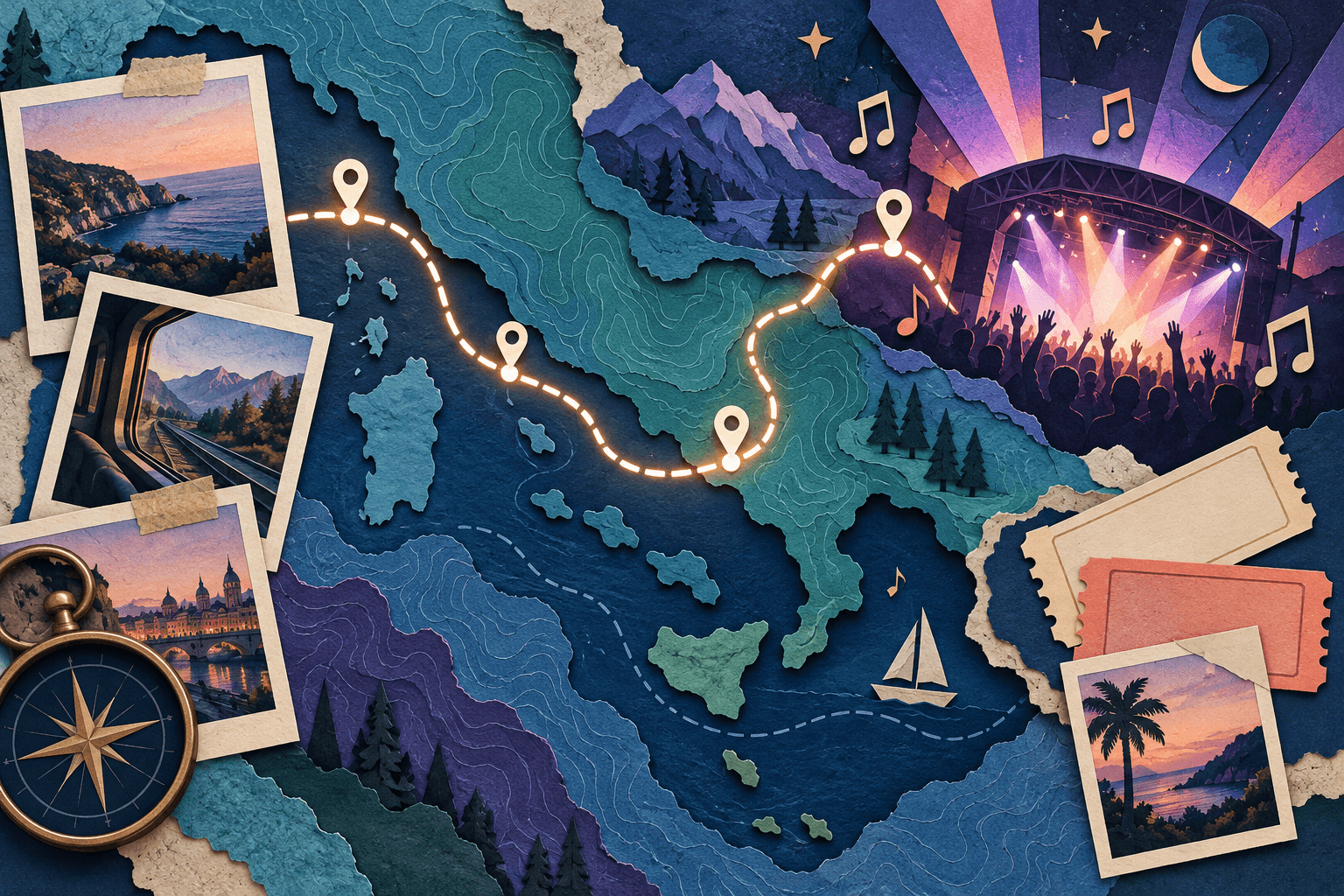
A concert travel vlog can tell the story around a show without trying to reproduce the performance. Build it from the trip, the people you went with, and the small moments before and afterwards. A map connects the cities; your photographs, notes, and reflections explain why those places matter to you.
This approach works for one special concert or several completed trips. It is a personal scrapbook of events you attended, not an artist's official tour map, a future schedule, or a compilation of stage recordings.
Explore a social map video with AlbumMap, then choose the memories that make the experience yours.
Decide whether the story is one night or several journeys
A single-night story can begin with getting ready and end with the journey home. Its map may need only the destination city and the public venue area. You do not have to invent a long route to justify using a map.
For several concerts, decide what connects them. Perhaps each trip involved a different friend. Perhaps one show was a first solo outing. A simple organising idea makes the scrapbook more interesting than a list of dates.
Use your own records to check the dates and venue names. When memory and an old caption disagree, verify the detail before putting it on screen. Label the project clearly as your concert trips so it is not mistaken for official artist information.
Collect the memories surrounding the performance
Useful material includes the outfit you chose, a permitted venue-exterior photo, a handwritten journal entry, an approved picture with friends, and the meal you talked about afterwards. A travel day can provide context without becoming a separate transport tutorial.
Ask yourself what you would tell someone who was not there. “The show was amazing” is a reaction, but not yet a scene. “We were so early that we spent an hour inventing predictions over coffee” suggests images, a place, and a line of narration.
Do not recreate missing evidence as though it were documentary footage. A title card saying “The conversation on the way home” is more honest than presenting unrelated crowd footage as your group that night.
When a meal becomes a story of its own, the food travel vlog structure can help shape a separate chapter. Keep the concert scrapbook focused on the experience you set out to remember.
A three-chapter concert travel vlog plan
The following is an original structure for a roughly 75-second personal scrapbook. It is a planning guide, not a claim about a built-in template.
| Chapter | Suggested time | Material | Story question |
|---|---|---|---|
| Before the trip | 0–20 seconds | Broad map, preparation detail, anticipation note | Why did this show matter before you arrived? |
| Around the show | 20–50 seconds | Public exterior, approved friend photo, your own reflection | What made being there feel different from imagining it? |
| After the night | 50–75 seconds | Quiet next-day image, memory card, closing map | What will you remember beyond the set list? |
Keep the middle chapter about your experience rather than assuming it must contain performance footage. A carefully chosen photograph and an honest sentence can do more than a distant stage recording with unclear sound.
For multiple shows, repeat the same three questions for each city, but shorten the scenes. If the result becomes rushed, make separate episodes instead of reducing every memory to a blink.
Turn ticket information into a safe memory card
Treat ticket screenshots as private records first. Before using one in a video, remove QR codes, barcodes, order references, contact information, and anything else the audience does not need. Review the final exported image rather than relying on an editable cover placed over the original.
A simpler option is an original text card with the artist name, venue, city, and date, checked against your records. It does not need to imitate a genuine ticket or use official logos.
Use your own design and label the project as a personal scrapbook. A memory card should help you remember the night, not suggest that the video is an official announcement or that a ticket remains available.
Choose map labels that tell your story
A city-level pin may be enough for a multi-show scrapbook. More detailed maps should show only places necessary to understand the memory. Hotels, friends' homes, and private meeting spots rarely need to appear.
Show journeys you actually made, not the complete published tour route. If you travelled separately with friends, do not invent a shared route for everyone. You can connect the memories through a city label without describing anybody's private movements.
Give each pin a useful caption. “First concert on my own” or “The trip we finally managed to organise” adds context that a date alone cannot provide.
Write captions that belong to this night
Try a caption built from three pieces: the situation, the detail, and what it meant. For example: “We arrived far too early, found an empty café, and had the longest conversation of the whole trip.”
Another fictional example could read: “The show ended, but nobody wanted the evening to finish. We sat over a late snack and compared the moments we would remember.”
Replace these with your own details. Avoid attributing feelings to a friend without asking them. “I was nervous before going alone” is a personal reflection; “Everyone there felt like family” makes a much broader claim.
For more specific material, use the travel journal prompts and answer just one question per stop.
Keep the soundtrack separate from the right to attend
Recording a concert yourself does not automatically give you all the rights needed to upload the music or performance. YouTube's common copyright myths guidance also rejects the idea that a few seconds is automatically safe. Check applicable permissions and venue rules rather than treating attendance as a content licence.
A practical alternative is original narration over your own permitted travel images, with music licensed for the intended use. You can name a song as part of an accurate written memory without making its recording the soundtrack.
For YouTube, review the Audio Library documentation and any attribution terms. Recheck permissions before reusing a soundtrack elsewhere; do not assume one platform's music access covers every destination. This is a publishing precaution, not a determination that a particular clip is lawful.
Make the public version smaller than the private archive
Keep original photos and notes separately from the finished video. A public edit can use broad city labels and approved images while leaving private conversations and detailed travel records out.
Ask friends about the specific image and audience, not just whether they generally like the idea of a scrapbook. Respect a request to remove a photograph even when it is your favourite scene.
Choose a cover that identifies the personal story: “Three cities, three concert memories” is clearer than wording that resembles a new tour announcement. Do not include upcoming dates unless you are deliberately making a different, verified information piece.
Map the experience that happened to you
Gather the dates, choose the personal details, and let each city introduce a memory rather than a performance clip. Build your concert travel scrapbook with AlbumMap and close with what stayed with you after the night ended.
Helpful answers
Frequently asked questions
Can I make a concert scrapbook without stage footage?
Yes. Preparation, travel, permitted exterior photographs, personal notes, and reflections can tell the story. The subject is your experience around the concert, not a substitute recording of it.
What should I do when I only attended one show?
Build the story around anticipation, arrival, and the memory afterwards. A single destination pin can provide all the map context the video needs.
Can friends contribute their own pictures?
Ask the photographer for permission and check with the people shown before choosing an audience. Keep a note of which images were approved for the finished version.
Should I include every concert I have attended?
Only when that complete record is the purpose. For a more focused story, choose a theme such as first concerts, trips with one friend, or a particular period of your life.