How to Compile Video Messages Into One Meaningful Story
Learning how to compile video messages is not only about joining files. The real task is finding the story inside them. One person may tell a funny memory. Another may offer a quiet thank-you. Someone else may send a photo or a very short greeting. A clear plan helps these different pieces feel connected. You do not need advanced editing skills. You need a purpose, a simple order, and enough time to review the result. This guide walks through each step, from sorting the clips to choosing a strong closing message.
Decide what the finished video should say
Start with one sentence that explains the point of the video. For example: “We want Maya to see how many people and places shaped her journey.” Another goal might be: “We want the team to remember the season from the first practice to the final game.”
This sentence becomes your editing guide. Keep clips that support it. Shorten or remove parts that pull the video away from it. A clear purpose also helps you choose photos, music, titles, and locations.
Do not try to include every fact about a person or event. A focused story often feels more personal than a complete record. Choose two or three themes, such as growth, friendship, courage, travel, or gratitude.
Review every clip before you arrange anything
Watch each submission once without editing. Make a short note about its main idea, tone, length, and sound. A simple label might read “funny school story,” “coach thank-you,” or “quiet family message.”
Mark clips that need attention. Look for long pauses, repeated lines, weak sound, sideways video, or private details. Also note duplicate stories. Two people may describe the same event, but one version may fit the flow better.
Save an untouched copy of every file before making changes. Then rename working copies with the speaker’s name and topic. Clear names make the next steps much easier.
Choose a simple video story structure
Most message videos work with a three-part shape. The opening welcomes the viewer and sets the mood. The middle adds memories, feelings, and different voices. The ending brings those ideas together and looks ahead.
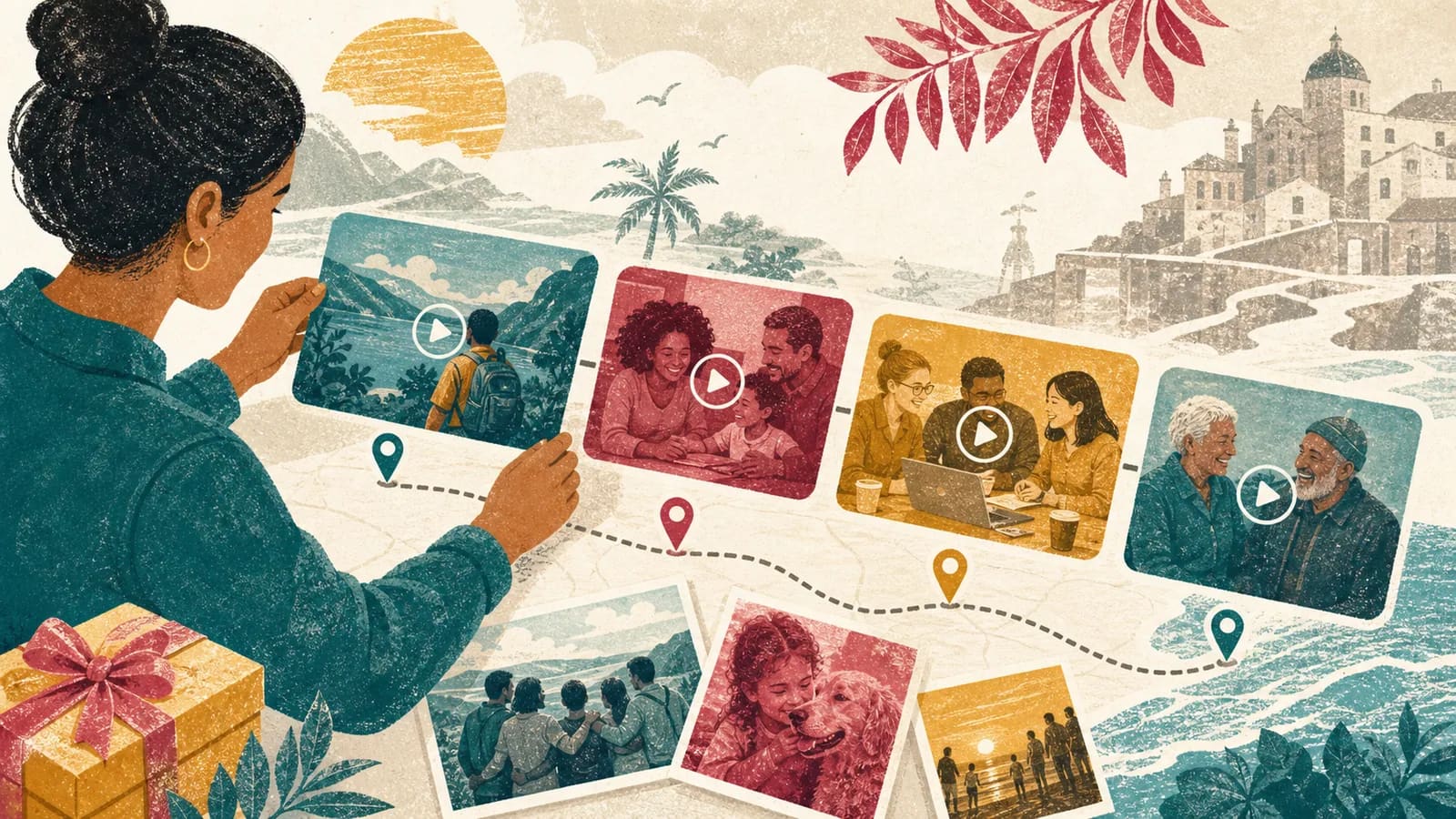
You can arrange the middle in several ways. A timeline moves from early memories to the present. A theme-based order groups family, friends, work, travel, or sports. A place-based order moves through meaningful homes, cities, schools, venues, or trips.
Pick the structure that makes the relationship easiest to understand. A graduation video may follow the student’s growth. A retirement video may move through career chapters. A travel story may follow the route itself.
How to compile video messages without losing the story
Create a rough sequence before trimming every detail. Put a warm or lively clip first. Follow it with two or three messages that explain why the occasion matters. Save the deepest stories for the middle, where the viewer is ready to hear them.
Change the tone with care. Several emotional clips in a row can feel heavy. Several jokes in a row may hide the purpose. Try moving between warm, funny, reflective, and hopeful moments.
End with a message that feels complete. A close family member, friend, coach, teacher, or organizer can thank everyone and speak to the recipient. A group greeting can also work when it echoes the opening.
Trim for meaning, not only for length
Remove the empty seconds before and after each speaker. Cut failed starts, repeated thoughts, and sections where the speaker moves away from the point. Keep natural pauses when they carry feeling.
Do not make every clip the same length. A quick greeting may need only ten seconds. A rare story from a grandparent or mentor may deserve more time. The test is simple: does each part add something new?
If a long message contains several ideas, keep its strongest section. You can ask the contributor for permission if the edit could change their meaning. Never cut words in a way that makes someone appear to say something else.
Use transitions that help the viewer follow
Simple transitions are usually enough. A clean cut keeps the pace moving. A short fade can mark a change in time, place, or mood. Too many effects can distract from the faces and words.
Short title cards can identify a new chapter. Examples include “The Early Years,” “Road Trips,” “Our Team,” or “What You Taught Us.” Keep the wording large and brief.
Photos can also create a natural pause. Place a relevant photo after a story instead of adding random images between every speaker. The photo should deepen the message or show the moment being described.
Make uneven recordings feel like one video
Group recordings will not look identical. Some people use bright rooms, while others record in dim spaces. Phones may be held in different directions. Accept some variation because it shows that real people contributed.
Fix only what gets in the way. Rotate sideways clips. Crop carefully when needed. Raise quiet speech and lower very loud clips. Do not apply a strong filter that changes how people look.
Choose one main frame shape for the final video. If a vertical clip sits inside a horizontal frame, use a simple background rather than stretching it. Keep names and captions in the same position throughout.
Put clear speech ahead of background music
The messages are the heart of the video, so speech must be easy to hear. Listen with headphones and through a phone speaker. A mix that sounds fine on a laptop may be unclear on a small device.
Keep music low under speech. Lower it further for quiet speakers, singing, or clips with important natural sound. Silence can also help a serious message land.
If a clip is hard to understand, ask for a new recording when time allows. Captions may help, but they cannot repair every sound problem. Check names and personal words carefully before adding captions.
Add photos and written messages with a purpose
Not everyone will want to appear on camera. A written note can still be part of the story. Pair it with the contributor’s name, a photo, or a meaningful place. Give the viewer enough time to read it.
Use photos to show the event, person, or place mentioned in a message. A childhood-home photo can support a family story. A team photo can bridge two sports clips. A travel image can show where a friendship began.
Avoid filling every second with extra media. The viewer needs time to see faces and hear words. Add a photo or note when it explains, connects, or gives the story room to breathe.
Use places when location is part of the meaning
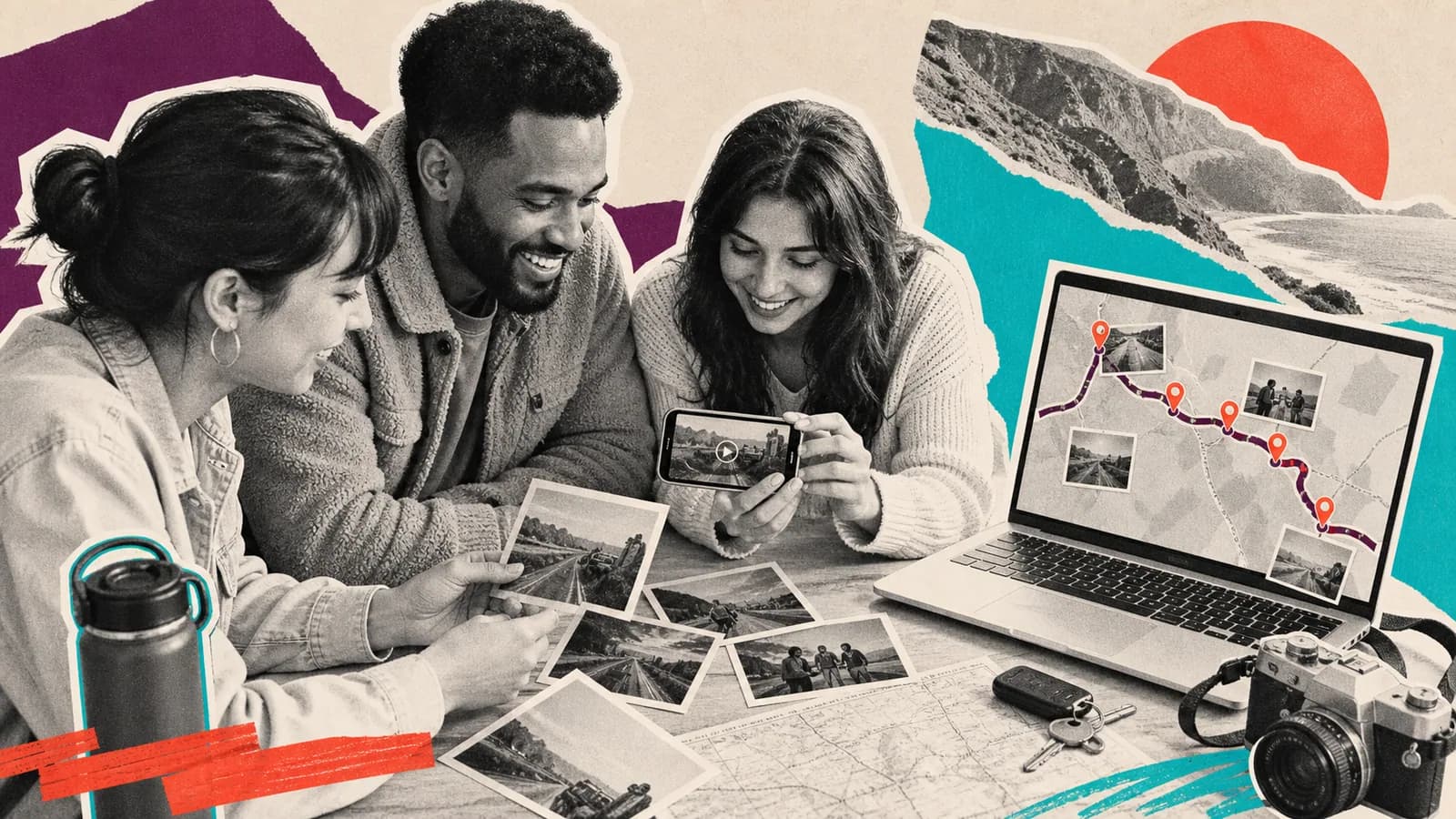
Some stories become clearer when viewers can see where they happened. A route can connect a hometown, school, first apartment, wedding venue, stadium, or favorite trip. Each place becomes a chapter instead of a random pin.
AlbumMap is useful when contributors are sharing videos, photos, messages, and locations. Those pieces can become a cinematic map video that moves through the places behind the memories. This works well for travel stories, long-distance families, team seasons, graduations, anniversaries, and retirements.
Do not add locations only for decoration. Ask what each place explains. If it marks a meeting, a turning point, a shared win, or a lasting home, it can strengthen the story.
Test the full video in three passes
Use the first viewing to check the story. Can someone understand the opening, middle, and ending without extra explanation? Move clips if the order feels random or an important person appears too late.
Use the second viewing to check pace and sound. Note where your attention drops, where a clip repeats an earlier point, or where the volume changes sharply. Make small fixes instead of rebuilding everything.
Use the final viewing to check details. Confirm names, dates, captions, image crops, music levels, and permissions. Watch the exported file on the device you plan to use for the reveal.
Common mistakes that weaken a video message compilation
The first mistake is editing without a goal. This often creates a long chain of greetings with no clear direction. Write the purpose before arranging the first clip.
The second mistake is saving every second because someone took time to record it. Respect the contribution, but remove parts that repeat or distract. Thoughtful trimming helps each person’s message receive more attention.
The third mistake is using effects to create emotion. The real feeling comes from specific memories and honest voices. Clean sound, a clear order, and a strong ending matter more than elaborate graphics.
The fourth mistake is leaving no time for review. Set the contribution deadline before your true editing deadline. That gives you room to replace a broken clip and check the final export.
A practical example: from scattered clips to one story
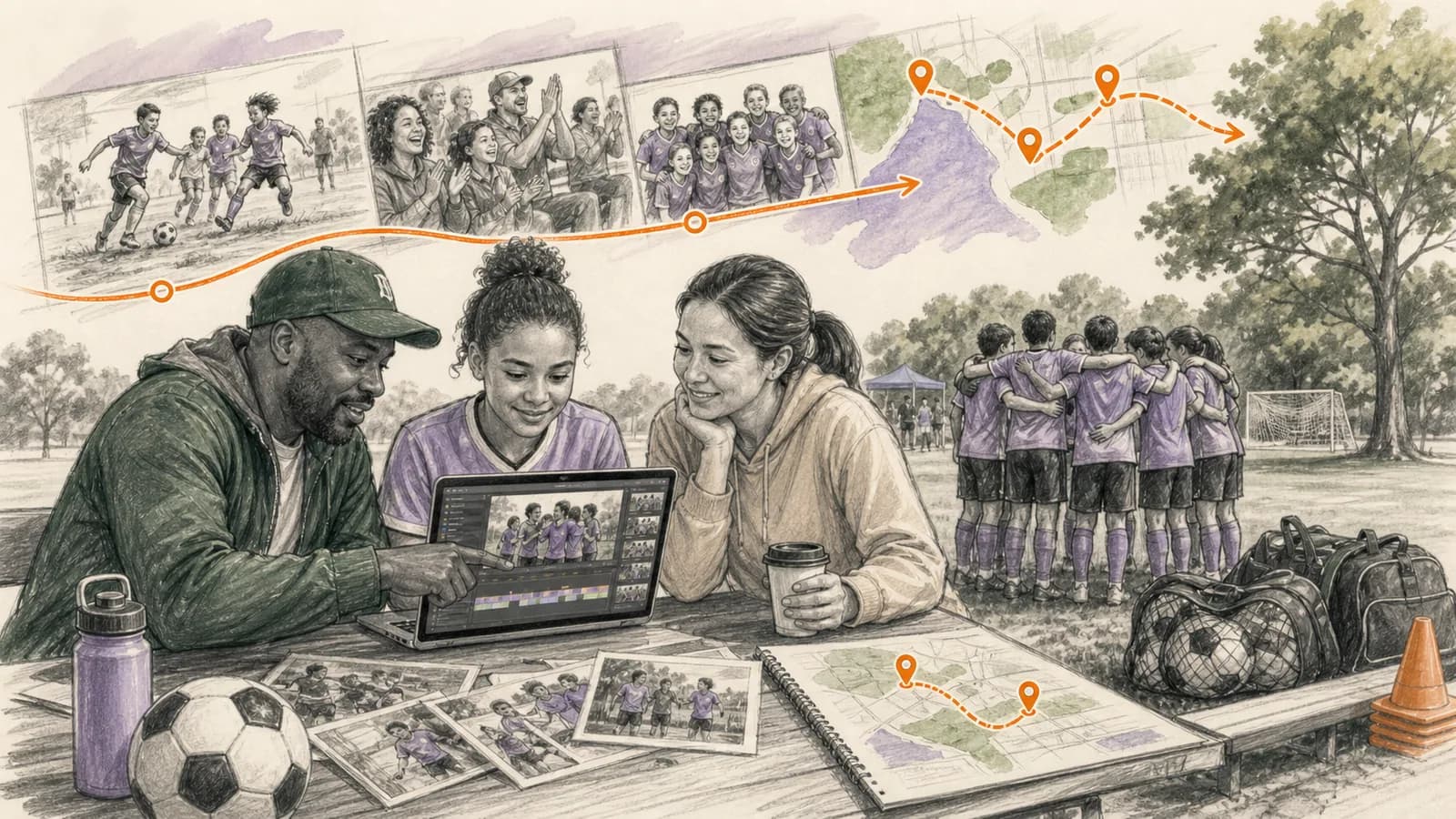
Imagine a coach is retiring. Players send quick thank-yous, old teammates share stories, and family members add photos from early seasons. At first, the files feel unrelated.
The organizer opens with a current team greeting. The next chapter shows early photos and stories from former players. The middle covers important games, lessons, and funny moments. Family messages add a more personal view. The video ends at the home stadium with the current captain thanking the coach.
The same plan works for other events. Change the chapters, not the basic shape. Welcome the viewer, build the story through distinct voices, and finish with a message that gathers everything together.
Examples You Can Copy
Copy-ready contribution request
Hi everyone! I am making a video for [Name/Team]. Please record a short message about [specific prompt]. Aim for 20 to 45 seconds and film somewhere quiet. If you have one, please add a photo or place connected to your story. Upload everything here: [Link]. The deadline is [Date]. Thank you!
Copy-ready story prompt set
Choose one prompt: What is a moment with [Name] you still remember clearly? What did [Name] teach you? Which place holds your favorite shared memory? When did [Name] make you laugh or help you? What do you hope comes next for them?
Copy-ready three-part sequence
Opening: a welcome from the organizer and two short, upbeat greetings. Middle: memories grouped by time, theme, or place, with photos between chapters. Ending: the most meaningful message, followed by a shared thank-you or wish for the future.
Copy-ready closing message
[Name], these messages come from different people, years, and places, but they share one idea: you made a lasting difference. Thank you for the memories you gave us. We hope this video reminds you how many people are cheering for what comes next.
Final Thoughts
A meaningful group video does not need perfect recordings or complex effects. It needs a clear purpose and a thoughtful order. Review every clip, find the shared themes, and remove anything that weakens the flow. Let the strongest voices, memories, photos, and places carry the story. When those pieces support one another, separate messages begin to feel like one complete gift.
Helpful answers
Frequently asked questions
- What is the easiest way to combine video messages into one video?
- Start by putting every clip in one folder or project. Rename the files, note each clip’s topic, and create a rough order. Then trim pauses, balance sound, and review the full video before adding extra effects.
- How long should each video message be?
- Many messages work well at 20 to 45 seconds, but the content matters more than an exact limit. A quick greeting can be shorter. A rare story from someone close may need more time.
- What order should group video messages follow?
- Use an opening, middle, and ending. Start with a warm welcome, group the middle by time, theme, or place, and save a strong message for the close. Change the tone so jokes and deeper stories have room.
- Should I add music to a video message compilation?
- Music can support the mood, but it should stay below the voices. Test the sound on headphones and a phone speaker. Lower or remove the music during quiet speech, singing, or important natural sound.
- How can I include someone who does not want to record a video?
- Ask for a written note, voice recording, or photo. Pair it with the person’s name and a relevant memory or place. This keeps them in the story without forcing them to appear on camera.
- Can locations help connect separate video messages?
- Yes. Locations can create chapters when the memories are tied to homes, schools, trips, workplaces, venues, or cities. AlbumMap can connect messages, photos, clips, and places in a map-based video story.