Moving-Away Video Ideas for Friends and Family
A moving away video can make a difficult goodbye feel more complete. It lets friends and family share memories, gratitude, laughter, and hope in their own voices. The person leaving can keep those messages close after the boxes are unpacked. The video does not need costly gear or complex effects. A clear idea and a few honest details matter more. This guide offers simple formats, copy-ready prompts, filming tips, and an easy editing plan. You can use it for a close friend, sibling, parent, child, cousin, or another loved one starting life somewhere new.
Choose the Right Farewell Video Format
Start by choosing one main format. This gives contributors a clear goal and makes editing easier. A simple message montage is often best for a large group. Each person records one memory, one thank-you, and one wish.
A memory timeline works well for a sibling, parent, or longtime friend. Begin with early photos, move through shared years, and finish with the upcoming move. Keep the story selective. You do not need to include every event.
A place-based story is useful when the relationship is tied to homes, schools, trips, parks, or favourite local spots. Each location becomes a short chapter. This format can also show messages arriving from people in different cities.
A day-in-the-life goodbye can celebrate the small things someone will miss. Film a favourite café, walking route, family kitchen, local park, or weekly gathering. Add short messages from the people connected to each place.
Moving Away Video Ideas for Different Relationships
For a close friend, build the video around ordinary moments. Include coffee runs, late talks, shared meals, road trips, and inside jokes. These details often feel more personal than a list of major events.
For a sibling, mix family history with hope for the next chapter. Add childhood photos, family traditions, and short clips from relatives. End with a promise to stay connected after the move.
For a parent or grandparent, focus on the home and community they helped create. Invite children, grandchildren, neighbours, and old friends. Ask each person to name one lesson or memory they will carry forward.
For a child leaving home, balance pride with reassurance. Family members can share practical encouragement, funny childhood moments, and reminders that home is still available when needed.
For a whole family that is relocating, celebrate each person. Friends can record messages for the adults and children. Include school memories, neighbourhood traditions, and warm wishes for the new community.
If the person feels unsure about the move, avoid making every message sad. Acknowledge the goodbye, then add confidence and practical support. The goal is to honour what is changing without making the move feel like a loss alone.
How to Plan a Moving Away Video
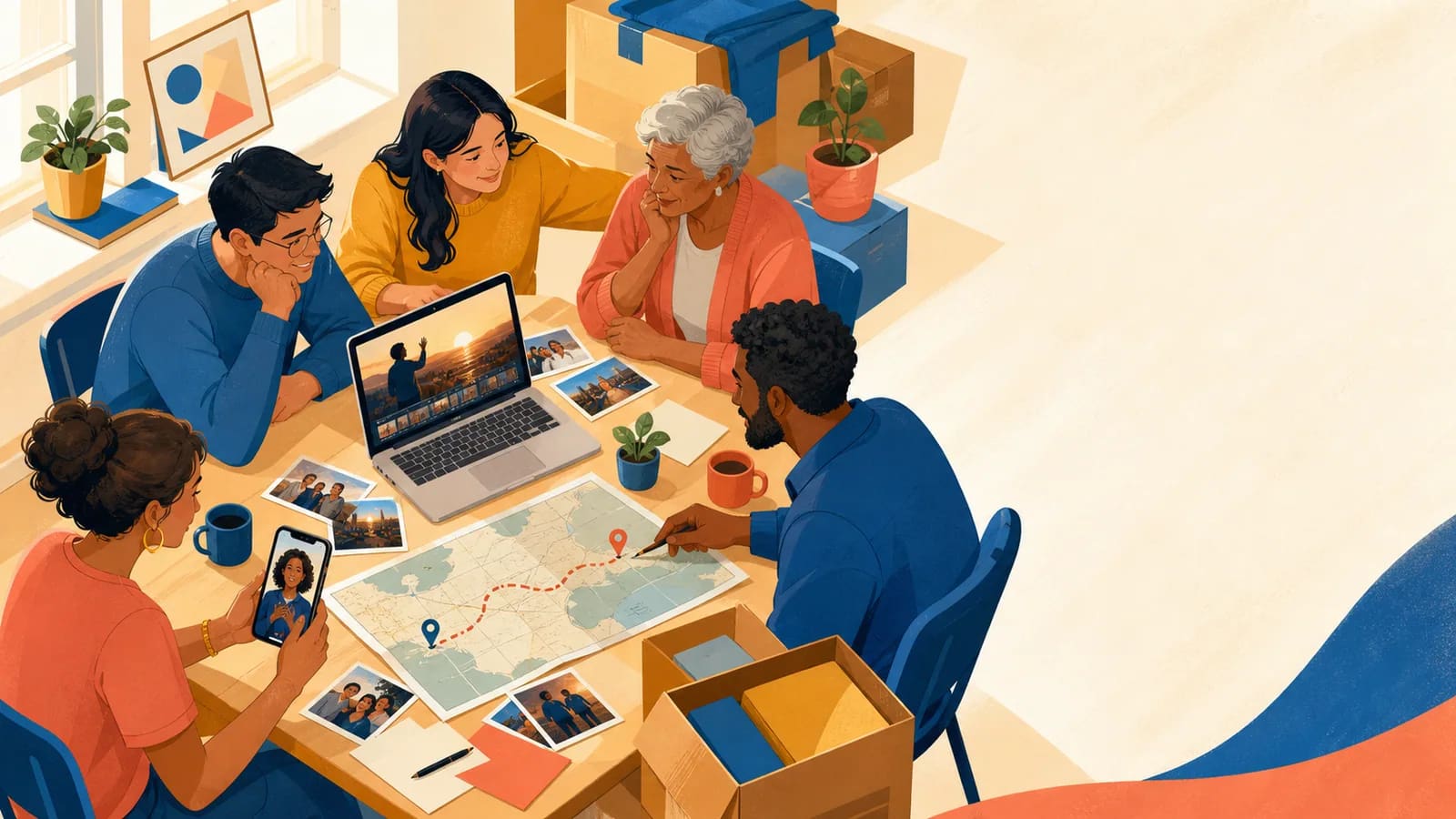
Decide who will organize the project and when the final video must be ready. Set the contribution deadline several days earlier. That gap gives you time to follow up, edit, and fix technical problems.
Write one sentence that explains the video's purpose. For example: We want Maya to remember the people and places that made this city feel like home. Use that sentence to guide every choice.
Choose the tone before inviting contributors. The video may be warm, funny, reflective, hopeful, or a mix. Tell people what tone you want so the clips do not feel disconnected.
Plan a simple beginning, middle, and ending. Open with a welcome or title. Use the middle for memories and messages. End with a group wish, a view of the new destination, or a promise to meet again.
Invite People and Collect Better Contributions
Send one request with the deadline, clip length, recording tips, and upload link. Ask for clips of about 20 to 40 seconds. Short limits help people focus and keep the finished video moving.
Give contributors two or three prompts. Do not ask them to say something nice without direction. Specific questions lead to specific stories.
Useful prompts include: What ordinary moment will you miss? Which place reminds you of this person? What made you feel welcome around them? What should they remember during their first week away?
Accept written notes and photos from people who do not want to record. Their words can appear on a simple screen or be read by the organizer. This makes the group farewell video more inclusive.
Keep every submission in one organized place. Use clear filenames with the contributor's name. Track who has replied, who needs a reminder, and whether you have permission to include each item.
Help Everyone Record a Clear Goodbye Video Message
Ask people to face a window or another soft light. The main light should be in front of them, not behind them. A quiet room usually matters more than an expensive camera.
The phone should stay still and sit near eye level. Contributors should clean the camera lens and leave a brief pause before speaking. That pause makes editing easier.
Ask everyone to look at the lens and speak as if the person were there. A natural voice is better than a memorized speech. Reading a few notes is fine, but the message should not sound like a formal announcement.
A useful message has four parts: the person's name, one specific detail, the meaning of that detail, and a wish. For example, mention the weekly dinner, explain why it mattered, and wish them well in the new city.
If someone becomes emotional, they can pause and record again. They do not need to hide every feeling. A sincere pause can belong in the final edit when the contributor is comfortable with it.
What to Say Without Sounding Generic
Start with a detail only you could share. Replace “You are a great friend” with a real example. You might mention the night they helped you move, the meal they always made, or the walk that became a weekly habit.
Say what will change after they leave. This can be small and honest: the group chat will be quieter, Sunday dinner will feel different, or nobody else knows the best local shortcut.
Add confidence about the future. Tell them which strength will help in the new place. Kindness, curiosity, patience, humour, and courage are stronger than a broad promise that everything will be perfect.
End with a practical connection. Suggest a monthly call, a future visit, a shared photo challenge, or the next planned gathering. This turns the goodbye into a bridge rather than a full stop.
Edit the Video Into a Simple Story
Begin with one strong opening clip or image. A short line such as “Before you go, we wanted you to hear this” is enough. Avoid a long title sequence.
Group similar material into chapters. You might use childhood, school, neighbourhood, trips, family, friends, and the new chapter. Another option is to arrange everything by location.
Vary the mood. Place a light story after an emotional message. Add photos between several talking clips. This gives the viewer a moment to breathe and prevents similar messages from blending together.
Use music quietly under spoken words. Choose music you have permission to use. Captions can help when audio is soft or when relatives speak different languages.
Remove repeated openings, long pauses, and private details that should not be shared. Keep imperfect moments when they add warmth. The aim is a clear keepsake, not a flawless film.
Save the finished file in a common format and watch it from beginning to end. Check names, sound levels, photo direction, and captions. Test it on the device you will use for the reveal.
Use Places to Give the Farewell Video a Clear Path
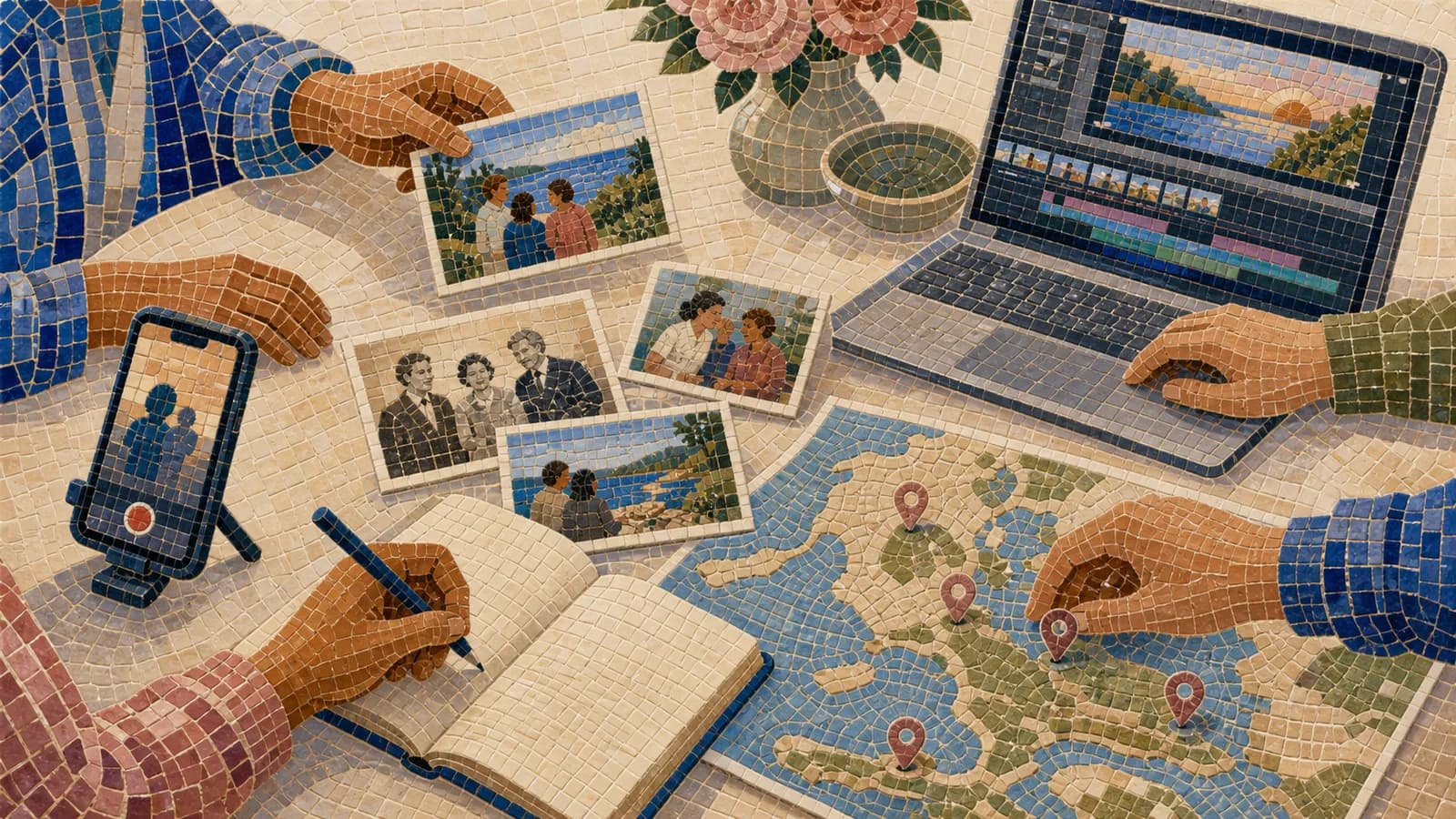
A normal montage can feel random when clips arrive from many parts of someone's life. Locations offer a natural structure. The story can move from a childhood home to school, work, favourite places, family homes, and the new city.
Ask each contributor to include one meaningful place. It may be where they met, shared a tradition, took a trip, or spent ordinary time together. The location should support the memory rather than replace it.
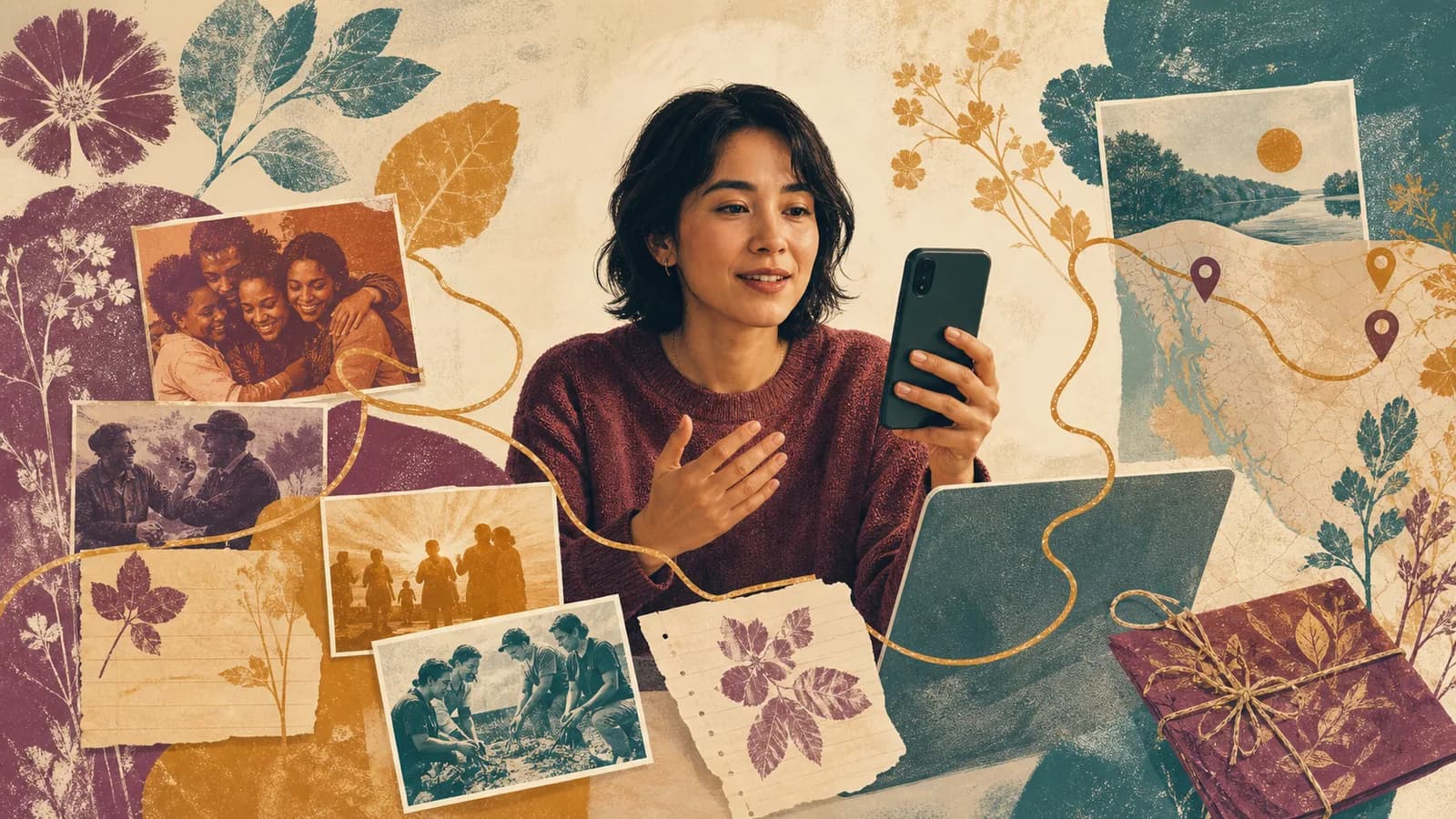
AlbumMap can help when you want to collect photos, short videos, written messages, and locations in one flow. The finished map-based story can travel between those places. This makes the route part of the farewell.
A map format is not needed for every goodbye. Use it when several locations help explain the relationship. A basic message montage may be better when the memories are not connected to distinct places.
Plan the Reveal and Protect Everyone's Privacy
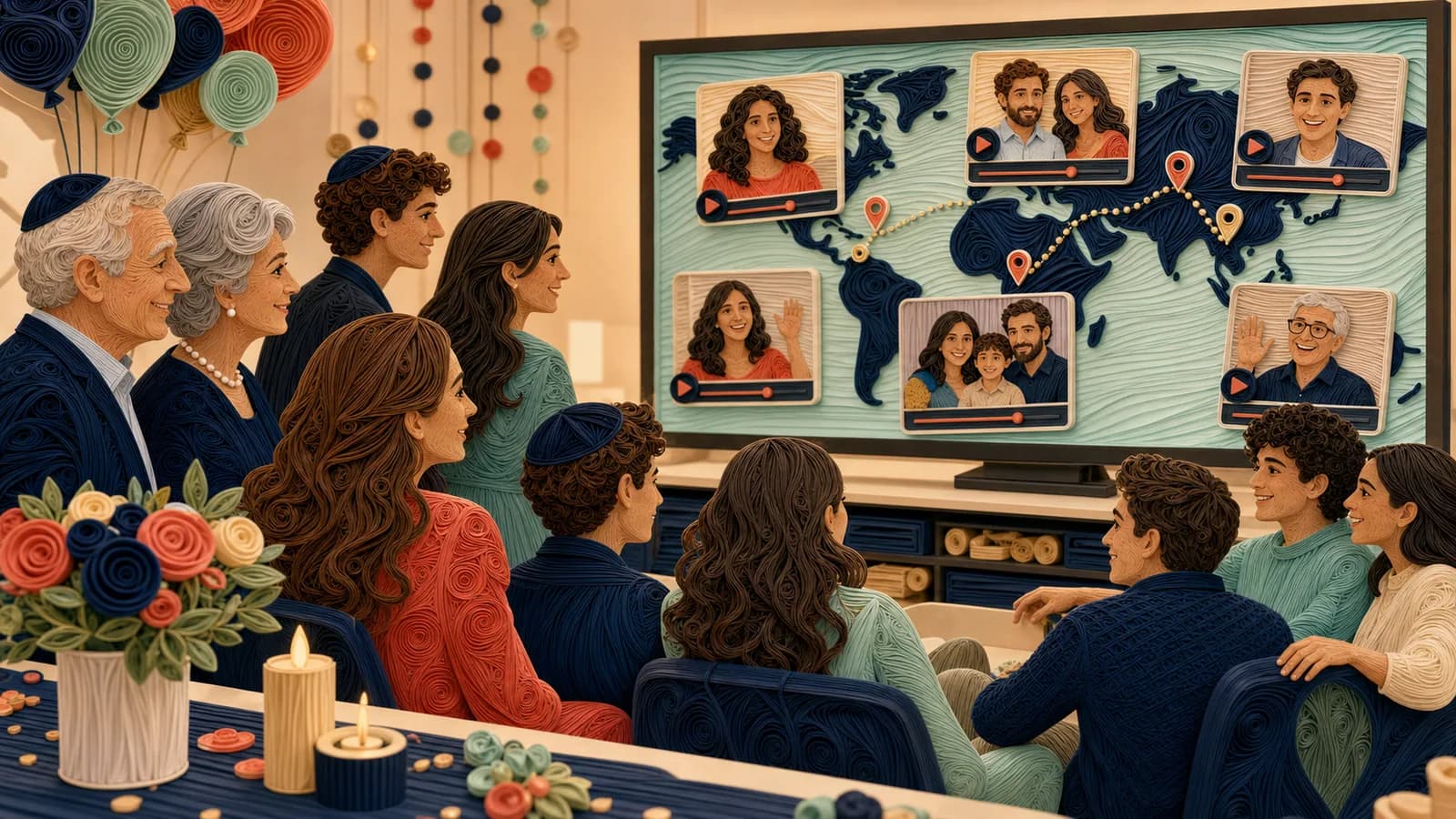
Choose a reveal that fits the person. You can play the video at a farewell dinner, share it during a family call, or send it for a quiet viewing after the move.
Test the internet, speakers, screen, and backup file before a group event. Download a copy when possible. Keep a second device ready in case the first setup fails.
Ask before posting the video on social media. A private family story may include children, home details, workplaces, or emotional messages. Private sharing is often the kinder choice.
Send the recipient a clear copy or private link after the reveal. Include a short note explaining who helped. They may value the video most during a quiet moment in their new home.
A Simple Seven-Day Production Plan
Day one: choose the organizer, format, purpose, contributor list, and reveal date. Set a submission deadline for day four.
Day two: send the invitation and prompts. Contact older relatives or anyone who may need recording help.
Day three: collect early clips and check their sound. Reply quickly if someone needs to record again.
Day four: send one kind reminder and close submissions. Organize clips, photos, notes, names, and locations.
Day five: build the first edit. Arrange the story, trim clips, add photos, and balance the sound.
Day six: review the full video with one trusted person. Check privacy, spelling, pacing, and music permission.
Day seven: export and test the final version. Prepare a backup, then share the farewell in the way that suits the recipient.
Common Mistakes to Avoid
Do not wait until the final weekend to collect clips. Late requests produce rushed messages and leave little time for fixes.
Do not invite everyone without giving prompts. Many people will repeat the same general wish. One clear question can make each contribution more useful.
Do not make the person watch every photo you can find. Select memories that support the story. A shorter, focused video often feels more thoughtful.
Do not use jokes that embarrass the recipient or reveal private history. If you are unsure, leave the joke out or ask the contributor for another version.
Do not make the whole farewell about your own sadness. Leave room for excitement, courage, and the person's reasons for moving.
Do not add a map only as decoration. Locations should connect to real memories, people, or parts of the journey.
Examples You Can Copy
Copy-ready invitation to contributors
Hi everyone, we are making a farewell video for [Name] before the move. Please send a 20-to-40-second phone video by [date]. Share one memory, one thing you will miss, or one wish for the new chapter. You may also send a photo or written note. Upload everything here: [link]. Please keep it a surprise.
Copy-ready invitation with a location prompt
We are building a video around the places that shaped [Name]'s life here. Please send one short message, a photo or clip, and the location connected to your memory. It might be a home, school, park, café, trip, or family gathering place. Please submit it by [date] at [link].
Copy-ready reminder
A quick reminder that messages for [Name]'s farewell video are due on [date]. A simple phone recording is perfect. If you feel stuck, answer this: What ordinary moment with [Name] will you miss most? Upload your clip, photo, or note here: [link]. Thank you.
Heartfelt message for a close friend
Sam, I will miss our Saturday walks and the way a quick coffee always became a two-hour talk. You made this city feel smaller and kinder. I am excited for everything waiting for you in [new city]. Let us keep our first Sunday call on the calendar.
Warm message for a family member
Mum, this house holds so many memories because you made people feel welcome in it. I will always remember the crowded holiday meals and your open door. I hope your new home gives you rest, good neighbours, and many reasons for us to visit.
Light message for a friend
Alex, I support this move, although I strongly question your decision to live farther from our favourite pizza. I will miss the last-minute plans and your terrible directions. Your new city is lucky to get you. Save a weekend for our first visit.
Final Thoughts
A moving away video does not need perfect speeches or advanced editing. It needs honest voices, useful prompts, and a story that fits the person. Choose one format, collect short contributions, and leave space for both sadness and hope. When the memories connect to several homes, schools, trips, cities, or family places, a map can give the story a natural route. AlbumMap can bring those locations together with shared photos, clips, and written messages. The result can help someone carry a clear piece of home into the next chapter.
Helpful answers
Frequently asked questions
- How long should a moving away video be?
- Aim for about three to eight minutes for most personal farewells. A small family project may be shorter. A large group can run longer if each message adds a new detail. Ask contributors for clips of 20 to 40 seconds and remove repeated material.
- What should I say to a friend who is moving?
- Name one memory, explain what the friendship means, and offer a hopeful wish. Add a practical plan for staying connected. Specific details sound warmer than broad praise, so mention a routine, place, joke, or moment that belongs to your friendship.
- How many people should contribute to a farewell video?
- There is no required number. Three thoughtful messages can be enough for a close family goodbye. A wider tribute may include friends, relatives, neighbours, classmates, and former roommates. Invite people who can add a real memory or useful wish.
- Can people contribute without recording themselves?
- Yes. Accept photos, written messages, voice recordings, or a favourite place connected to the recipient. The organizer can place a written note on screen or read it aloud. Offering choices makes the project easier for shy contributors and relatives who need technical help.
- When does a map-based farewell video work best?
- Use a map when places are important to the story. Good examples include a childhood home, school, first apartment, favourite café, family houses, shared trips, and the new destination. A simple montage may be better when locations do not add meaning.