How to Make a Get-Well Video From Friends and Family
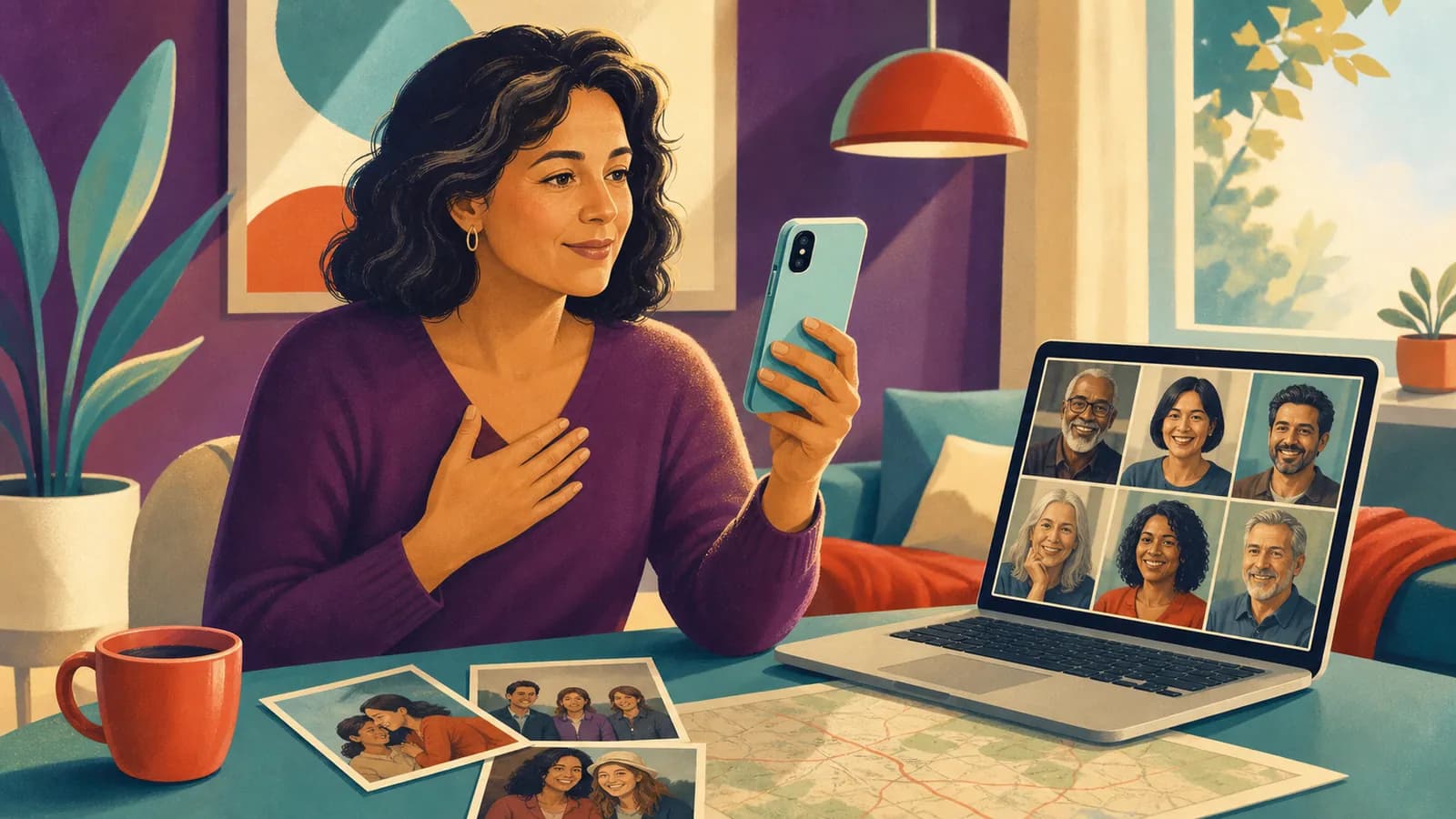
A get well video can bring familiar faces and caring voices together when someone needs support. It works well when friends and family live far apart or cannot visit. The video does not need polished speeches or perfect editing. A few short, honest messages can help the recipient feel remembered without placing any demands on them.
Start with the recipient, not the video
Before inviting anyone, think about what the recipient would welcome. Some people enjoy a cheerful surprise. Others may prefer a quiet message they can watch in private. If you are unsure, ask a close family member or caregiver about the best tone and delivery time.
Be careful with health details. Do not name a diagnosis, treatment, or hospital unless the person has shared that information openly. Tell contributors to keep the finished video private unless the recipient gives permission to share it.
The phrase “get well soon” may not fit a long illness, chronic condition, or uncertain diagnosis. In those cases, use “thinking of you,” “sending support,” or “we are with you.” The goal is to show care, not predict what will happen.
How to plan your get well video
Choose one organizer to collect clips, answer questions, and make final decisions. Set a clear deadline that leaves time for reminders and editing. Three to seven days is often enough for a small group, but a larger family may need longer.
Plan for a short final video. Five to eight minutes is usually easier to watch than a long program, especially when someone is tired. If many people want to join, ask each person for a clip of 20 to 40 seconds.
Pick a simple shape for the video. You might open with a title card, follow with messages from close family, add friends and coworkers, and end with one gentle group wish. A clear plan prevents repeated messages and makes editing easier.
Send one clear invitation
People respond faster when they know exactly what to record. Your invitation should name the recipient, explain the purpose, set a deadline, and give a suggested clip length. It should also tell people whether the video is a surprise.
Use one upload method whenever possible. Files sent across texts, email threads, and social apps are easy to lose. A single contribution link keeps names, clips, photos, and written notes together.
Send one friendly reminder before the deadline. Avoid repeated pressure. Someone who cannot record may still contribute a photo or short written message.
Give contributors easy recording prompts
Blank screens can make people freeze. Offer two or three prompts, but let each person choose one. Good options include: “What do you appreciate about them?” “What memory always makes you smile?” and “What would you like them to know today?”
For someone recovering from a short illness or surgery, contributors can mention a future plan. Keep it flexible: “When you feel ready, I would love to have lunch.” This is kinder than setting a date or telling the person when they should feel better.
For a longer or uncertain health journey, focus on the present. Contributors can say they are thinking of the person, name something they value about them, or offer specific help. They should not give medical advice unless the recipient requested it.
Record short clips that are easy to watch
A phone camera is enough. Record in a quiet room with soft light facing the speaker. Place the phone at eye level and look toward the camera. A plain background helps the message remain the focus.
Ask everyone to use the same phone position. Horizontal clips often suit a television or laptop, while vertical clips suit a phone. Either can work, but a consistent choice makes the final edit feel calmer.
Speak a little slower than usual and leave a brief pause at the start and end. Avoid loud music behind the speaker. If possible, add captions so the recipient can watch without sound or follow every message more easily.
The clip does not need to be flawless. A natural pause or small laugh can make it feel real. Clear sound and sincere words matter more than a formal performance.
What to say in a supportive message
A useful message has three parts: a warm greeting, one personal detail, and a caring close. The personal detail could be a memory, a quality you value, or a simple offer of help. This structure keeps the message specific without making it long.
Try to avoid lines such as “Everything happens for a reason,” “You must stay positive,” or “I know exactly how you feel.” These phrases can reduce a difficult experience to a lesson. They may also make the person feel responsible for comforting everyone else.
Do not ask for updates in the video. The recipient should be free to watch without replying. If you offer help, make it specific and low-pressure, such as bringing groceries or handling a school pickup.
Add photos and memories with care
A few familiar photos can give the messages more context. Choose images that the recipient already likes. Avoid hospital photos or private health images unless they have clearly approved their use.
Short memory captions can connect the pictures. Use simple details such as “Our rainy weekend in Halifax” or “The picnic where the cake fell over.” A specific caption is warmer than a general label.
Humor can help when it matches the person's style. Choose a shared joke rather than making the illness the joke. If there is any doubt, leave it out or ask someone close to the recipient.
Use places to tell a wider story with AlbumMap
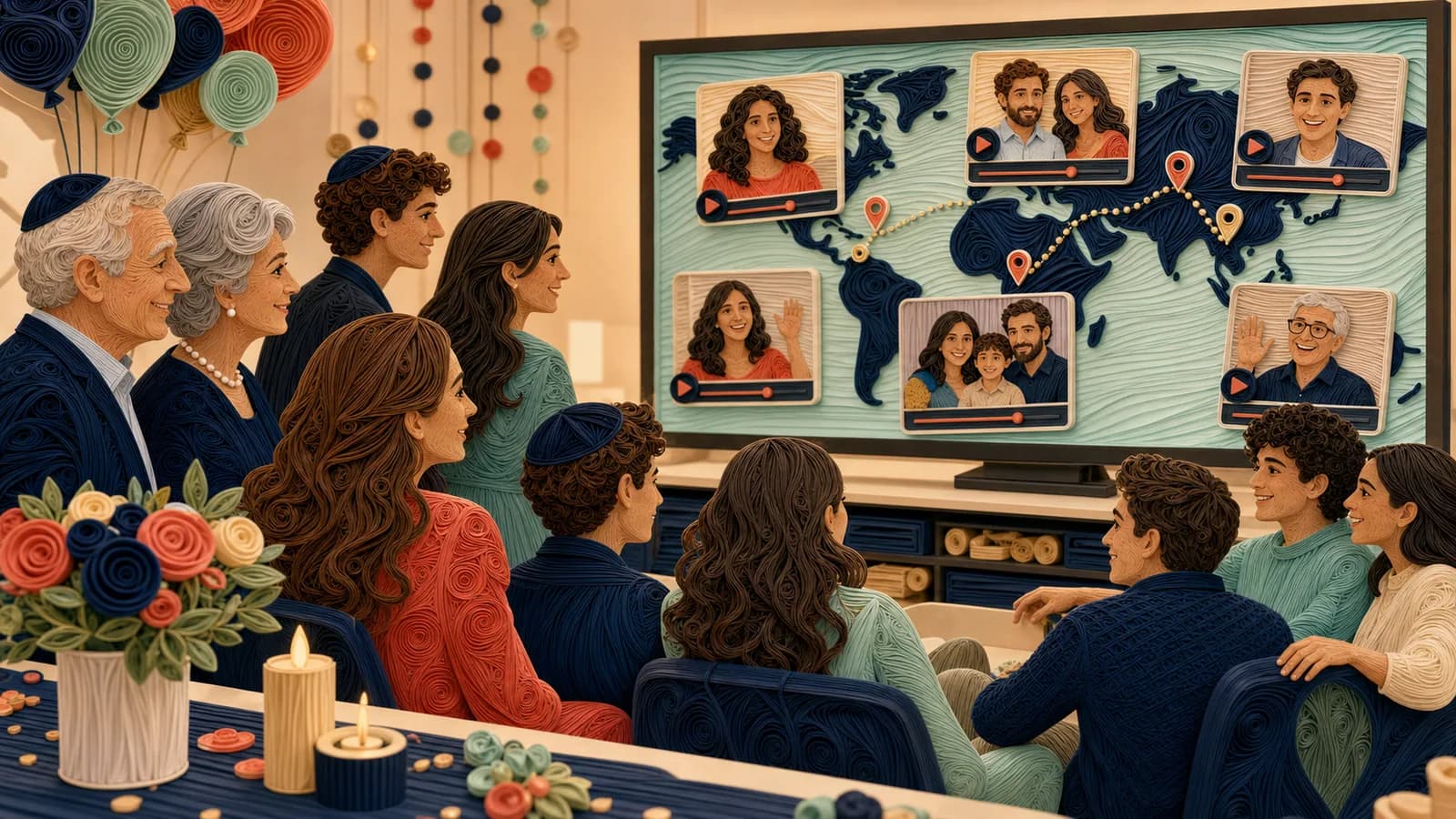
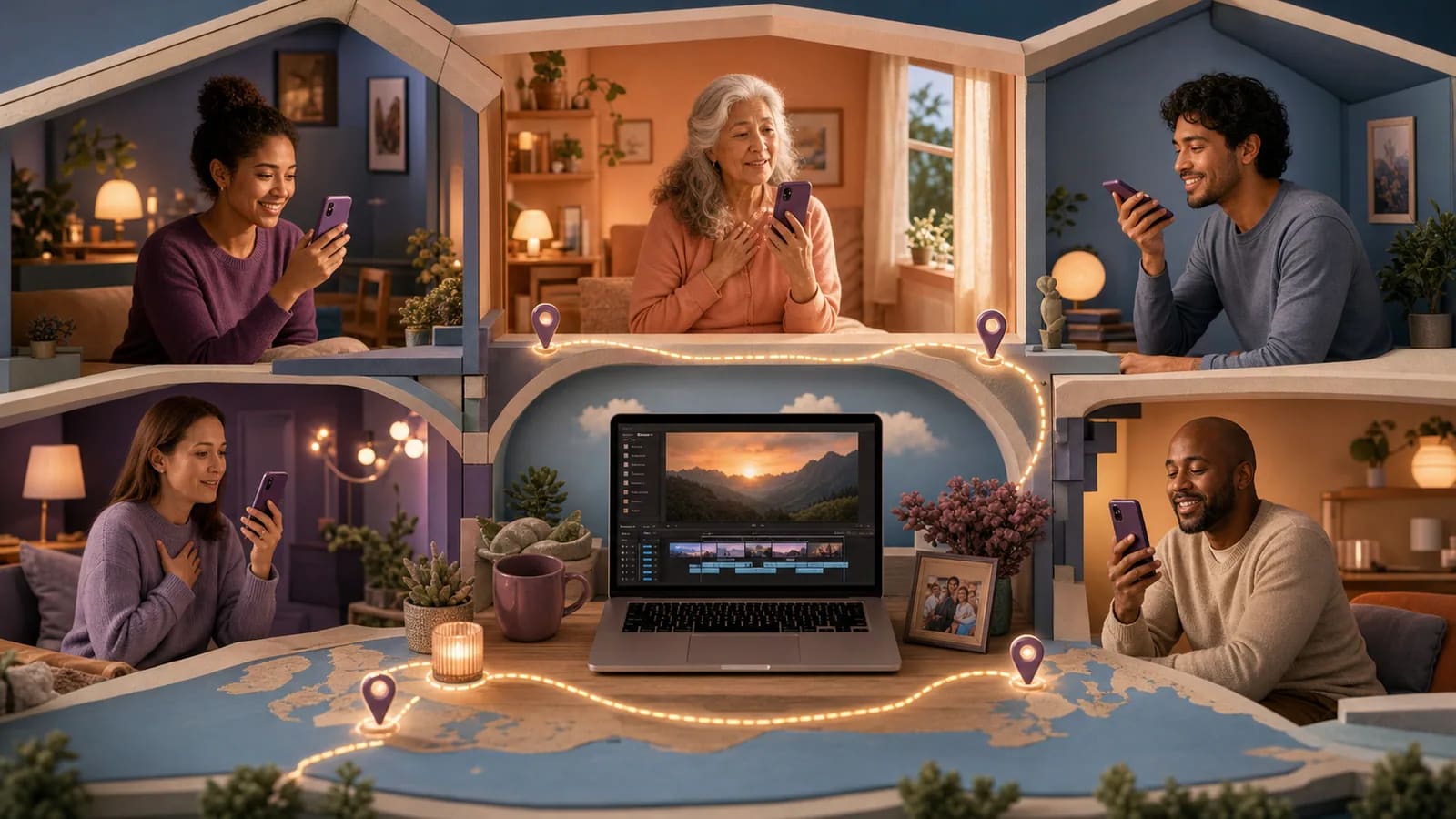
AlbumMap is useful when the group is spread across different cities or when memories are tied to places. Friends can contribute photos, short clips, written messages, and locations through one link. The finished map video can move between the places connected to those memories.
For example, the story might begin at the recipient's hometown, stop at a school or family home, and then visit the cities where friends live today. Each place can hold one kind message or familiar photo. The map gives the video a gentle structure without turning it into a formal speech.
Locations should be meaningful, but they do not need to be exact addresses. A city, park, campus, or favorite travel stop may be enough. Avoid displaying a home or hospital location if privacy could be a concern.
Arrange the messages into a calm flow
Open with a short title such as “Messages for Maya” or “We are thinking of you.” Avoid dramatic language. A quiet opening helps the recipient understand what they are about to watch.
Place a familiar face near the beginning. Then mix close family, friends, coworkers, photos, and written notes. If two clips share the same idea, separate them with a different memory or image.
Keep transitions simple and music soft. Check that the music does not cover anyone's voice. You can also skip music if the recipient is sensitive to sound or the spoken messages already carry the right mood.
End without asking the recipient to respond. A final line such as “Watch whenever you want, and know that we are here” gives them room to rest.
Review privacy, comfort, and accessibility
Watch the full video before sending it. Check names, captions, volume, image order, and private details. Remove jokes or health comments that could embarrass the recipient.
Make sure the video can be opened on the device they use. Provide a direct link and a short note explaining what it is. If their internet connection is limited, offer a smaller file or ask a family member to help with playback.
Captions, readable text, and steady audio make the video easier to enjoy. Avoid flashing effects and tiny on-screen words. Give each text card enough time to read.
Share the finished video only with the recipient and approved viewers. Do not post it on social media or play it at a public gathering without consent.
Choose a gentle way to deliver it
Timing matters. Ask a caregiver or close relative when the person is likely to have energy. A video can wait until they are home, awake, or ready for company.
Send a short note with the link. Say that there is no need to watch right away or reply. This removes pressure and lets the recipient choose the moment.
If the person is in a hospital or care setting, headphones may help protect their privacy. A family member can also save the video for later if screens or sound are not welcome at that time.
Examples You Can Copy
Copy-ready invitation to contributors
Hi everyone. We are making a short support video for [Name]. Please record a 20- to 40-second message by [date]. You could share a favorite memory, say what you appreciate about them, or offer a few kind words. Please upload your clip here: [link]. The video is a surprise, so please keep it private.
Copy-ready reminder
A gentle reminder that messages for [Name] are due on [date]. A simple phone recording is perfect. If you cannot record, you can add a photo or written note instead. Here is the contribution link: [link]. Thank you for helping us send some care.
Message after surgery
Hi, Maya. I am thinking of you and hope today feels a little easier. I still laugh about our rainy picnic and the cake sliding off the table. When you feel ready, I would love to bring lunch. There is no need to reply. Just rest and know I am here.
Message for a longer health journey
Hi, Daniel. I wanted you to see a familiar face and hear how much you mean to me. Your patience and dry sense of humor have helped me through many hard days. I am thinking of you this week, and I am here for practical help or quiet company.
Message from a coworker group
Hi, Priya. Everyone on the team is thinking of you. We miss your thoughtful questions and the way you make Monday meetings easier. Please focus on yourself. We have your work covered, and there is no need to send updates.
Delivery note for the recipient
We made this for you with messages from people who care about you. Watch it whenever you have the time and energy. There is no need to reply. We simply wanted you to know that you are in our thoughts.
Final Thoughts
A thoughtful get well video is not about perfect editing or saying something profound. It is about helping someone see the people who care about them. Keep the clips short, the language honest, and the delivery private. When photos, messages, and shared places add meaning, AlbumMap can bring those pieces into one map-based story. Most of all, let the recipient watch in their own time and without any pressure to respond.
Helpful answers
Frequently asked questions
- How long should a get well video be?
- Aim for about five to eight minutes when the recipient may be tired. Ask each contributor for 20 to 40 seconds. A larger group can make a longer video, but short chapters or separate videos may be easier to watch.
- What should I say when recovery is uncertain?
- Focus on care in the present. Say that you are thinking of the person, share something you value about them, or offer specific help. Use “thinking of you” instead of promising that they will recover soon.
- Can someone contribute without recording a video?
- Yes. A photo, written note, voice message, or meaningful location can still add warmth. Giving people several ways to join also makes the project more accessible.
- Should the video be a surprise?
- Only if the recipient normally enjoys surprises and privacy can be protected. For a serious illness or hospital stay, ask a close relative or caregiver whether a surprise would feel welcome.
- Can I share the finished video on social media?
- Ask the recipient and every identifiable contributor first. Health information and personal messages may be private. Sending a direct link to approved viewers is usually the safer choice.
- How can AlbumMap be used for a support video?
- AlbumMap can collect photos, clips, written messages, and locations from the group. It is especially useful when contributors live far apart or when important memories are connected to different places.