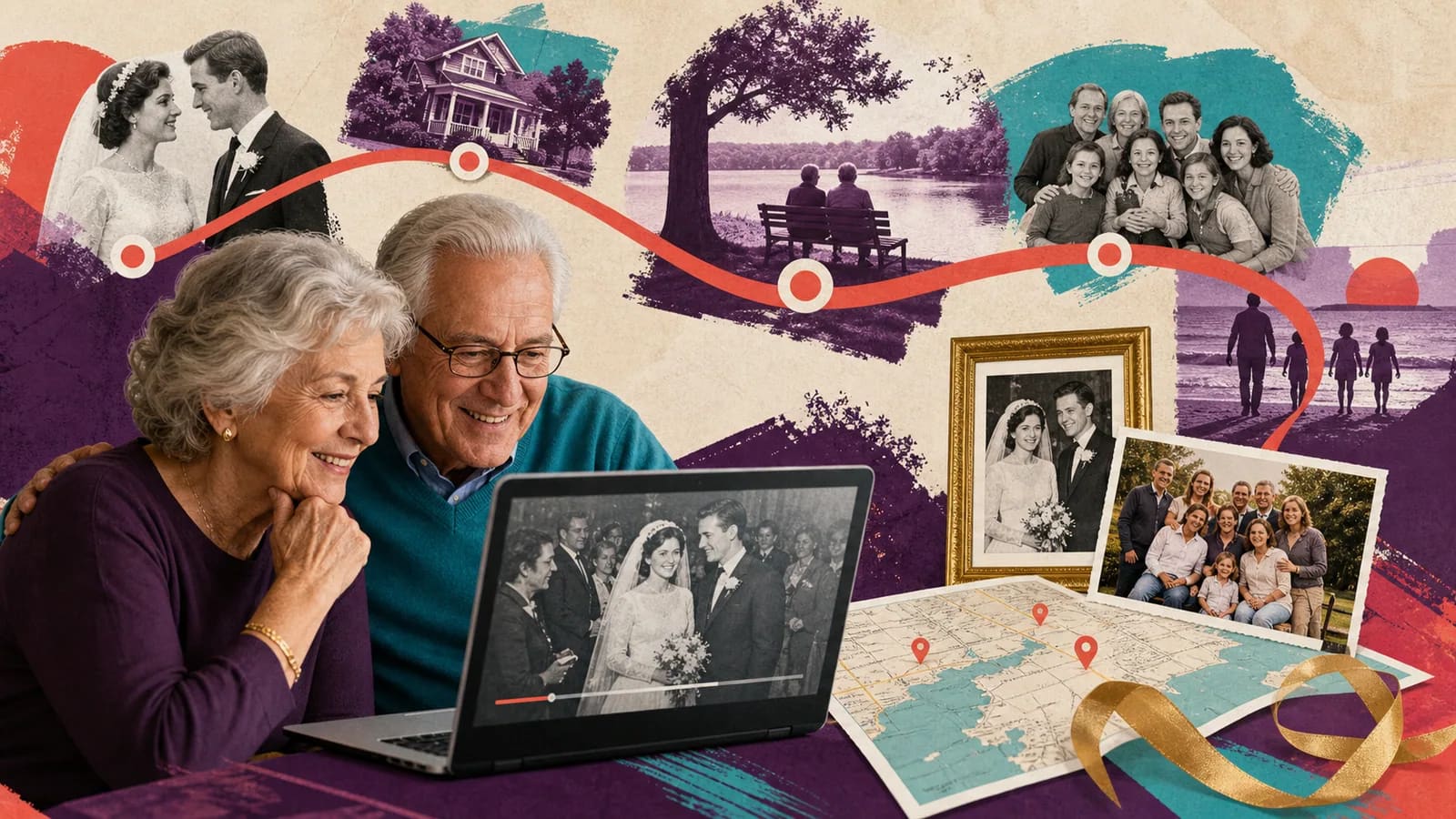
A 50th anniversary video can hold more than wedding photos and congratulations. It can show how two people built a home, raised a family, kept old friendships, faced change, and made ordinary days matter. The best video does not try to cover every event. It selects the stories, voices, and places that make their fifty years feel real. You can make the gift for your parents, grandparents, spouse, relatives, or close friends. Start with a clear idea, then ask others for small and specific contributions. This guide gives you video themes, a simple plan, useful prompts, and scripts you can copy.
Idea card 1 of 13
Decide what the video should celebrate
Fifty years can produce thousands of photos and stories. Trying to include them all will make the project hard to finish. Choose one main purpose before collecting anything.
The video could thank the couple for the family they created. It could trace their shared journey through homes and trips. It could bring distant friends into the celebration. It could also record lessons that children and grandchildren want to keep.
Write the purpose in one sentence. For example: This video will show how Mum and Dad made every home feel welcoming. Use that sentence to decide what belongs.
Idea card 2 of 13
Nine 50th anniversary video ideas for a life together
1. Build five chapters for five decades. Give each decade a short section. Add a few photos, one key story, and a voice from someone who knew the couple then. Keep the chapters balanced, even if recent years have more digital photos.
2. Follow the places that shaped their marriage. Begin where they met or married. Move through homes, work moves, family towns, and favorite trips. A map-based route gives fifty years a clear shape.
3. Gather voices from each generation. Invite siblings, old friends, children, grandchildren, and newer friends. Ask each person to explain their link to the couple. This helps viewers follow the story.
4. Share fifty small things people love about them. Give each person one or two items. Mix warm details with gentle humor. A morning routine or famous family recipe may say more than a formal speech.
5. Pair then-and-now moments. Match an early home with the home they enjoy now. Pair a wedding dance with a recent dance. Add one sentence explaining what remained the same.
6. Celebrate the everyday parts of marriage. Ask about Sunday calls, garden work, road-trip snacks, holiday routines, or the way they welcome guests. Small habits make the story personal.
7. Let meaningful objects introduce memories. A wedding invitation, handwritten letter, recipe card, souvenir, or old tool can open a chapter. Photograph the object clearly and explain why it matters.
8. Record lessons without turning the video into an interview. Ask what the couple taught others about patience, teamwork, family, or humor. Specific observations will feel warmer than broad praise.
9. Make a message from far away. Invite people who cannot attend to record from their city. They can name where they are, share one memory, and offer a short wish. These clips make distance part of the gift.
Idea card 3 of 13
Plan the project in six simple steps
First, choose one organizer. That person tracks invitations, files, dates, and permissions. A second person can check names and family details.
Next, list the people and life chapters you want to include. Set a contribution deadline at least one or two weeks before your editing deadline. Send one reminder halfway through.
Then ask each person for a short clip, one photo, and one focused memory. Sort incoming material by decade, theme, or place. Build a rough order before choosing music or effects.
Finally, review the full video on the screen you will use for the reveal. Check sound, captions, dates, names, and private details. Save a backup copy on another device.
Idea card 4 of 13
Choose five themes or five dated decades
A clear order keeps an anniversary slideshow from feeling like a random folder. Open with the couple's names, wedding date, and a recent photograph. Then choose five themes or five actual ten-year periods, labeling which structure you are using.
Thematic chapters might be Beginnings, Shared Routines, People Who Matter, Adventures and Traditions, and Life Today. These are themes, not five decades. You do not need equal time for every year. Give more time to stories that reveal the couple's character.
End in the present. A recent clip reminds viewers that this is a living story, not only a look backward. Finish with a shared message from the family or a few quiet words from the organizer.
Idea card 5 of 13
Golden anniversary: a balanced five-decade worksheet
For fifty years, choose either five dated ten-year periods or five themes. Do not label thematic sections as decades. An example celebrating 1976–2026 can use the periods below, with the anniversary in 2026 as a separate closing. Use the couple’s real dates in your version.
| Period | Select one item from each voice | Evidence to retain |
|---|---|---|
| 1976–1985 | A beginning both people want remembered | Date/source and permission for one original or scan. |
| 1986–1995 | A shared routine or friendship | Who remembers it; mark approximate dates. |
| 1996–2005 | A change or meaningful place | A broad place and what each person says mattered. |
| 2006–2015 | A tradition or adventure | Approved image and short caption. |
| 2016–2025 | Life together in recent years | Current wishes and an image both approve. |
A ten-second opening + five twenty-six-second chapters + a ten-second present-day closing = 150 seconds. Chapter time includes voices, photos and transitions. A longer private archive can preserve full interviews; it is not a default five-to-ten-minute screening.
Fifty years ago, [Names] began a life together. That life grew through homes, journeys, family meals, hard days, happy news, and thousands of ordinary moments. These memories come from people who were lucky enough to share part of the journey.
Work on copies of old photographs and keep original scans. Use the photo-scanning guide and family-history interview guide when a caption or memory needs context. Represent both people, and do not make children or grandchildren the only narrators.
Idea card 6 of 13
Ask for stories instead of general congratulations
A broad request often produces repeated messages. Give each person one prompt. Ask them to describe a moment, place, habit, or lesson.
Useful prompts include: What is your earliest memory of them together? When did they make you feel welcome? Which place brings them to mind? What family tradition did they begin? What still makes them laugh? What did their marriage teach you?
Suggest a clip length of about 20 to 45 seconds for most people. Close family members may need longer. Let nervous contributors send a written note, photo, or voice recording instead.
Idea card 7 of 13
Handle old photographs and home videos with care
Old material may need more preparation than phone clips. Scan photographs at a useful size and keep the original files. Crop copies instead of changing the only scan. Label each file with a date, place, and names when known.
Do not discard a photo because it is faded or imperfect. A clear copy of a meaningful moment is often more useful than a polished but generic image. Ask an older relative to check uncertain names and dates.
Get permission before using private letters, sensitive stories, or images of someone who may not want to appear. If a memory could embarrass the couple, leave it out or ask first.
Idea card 8 of 13
Turn meaningful places into an AlbumMap story
AlbumMap is useful when the couple's history is tied to places. You can connect photos, short videos, written messages, and locations in one map-based story.
Choose a small set of stops. These might include where they met, the wedding venue, a first home, a town where the family grew, and a favorite trip. Add one strong memory to each stop. The map then becomes the structure, rather than a decoration.
Family and friends can contribute from their own phones. This can help when memories are spread across households and group chats. It also gives people who dislike recording another way to join through a photo or written message.
Idea card 9 of 13
Edit for warmth, clarity, and easy viewing
Use simple cuts and gentle fades. Fast effects can distract from older photographs and spoken memories. Keep title cards brief and use large, high-contrast text.
Balance the sound before the reveal. Phone clips may have very different volume levels. Remove long pauses, but do not cut every natural breath or laugh.
Add captions to spoken clips when possible. Captions help guests follow soft voices and recordings made in noisy rooms. They also make the gift easier to enjoy with the sound low.
Choose music that supports the words. Use music you have permission to include. If the couple has a special song, confirm that your planned sharing method allows its use.
Idea card 10 of 13
Plan a reveal that suits the couple
A large party screen can work for an outgoing couple. A quiet home viewing may suit a private couple better. Think about their comfort before planning a surprise.
For a party, test the screen, speakers, cables, and internet connection. Keep an offline copy ready. Ask one person to introduce the video and another to manage playback.
You can also send the finished video with a printed card or QR code. Give the couple a saved copy and simple instructions for watching it again.
Idea card 11 of 13
Avoid common golden-anniversary video mistakes
Do not let one decade take over only because it has more photos. Do not use long clips without a clear point. Avoid jokes that need private context or stories that could make someone uncomfortable.
Do not ask contributors to send anything they want. Clear prompts produce better material. Do not wait until the last few days to collect files. Older photos, missing dates, and late replies take time.
Most of all, do not confuse polish with meaning. Clean sound, a clear order, and honest memories matter more than complex effects.
Idea card 12 of 13
Examples You Can Copy
Copy-ready contribution request
Hello everyone. We are making a golden wedding anniversary video for [Names]. Please send one 20 to 45 second clip by [date, time and named time zone]. Share one memory, one thing you learned from them, or one place that reminds you of their life together. You may also send one favorite photo. A simple phone recording is perfect.
Copy-ready memory prompt
Start by saying your name and how you know [Names]. Then share one specific moment you remember. Tell them why that moment stayed with you. End with one short wish for their anniversary.
Copy-ready opening narration
Fifty years ago, [Names] began a life together. That life grew through homes, journeys, family meals, hard days, happy news, and thousands of ordinary moments. These memories come from people who were lucky enough to share part of the journey.
Copy-ready map chapter plan
Stop 1: where they met. Stop 2: where they married. Stop 3: their first home. Stop 4: the place where family life grew. Stop 5: a favorite journey. Stop 6: where they are celebrating today. Add one photo, one short story, and one message to each stop.
Copy-ready party introduction
Before we raise our next toast, we have a gift made by family and friends near and far. It follows some of the people, places, and memories that became part of [Names'] fifty years together. We hope it brings back a few stories and creates one more.
Idea card 13 of 13
Final Thoughts
The best 50th anniversary video will not explain every year. It will help the couple recognize their life in the details. Choose a clear theme, ask for specific memories, and give the story room to breathe. If places are central to that story, AlbumMap can bring the photos, clips, written messages, and locations into one map video gift. The result can feel like a journey through the life they built together.
For other anniversary lengths and a three-minute example, see the general anniversary video guide.
Your shortlist
Ideas you saved
Tap “Save to shortlist” on any idea card and it lands here, ready to compare.
- Decide what the video should celebrate
- Nine 50th anniversary video ideas for a life together
- Plan the project in six simple steps
- Choose five themes or five dated decades
- Golden anniversary: a balanced five-decade worksheet
- Ask for stories instead of general congratulations
- Handle old photographs and home videos with care
- Turn meaningful places into an AlbumMap story
- Edit for warmth, clarity, and easy viewing
- Plan a reveal that suits the couple
- Avoid common golden-anniversary video mistakes
- Examples You Can Copy
- Final Thoughts
Helpful answers
Frequently asked questions
What should a 50th anniversary video include?
Include a small set of early photos, family milestones, everyday memories, short messages, and recent moments. Add places, objects, or traditions that help explain the couple's story. A focused selection is better than every available file.
How long should a golden wedding anniversary video be?
Choose a length for the couple and the viewing setting. The five-decade worksheet in this guide uses 150 seconds: ten-second opening, five twenty-six-second chapters and ten-second closing. Keep longer interviews in a separate optional archive.
What should family members say in the video?
Ask each person to share one specific memory, lesson, habit, or place. They can explain what they admire about the couple and end with a short anniversary wish. A clear prompt helps people avoid generic congratulations.
How early should I start collecting clips and photos?
Start several weeks before the celebration when possible. Set the contribution deadline at least one or two weeks before the editing deadline. This leaves time to send reminders, scan old photographs, check details, and test the finished video.
Can people take part without recording a video?
Yes. A contributor can send a photograph, written message, voice recording, scanned letter, or meaningful location. Offering choices helps older relatives, camera-shy guests, and people with limited time take part.
When is AlbumMap a good fit for this video project?
AlbumMap can collect photos, short videos, written messages, and locations from family and friends. Those pieces can form a video that travels through places from the couple's shared life, such as their wedding venue, homes, and favorite trips.