Engagement Video Ideas That Tell the Couple’s Story
The best engagement video ideas do more than show a ring or a set of polished portraits. They help people understand the couple. A strong video can show how they met, what changed along the way, and why this next step matters. You can build that story with old photos, phone clips, short interviews, written messages, and a few meaningful places. You do not need a large crew or a complex script. You need a clear purpose, honest material, and a simple order that viewers can follow.
Decide What the Engagement Video Needs to Do
Start by choosing the viewing moment. Will the couple share the video as their announcement? Will they play it at an engagement party? Is it a private gift from one partner, or a surprise made by family and friends?
The answer changes the story. A public announcement should be short and easy to understand. A private gift can hold quieter memories and longer messages. A party video can include more friends, humor, and shared history.
Write one sentence that defines the job. For example: “This video will show how Nia and Sam grew from college friends into future spouses.” Use that sentence to guide every choice.
Engagement Video Ideas for a Story That Feels Personal
1. Make a meeting-to-engagement timeline. Begin with the earliest photo, message, or place you can find. Move through the first date, early trips, family meetings, a shared home, and the proposal. Choose turning points instead of trying to include every month.
2. Record a two-voice interview. Ask each partner the same questions in separate recordings. Try: What did you first notice? When did the relationship feel serious? What small habit do you love? Place their answers beside matching photos and clips.
3. Build the story around meaningful places. Use the café where they met, a favorite park, the first apartment, a regular holiday spot, and the proposal location. Each place should introduce a memory or change in the relationship.
4. Ask loved ones to tell one chapter each. A sibling might cover childhood context. A college friend can explain how the couple met. A parent can share when the relationship began to feel lasting. This creates a group video without filling it with repeated congratulations.
5. Film an ordinary day together. Capture cooking, walking the dog, visiting a market, or sharing a favorite weekend routine. These small scenes often reveal more personality than formal poses. Add a short voice-over about why the routine matters.
6. Turn the proposal into the final chapter. If you have proposal footage, save it for the emotional peak. Show a little of the day, the setting, the reaction, and the first call afterward. If no one filmed it, let the couple retell the moment instead of staging it again.
7. Use letters or voice notes. Each partner can read a short letter about the past, present, and future. Old texts or notes may also help, but use them only with permission. Keep private details off a public version.
8. End with the next chapter. Show the wedding date, a future home, a planned trip, or a simple statement about what comes next. The ending should look forward without turning into a full wedding invitation.
Give the Story a Beginning, Middle, and End
A clear structure matters more than fancy effects. The beginning introduces the two people and the world they lived in before becoming a couple. One early photo from each person may be enough before the story brings them together.
The middle shows change. Include the first date, shared interests, hard seasons, trips, family moments, and choices that built trust. Use only the events that help viewers understand the relationship.
The ending covers the proposal and the future. Let the strongest image, clip, or spoken line appear near this point. Then close with one calm final frame rather than a long series of effects.
Try to give each chapter one job. A chapter may introduce a person, reveal a new side of the relationship, or mark a turning point. If a photo adds no new detail, it may not need to be in the finished video.
Choose Material That Shows More Than It Tells
Gather the material before writing a detailed script. Look for early photos, casual phone videos, travel clips, voice notes, short messages, and images from key places. Ask for dates, names, and one line of context with every file.
Small details make the story believable. A train ticket, saved menu, handwritten note, or clip from a rainy trip can carry more meaning than another posed portrait. Use details that belong to this couple alone.
Mix polished and imperfect material. Professional engagement photos can set the scene, while old phone clips add warmth and history. A few rough clips are fine when the sound and meaning are clear.
Create a simple selection rule. Keep an item when it adds a new person, place, feeling, or turning point. Remove near-duplicates and anything that needs a long explanation.
Use Places to Connect the Couple’s Chapters
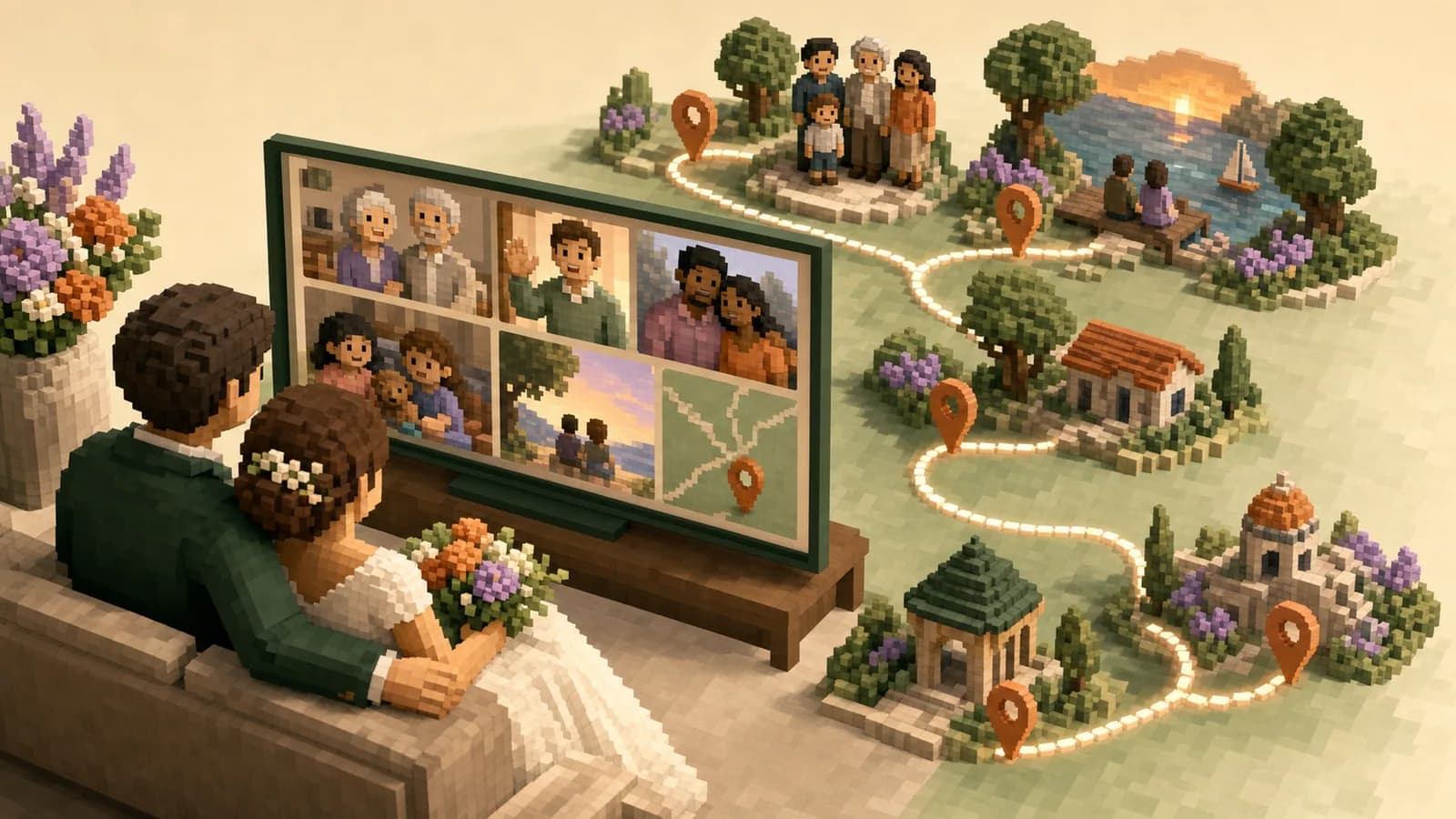
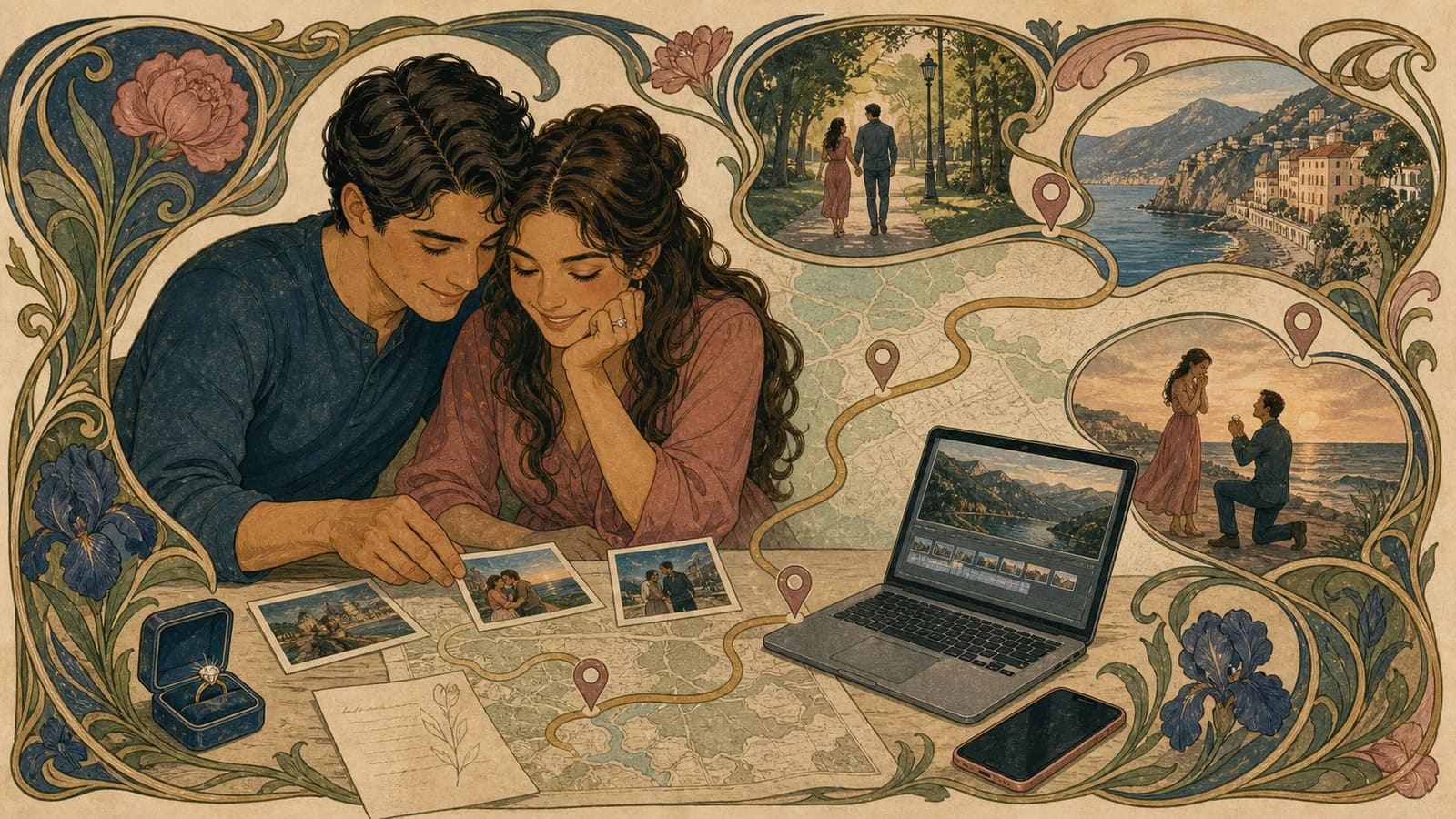
A relationship often becomes easier to follow when places guide it. The route might begin in two hometowns, meet at a school or workplace, move through trips and homes, and end at the proposal spot.
Do not add a location only because it looks attractive. Connect it to a memory. A beach matters because it was their first trip. A small restaurant matters because they returned there every year.
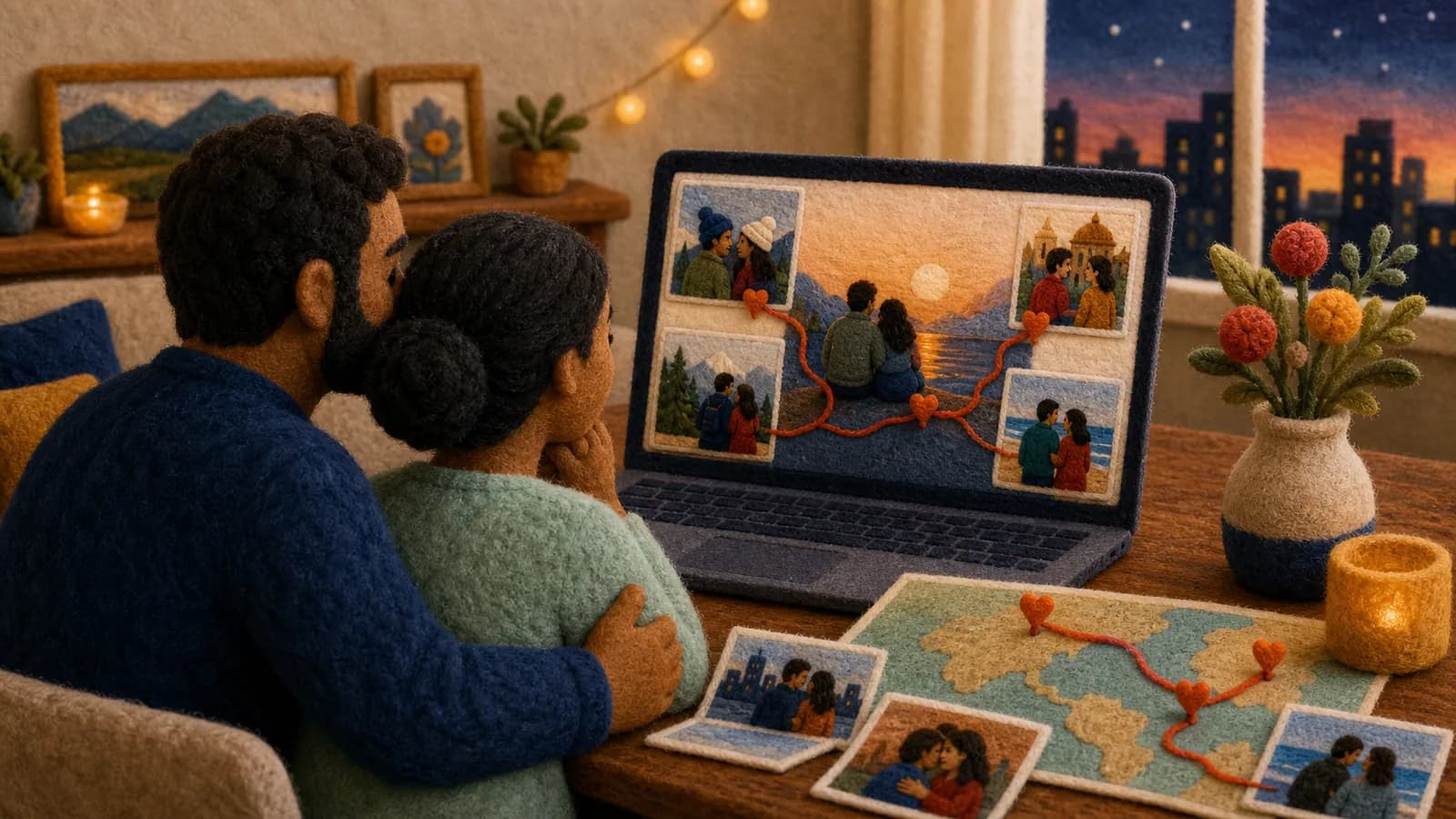
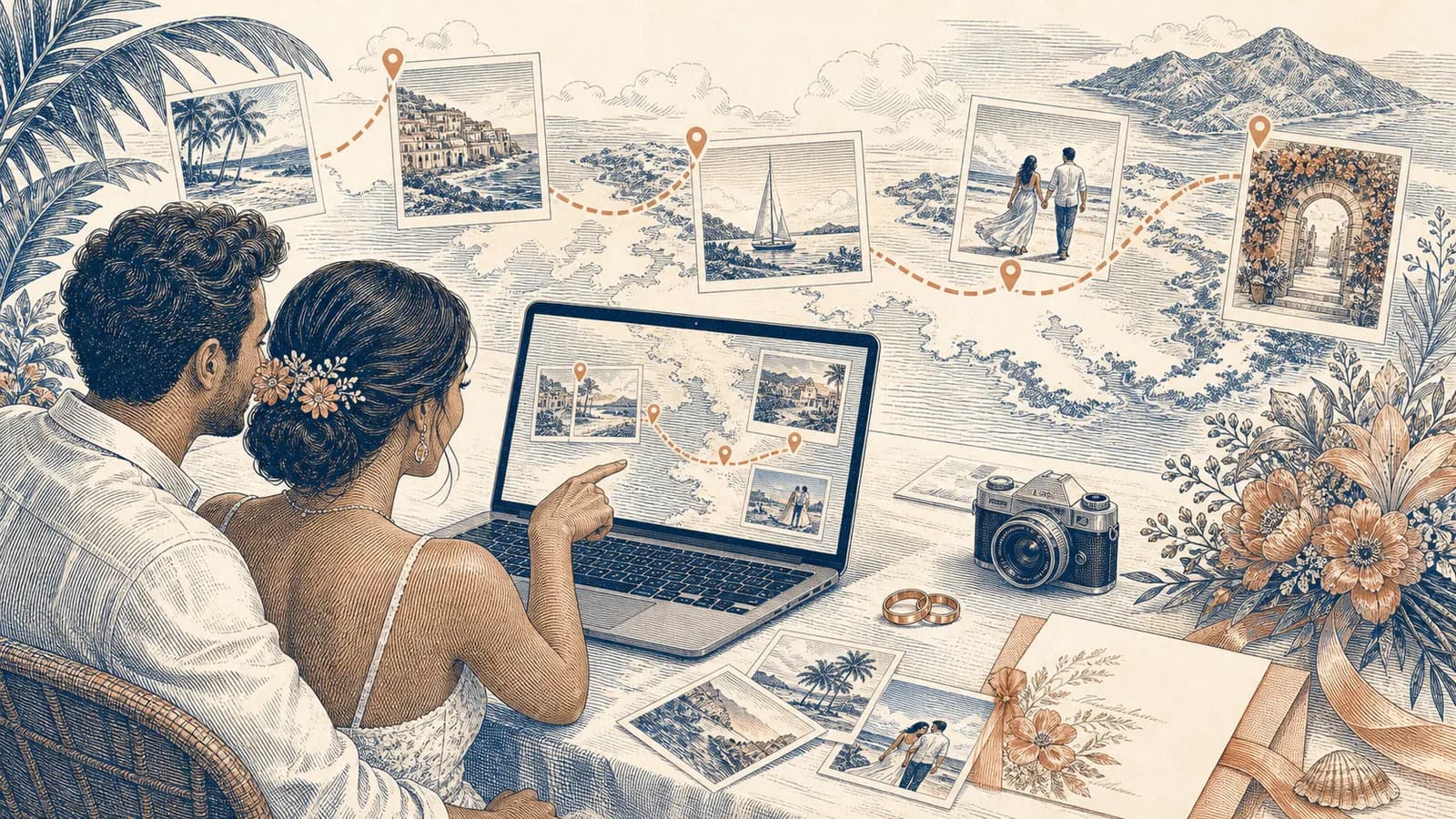
AlbumMap can help when photos, short clips, written messages, and locations need to become one flow. A map-based story can move between the places that shaped the relationship. This is especially useful when the couple has lived in several cities or loved ones are contributing from far away.
Keep the route selective. Five meaningful stops can tell a clearer story than twenty pins with little context. Match each stop with one strong memory and a short caption or voice clip.
Plan a Low-Stress Filming Session
Make a short shot list before filming. Include one wide view of each place, a few close details, natural movement, and brief interview answers. A phone, stable support, and quiet setting may be all you need.
Record speech in the quietest space available. Move away from traffic, wind, music, and crowded rooms. If an interview sounds unclear, move closer rather than hoping editing will fix it.
Ask questions that lead to specific answers. “Tell me about the first date” works better than “Tell me about your relationship.” Give each person time to think, then let them answer in their own words.
Do not direct every smile or movement. Give the couple a simple action, such as walking to a familiar place or looking through old photos. Natural reactions often appear once they stop thinking about the camera.
Film a few seconds before and after each action. These extra moments make editing easier. Check one test clip for sound, light, and framing before recording the full session.
Edit for the People Who Will Watch
Choose the length based on the setting. A social announcement should move quickly. A video for an engagement party can hold a few more chapters. A private keepsake can be longer when each section adds something meaningful.
Start with a clear opening. Show the couple, their names, or one line that sets up the story. Avoid a long title sequence that delays the first real moment.
Use captions for names, dates, places, and important speech. Keep each caption short and large enough to read. Captions also help when the video plays in a noisy room or someone watches without sound.
Let spoken words lead the music. Lower the music under interviews, messages, and proposal audio. Choose music you have permission to use for the planned platform or event.
Watch the first edit without stopping. Mark the points where attention drops or the same idea repeats. Shortening those sections will usually improve the video more than adding another transition.
Invite Friends and Family Without Losing the Couple’s Story
Group contributions work best when every person receives a focused prompt. Ask for one memory, one short clip, and the place linked to that memory. A clear request produces stronger material than “Please say something nice.”
Choose contributors from different parts of the couple’s life. Include people who knew them before they met, people who saw the early relationship, and people who know them now. The mix creates a wider view of the story.
Set a deadline before the real editing deadline. Give yourself time to follow up, review files, and replace clips with poor sound. Tell contributors how long to speak and where to upload.
Not everyone wants to record a video. Let people send a written note, photo, or voice message instead. Different formats can still fit when every contribution supports the same story.
Protect the Surprise, Privacy, and Relationship
Ask both partners before publishing private messages, old photos, or sensitive stories. A loving video should not reveal something one person wanted to keep private.
Avoid jokes about former partners, family conflict, money, or difficult events unless the couple has clearly approved them. Remove photos of other people who did not agree to public sharing.
If the video is a surprise, use a private collection link and choose contributors carefully. Keep a backup of the original files. Save a private version when the public edit leaves out meaningful but personal material.
A Simple Seven-Step Production Plan
First, define the viewer and viewing moment. Second, write the one-sentence purpose. Third, choose three to six story chapters. Fourth, collect the photos, clips, messages, and location details for each chapter.
Fifth, record only the missing material. You may need two short interviews, a few location shots, and one closing message. Sixth, build a rough edit with no decorative effects. Check the order and pace first.
Seventh, add music, captions, and simple transitions after the story works. Test the final file on the screen and speakers you plan to use. Keep another copy in a separate location.
This order prevents a common mistake: spending hours on visual effects before the story is clear. A simple edit with honest details will usually feel more personal than an elaborate video with no direction.
Examples You Can Copy
Copy-ready request for the couple
We are making a short video about your story. Please each answer these three questions in your own words: What do you remember about meeting? When did the relationship begin to feel serious? What are you most excited about now? Record in a quiet place and keep each answer under one minute.
Copy-ready request for friends and family
Help us tell Ava and Jordan’s story. Please send one photo or short clip, one memory about them as a couple, and the place connected to that memory. A 20-to-45-second message is perfect. Please upload everything by [date]: [link].
Copy-ready interview prompts
What did you first notice about your partner? Which ordinary day together do you still remember? What challenge helped you grow as a team? Which place feels most like part of your story? What do you hope the next chapter feels like?
Copy-ready three-chapter outline
Chapter one: Two separate paths and the place where they met. Chapter two: The dates, trips, people, and everyday moments that built the relationship. Chapter three: The proposal, messages from loved ones, and one hopeful look at what comes next.
Final Thoughts
An engagement video does not need to cover every moment or look like a film trailer. It needs to reveal something true about the couple. Choose a clear purpose, build a few strong chapters, and use details that could belong only to them. Photos, interviews, short clips, messages, and meaningful places can all support that goal. When location is part of the story, a map-based video can connect each chapter without forcing it. Keep the edit focused, protect private memories, and end with room for the life still ahead.
Helpful answers
Frequently asked questions
- What should an engagement video include?
- Include only material that helps explain the couple. Useful choices include early photos, casual clips, short interviews, proposal footage, messages from loved ones, and meaningful locations. Give each item a clear place in the story.
- How long should an engagement video be?
- Match the length to the viewing moment. A social announcement should be brief. A party video can hold several focused chapters. A private keepsake may be longer, but remove repeated ideas and clips that add no new detail.
- Can we make a good video without proposal footage?
- Yes. Ask the couple to retell the proposal in separate interviews. Add photos of the location, the ring, or the day around it. Honest recollections can feel more personal than a staged recreation.
- What questions should we ask the couple?
- Ask about specific moments. Try: What did you first notice? When did the relationship feel serious? Which ordinary day do you remember? What place matters most? What are you excited to build together?
- Can friends and family contribute?
- Yes. Ask each person for one short memory, one photo or clip, and the place linked to it. Invite people from different stages of the relationship so the video gains range without repeating the same congratulations.
- How can locations become part of the story?
- Use each place to open a chapter. The route may include hometowns, the meeting place, a first date, a shared home, favorite trips, and the proposal spot. Pair every location with a memory instead of adding pins only for decoration.
- What should we avoid putting in the video?
- Leave out private messages, embarrassing stories, former-partner jokes, and unapproved photos. Avoid long stretches of similar images, tiny captions, unclear audio, and music you do not have permission to use.