70th Birthday Video Gift Ideas From Family and Friends
A 70th birthday video can bring family, friends, grandchildren, neighbors, and old coworkers into one warm gift. It works even when people live far apart or cannot attend the party. The goal is not to fit an entire life into one film. It is to share a few true stories that show who the recipient is, what they mean to others, and what everyone hopes to enjoy with them next. A phone, a clear plan, and thoughtful prompts are enough to begin.
Why a Group Video Fits a 70th Birthday
Turning 70 offers seven decades of relationships and memories. One person may remember childhood games. Another may know the recipient through work, travel, family life, or a shared hobby. Bringing those views together creates a fuller picture than one speech can provide.
The gift should not feel like an archive of a life that has ended. Include old photographs, but also show the person as they are now. Mention the jokes they still tell, the people they support, the interests they enjoy, and the plans they are making.
Choose a tone that fits the recipient. A quiet person may prefer a private, sincere film. Someone social may enjoy a lively party premiere. Use age jokes only when you know they will feel kind. The main feeling should be recognition, not teasing.
Choose One Clear Theme Before Inviting People
A clear theme helps contributors know what to send. It also stops the finished film from becoming a random line of greetings. Write the theme in one sentence before you make the guest list.
You might say, “We are making a warm film about the people, places, and lessons in Mum's seven decades.” Another option is, “We are collecting funny family stories and wishes for Dad's next chapter.” Send the same sentence to every contributor.
Use one main theme and one supporting idea. For example, make seven life chapters the main structure and ask for one lesson in each chapter. A simple plan gives you room for many voices without making the result feel busy.
9 70th Birthday Video Ideas From Family and Friends
1. Create seven short chapters. Give each decade one section with a photograph, a place, and one or two voices. You do not need equal coverage of every year. Choose moments that reveal a relationship, change, or part of the recipient's character.
2. Build a circle of gratitude. Ask each person to finish the sentence, “Thank you for…” Specific answers work best. A child might mention steady advice. A neighbor might remember years of small acts of help.
3. Make a story chain with longtime friends. Ask the first friend to describe how they met. Let later friends continue through school, work, parenthood, travel, community life, and recent years. Short stories will create a natural timeline.
4. Follow seven meaningful places. Begin with a hometown or childhood home. Continue through a school, first workplace, family home, favorite trip, community place, and present-day location. Add a photo, clip, or message at each stop.
5. Collect seven lessons or favorite sayings. Family and friends can share advice, habits, recipes, values, or familiar phrases learned from the recipient. Mix sincere lessons with gentle humor so the section feels natural.
6. Pair then-and-now memories. Show an old photograph beside a current clip connected to the same person, hobby, or place. A childhood friendship, annual trip, garden, recipe, or family tradition can reveal how a story continued.
7. Celebrate an interest they still enjoy. Build a section around music, cooking, sport, reading, volunteering, travel, or another real interest. Contributors can hold an object, share a related photo, or explain how the interest brought them together.
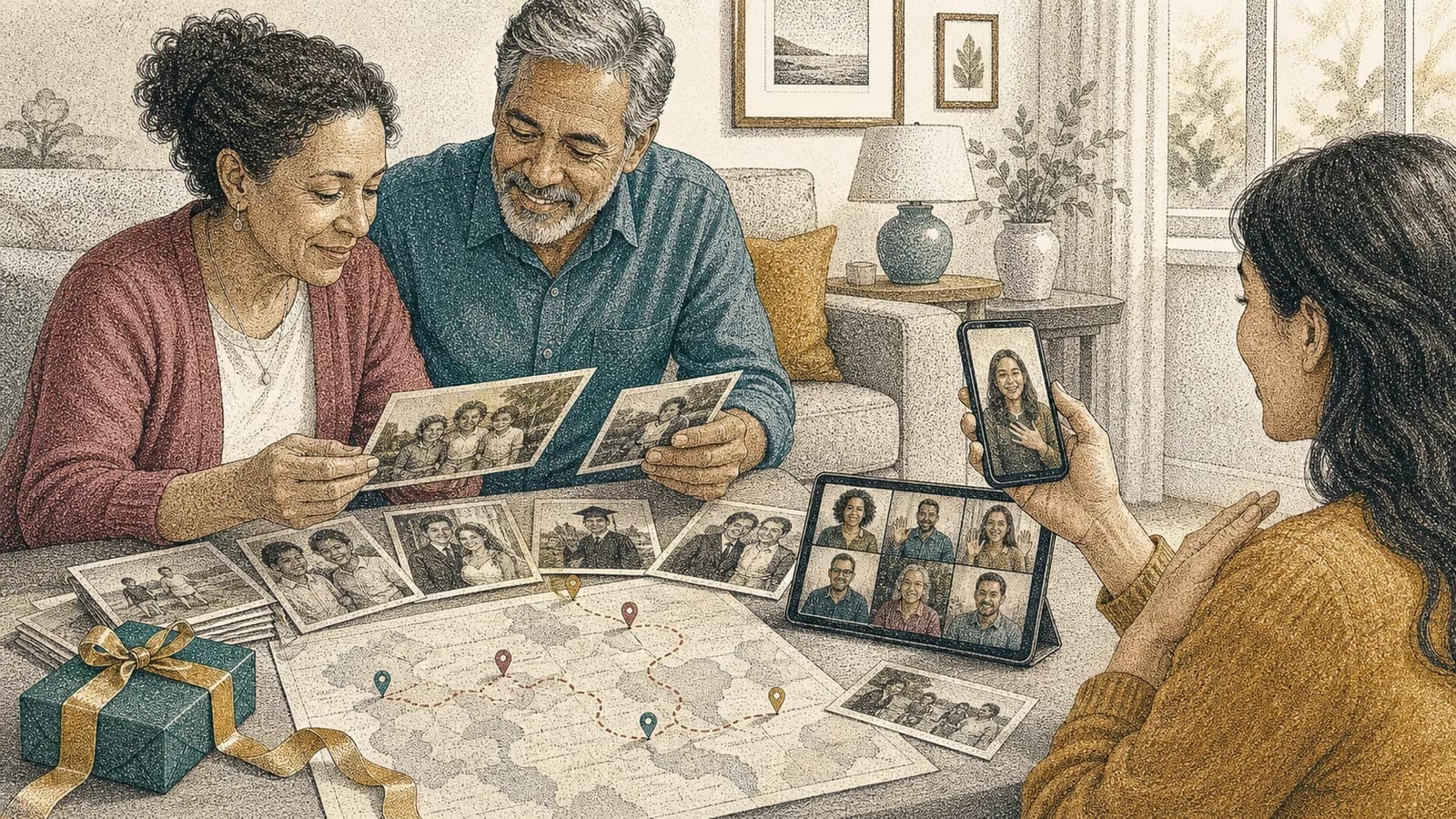
8. Bring distant people into the room. Ask contributors who cannot attend to say where they are recording. Include the city or country in a simple caption. Their presence can become part of the surprise rather than an apology for being away.
9. End with wishes for the next decade. Ask people to name something they hope to share with the recipient. It might be a trip, weekly meal, family event, new hobby, or quiet afternoon. This keeps the film hopeful and current.
Build a Contributor List That Covers Different Chapters
Start with close family and the people the recipient sees often. Then think through life chapters: childhood, school, early work, later work, neighborhoods, hobbies, travel, community groups, and current friendships.
Do not invite people only because of their formal relationship. Invite those who can share something true. A close neighbor may have a stronger story than a distant relative. Five thoughtful voices can be better than twenty repeated greetings.
Contact important people one at a time. Explain why their part matters. An old friend may need context, help with a prompt, or another way to contribute. Ask contributors to keep the project private if the film is a surprise.
Offer options for anyone who dislikes being on camera. They can send a written note, voice recording, photograph, or location with a short memory. A useful group gift makes room for different ages, abilities, and comfort levels.
Give Family and Friends Different Roles
Assigning simple roles creates variety. Siblings can share early memories. Children can speak about lessons or family traditions. Grandchildren can add quick greetings, drawings, songs, or questions. Friends can tell stories that the family may not know.
Former coworkers can describe the recipient's influence, humor, or work habits without turning the film into a formal retirement speech. Neighbors and community friends can show how the person contributes to daily life now.
Ask one close person to record the opening. Save another strong voice for the ending. Everyone else can choose one prompt. This structure makes the film feel planned while letting each person sound like themselves.
Use Prompts That Lead to Specific Stories
A request to “say something nice” often produces vague clips. Give people two or three focused choices. Ask for a favorite memory, a quality they admire, something they learned, or a wish for the years ahead.
Invite details that only the contributor would know. They might name a family saying, a regular phone call, a trip that went wrong, or a small act of care. One exact detail will often mean more than a long list of praise.
Do not test the recipient's memory in a clip. Instead of asking, “Do you remember our beach trip?” say, “I still laugh about the beach trip when the tent blew away.” This lets them enjoy the story without feeling pressured to recall it.
Tell contributors the target length and deadline. Most clips can be 20 to 45 seconds. A partner, sibling, or close friend may need up to 90 seconds. Short directions make it easier for people to start.
Follow a Simple Two-Week Collection Plan
Fourteen days before the birthday, choose the theme and make the contributor list. Send private invitations with one upload method, a clear deadline, and two or three prompts.
Nine or ten days before the birthday, check who has responded. Send personal notes to the people whose voices matter most. Offer a written or audio option if recording feels difficult.
Seven days before the birthday, review every file. Check that you can open it and hear the speaker. Rename files with the person's name and story chapter. Ask for a new take only when a technical problem makes the message hard to follow.
Three days before the reveal, finish the order and watch the entire film. Check names, captions, sound levels, music, and transitions. Test the final link or file on the exact screen and speakers you plan to use.
Help Every Contributor Record a Clear Clip
A modern phone is enough. Record in a quiet place and face a window or soft lamp. Keep the camera steady, look toward the lens, and leave a short pause before and after speaking.
Choose horizontal or vertical video based on where the gift will be watched. Horizontal often fits a television or laptop. Vertical may suit a phone. If strict rules would stop people from joining, accept both and use a simple layout.
Ask speakers to use their normal voice. Three notes are easier than a full script: greeting, story, and wish. Small pauses and natural laughter can make a clip feel warm.
Add clear captions when possible. Keep music below the voices and avoid fast flashes or tiny text. These choices help people with hearing or sight needs and make the film easier for everyone to enjoy.
Shape the Birthday Video Montage Like a Story
Open with a recent photograph or short welcome. This shows that the gift celebrates the recipient now. Then move through the chosen theme by decade, relationship, place, or mood.
Mix talking clips with photographs and short home videos. Place a funny moment near a sincere one so the film has emotional range. Use simple transitions. The memories should hold attention, not the effects.
For a large group, aim for a focused final edit. Ten minutes of varied, personal material may feel stronger than thirty minutes of repeated wishes. Save longer clips as bonus material if you do not want to lose them.
End with one clear idea. A close family member can thank the recipient, then invite everyone to join a shared birthday greeting. Finish with a current image and a wish for the next chapter.
When a Map-Based Story Adds Meaning
A standard group film is a good choice when the voices are the whole gift. A map-based story is more useful when memories span many homes, cities, schools, workplaces, or trips.
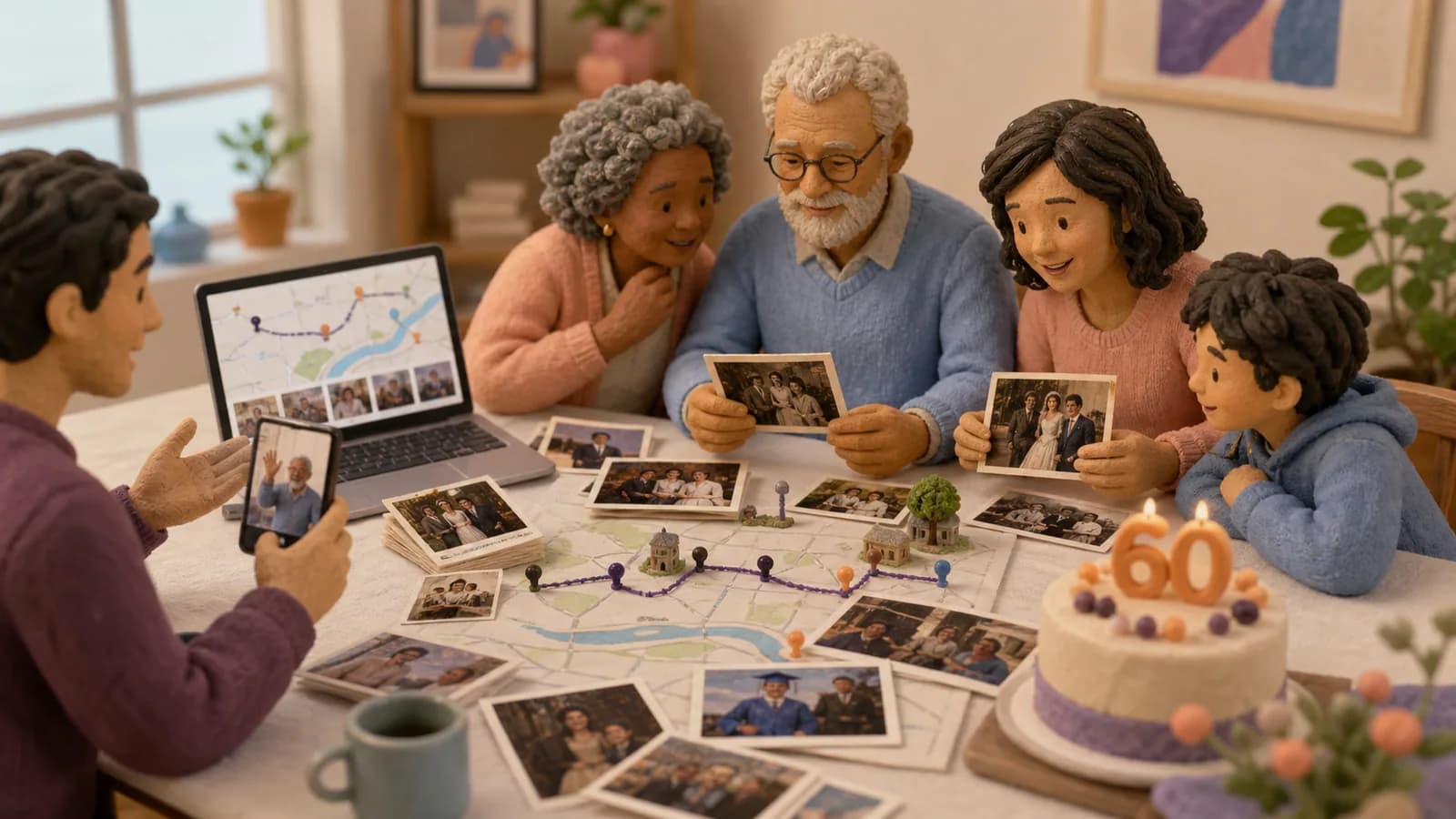
AlbumMap can collect photos, short videos, written messages, and locations from many contributors. The finished map video can travel through seven meaningful stops while each place introduces a person or memory.
For example, begin in the recipient's hometown. Move to the place where close friends met, a family home, an important workplace, and favorite travel spots. End with the cities where loved ones are sending messages today.
Use locations only when they add context. A map should help explain the story, not serve as decoration. If most memories come from one place, a simple montage may be the better format.
Plan a Comfortable Reveal and Lasting Keepsake
Think about how the recipient handles attention. A private viewing may suit someone who becomes shy or emotional. A party premiere can work for a person who enjoys sharing reactions with a room.
Test the internet connection, screen, speakers, and room lighting. Keep a downloaded backup when possible. If the recipient lives far away, watch together during a video call and allow time to pause or talk.
A printed card with a link or QR code can make the digital gift easier to open again. Test the code and include a normal web address as a backup. Give simple instructions rather than expecting the recipient to solve a technical problem.
Ask before posting the finished film online. Contributors may have shared family photographs, personal stories, or private locations for the recipient alone. Store the original files and final copy in a place the family can find later.
Common Mistakes to Avoid
Do not make every message about age. Avoid jokes about memory, health, or being old unless the recipient clearly enjoys them. Celebrate the person instead of a stereotype.
Do not ask everyone the same broad question. A mix of roles and prompts creates better stories. Trim repeated greetings while keeping each person's most personal detail.
Do not wait for every invited person. Set a firm edit date and finish the gift with the material you have. A complete film with eight warm contributions is better than a rushed project held up by two missing clips.
Do not focus only on the past. Recent photographs, present-day interests, and future plans help the gift feel alive. Turning 70 can be both a time to look back and a start for new memories.
Examples You Can Copy
Copy-ready group invitation
Hi everyone! We are making a surprise video for [Name]'s 70th birthday. Please record a 20-to-45-second clip by [Date]. Choose one prompt: share a favorite memory, name something you learned from [Name], or offer a wish for the next decade. Upload your clip here: [Link]. Please keep it a surprise.
Copy-ready invitation for a longtime friend
Hi [Name], we are collecting stories from different chapters of [Recipient]'s life for a 70th birthday gift. Your memories from [school, workplace, neighborhood, trip, or year] would add an important voice. Could you record one short story by [Date]? A phone video is perfect. Upload it here: [Link].
Copy-ready family role request
Could you share one family memory that shows what [Name] is like? Please name where it happened, explain one detail you still remember, and end with something you hope to enjoy together in the years ahead.
Copy-ready written-message option
If you would rather not record a video, please send a short written note, voice recording, or photograph. Add one sentence about why it matters. Every contribution is welcome, and you do not need to appear on camera.
Copy-ready reminder
Friendly reminder: your birthday contribution for [Name] is due on [Date]. A short, natural phone clip is all we need. Please upload it here: [Link]. If video is difficult, a photo, voice note, or written message is also perfect.
Copy-ready location request
Optional extra: choose one place connected to your story with [Name]. It could be a home, school, workplace, restaurant, park, city, or travel stop. Add one photo or clip and a sentence about what happened there.
Copy-ready message for a parent
Happy birthday, [Name]. I still think about [specific memory] because it showed me how [quality or lesson]. Thank you for [specific action]. I hope this next decade brings you more [personal wish], and I look forward to sharing it with you.
Copy-ready closing narration
These messages come from different years, relationships, and places, but they all lead back to you. Thank you for the care, laughter, and lessons you have shared. Happy 70th birthday, [Name]. We are grateful for every chapter behind us and excited for the memories still ahead.
Final Thoughts
A meaningful video gift does not need perfect footage or a huge guest list. It needs a clear theme, varied voices, and stories that feel true. Invite people from different chapters, give them useful prompts, and make contributing easy. Include the recipient's current interests and future plans as well as older memories. When those stories are tied to homes, schools, trips, and far-away loved ones, AlbumMap can connect the places with shared photos, videos, and messages. The result can show not only who cares, but where seven decades of memories took shape.
Helpful answers
Frequently asked questions
- How long should a group video for a 70th birthday be?
- A focused video of about 8 to 15 minutes works well for many groups. Ask most contributors for clips of 20 to 45 seconds. Close family members may need a little longer. Keep the best part of each message and save extra footage separately.
- How many people should contribute?
- There is no required number. Eight to fifteen varied contributors can create a full gift, but five thoughtful messages may be enough. Include people from different chapters instead of chasing a large number of similar greetings.
- What should family and friends say in their clips?
- Ask each person for one specific memory, one quality they admire, one lesson they learned, or one wish for the next decade. Focused prompts produce warmer messages than a broad request to say something nice.
- What if someone does not want to appear on camera?
- Let them send a voice recording, written note, photograph, drawing, or meaningful location. These items can appear between video clips and help the final story feel more varied.
- How far ahead should I start collecting birthday messages?
- Start two to four weeks before the birthday when possible. Set the contribution deadline at least one week before the reveal. This leaves time for reminders, file checks, editing, captions, and a full playback test.
- How can I make the gift emotional without making it sad?
- Balance reflection with humor, current photographs, everyday interests, and future wishes. Avoid presenting the birthday as the end of a story. Finish with plans and experiences people hope to share next.
- When should I use a map-based birthday story?
- Use a map when places carry part of the meaning. Homes, schools, workplaces, travel stops, and contributor cities can organize the film into clear chapters. If location does not matter, a simple group montage may be better.
- Can I show the finished video at a party?
- Yes, if the recipient enjoys public attention. Test the screen and sound first, keep a backup copy, and consider captions. Choose a private viewing when the recipient may prefer a quieter or more emotional moment.