Vacation Photo Albums Made Easy: Collect Everyone’s Memories
A vacation photo album should show the trip everyone remembers, not just the pictures on one person’s phone. Yet group photos often end up spread across camera rolls, chats, email threads, and social accounts. Some travelers share everything. Others forget until weeks later. The simple plan below helps you collect the group’s best photos, short videos, captions, and locations without becoming the trip archivist forever. You can use it for a family holiday, road trip, reunion, cruise, sports tour, or weekend with friends.
Why group vacation photos become hard to manage
Every traveler notices something different. One person takes the wide view from the lookout. Someone else catches the children laughing in the back seat. Another person records a short video at dinner. Those small moments form the real story, but they rarely live in one place.
The trouble grows after the trip. A busy group chat mixes photos with plans, jokes, and travel updates. Email can shrink files or split them across several messages. Social posts show only a few highlights. Asking each person again takes time, so the album often stays unfinished.
The answer is to make collection part of the trip plan. Give everyone one destination for their files. Set a clear deadline. Ask for a small, useful set instead of every image they took. A little structure makes the task easier for contributors and the organizer.
Decide what the finished album should do
Start with the end in mind. Do you want a private digital gallery for the whole group? Are you making a printed travel photo book for a family member? Do you want a short video for the last night of the trip? Perhaps you want a map-based story that follows each stop.
Your choice affects what you collect. A printed book mainly needs strong photos and short captions. A video can also use motion, natural sound, and spoken memories. A route story needs place names, dates, and the order of each stop.
Tell the group about the goal in one sentence. For example: “We are making a shared album with the best moments from each day.” A clear purpose helps people choose useful files instead of sending an unedited camera roll.
Set up your vacation photo album before the trip
Create the shared collection before anyone leaves home. Give it a clear name such as “Lopez Family — Nova Scotia — July 2026.” Add the trip dates and a short note about what belongs there. If access is private, explain who can view or add files.
Share the link through the channel the group already checks. Pin it in the trip chat. Add it to the itinerary or welcome note. If your chosen service offers a QR code, place it somewhere easy to scan. Confirm current access settings before sharing it.
Test the collection with one other traveler. Ask that person to add a photo, a short video, and a caption. A quick test can reveal sign-in trouble or unclear instructions while there is still time to fix them.
Use a simple plan to collect everyone’s memories
Choose one organizer and one backup helper. The organizer sends reminders and checks the collection. The helper can answer questions when the organizer is driving, hiking, or taking a break.
Use two gentle collection moments. During the trip, ask people to add a few favorites after a major day or stop. Then send one final reminder within two days of returning home. People are more likely to help while the memories are fresh.
Set a clear limit. Ask each traveler for five to ten favorites per day, plus any special group moments. Limits reduce duplicates and make choosing less stressful. Let people know they can add more when they hold the only copy of an important moment.
Do not demand perfect captions during the first upload. A place name, date, and short note are enough. You can polish the wording after the full set is collected.
Ask for a useful mix, not hundreds of similar photos
A good group album needs variety. Ask for one strong scene-setting image from each place. Add candid moments, group photos, food, signs, rooms, transport, and small details. Include a few imperfect pictures if they carry a good memory.
Short videos can preserve sound and movement that a still image misses. A ferry horn, a stadium cheer, or a child seeing the ocean can bring the trip back at once. Keep clips brief unless a longer event truly matters.
Written memories add context. Ask each traveler for a favorite moment, funniest surprise, or one detail they do not want to forget. These notes often become the best captions. They also give quieter travelers a way to shape the story.
Location details are useful even when the phone saved them automatically. Write the town, landmark, trail, beach, restaurant, or arena in plain language. Check spellings before the final version is shared.
Sort the collection without feeling overwhelmed
First, make a safe copy of the original files. Keep it separate from the working folder. Do not delete anyone’s upload during the first sorting pass.
Next, group files by day, destination, or activity. Use the structure that matches the trip. A road trip works well by stop. A resort week may work better by activity. A tournament can be sorted by game, team event, and free time.
Remove exact duplicates before making creative choices. Then mark the clearest version from each group of similar shots. Keep a second image when it adds a new person, expression, or point of view.
Use a simple three-part rating: must include, maybe, and archive. Finish the must-include group first. If the story still has a gap, look in the maybe group. The archive keeps the remaining files safe without crowding the finished album.
Aim for balance, not equal numbers from every phone. The final collection should cover the full trip and include the people who were there. Check for anyone who appears rarely. Ask the group whether an important moment is missing before you finish.
Turn the photos into a clear travel story
Begin with a cover image, trip name, route, and dates. Then add a short opening note. Two or three sentences can explain why the group traveled and what made the trip special.
Build the middle in a natural order. You can follow each day, move from place to place, or group related activities. Add small transitions when the setting changes. A line such as “The next morning, we drove north to the lake” keeps the reader oriented.
Mix wide scenes with close details. A mountain view shows where you were. Muddy boots, a café receipt, or a sleepy train photo shows how the day felt. Leave space around the strongest images instead of filling every page or screen.
End with the trip home, a final group image, or a short note from everyone. You can also include the route, favorite stops, or a “what we would do again” list. A clear ending makes the collection feel complete.
Choose a format that fits the way you want to remember
A shared digital album is useful when everyone wants quick access. It can hold a larger set and may be easy to update. Check the service’s current privacy, download, file-quality, and storage terms before you rely on it.
A printed book works well when you want a physical keepsake. Choose fewer images and give the best ones room. Captions, dates, ticket scans, and route maps can turn a stack of pictures into a story.
A simple slideshow suits an informal group viewing. Use a short running time and remove repeated shots. Add music only when you have permission to use it.
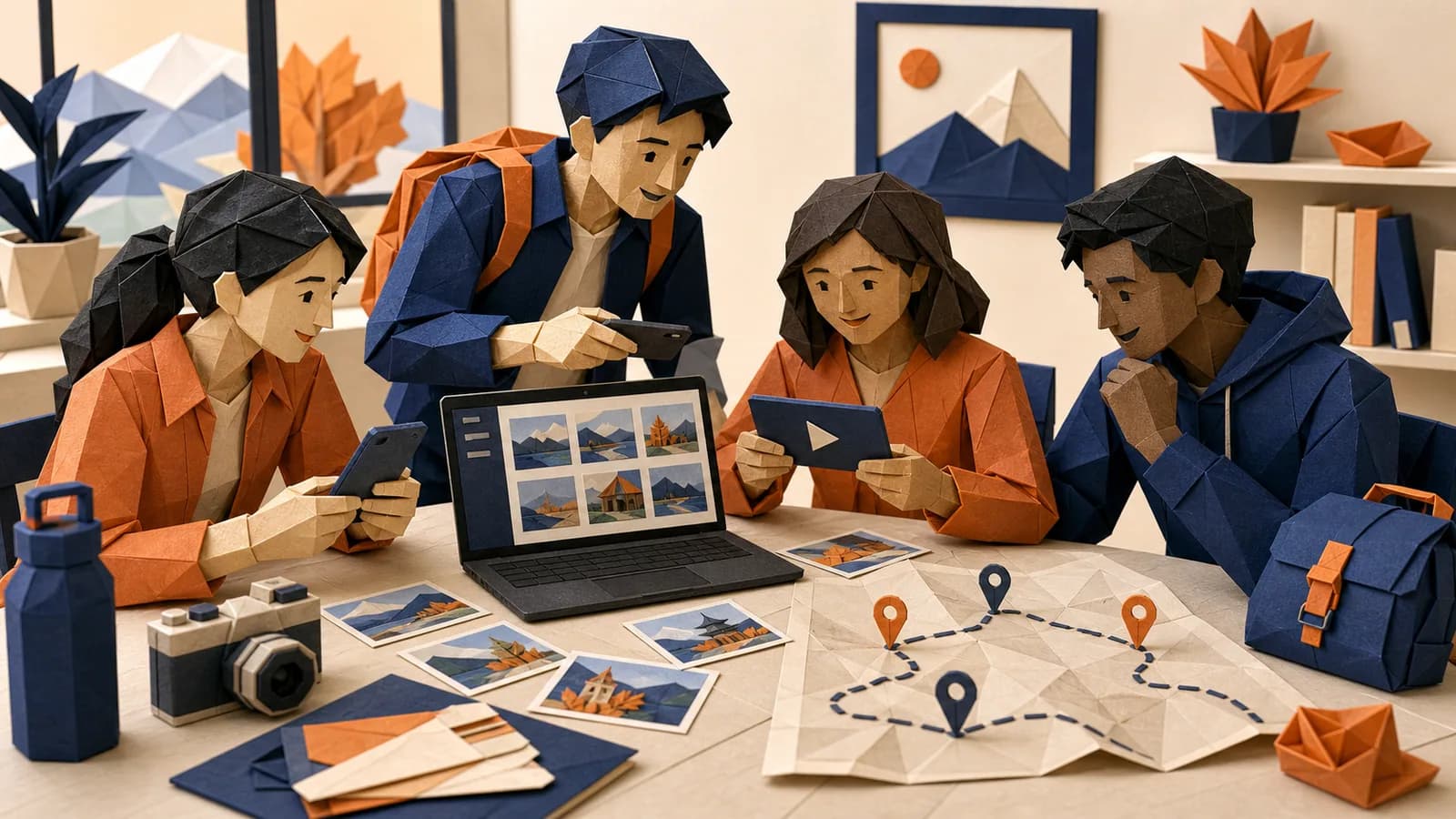
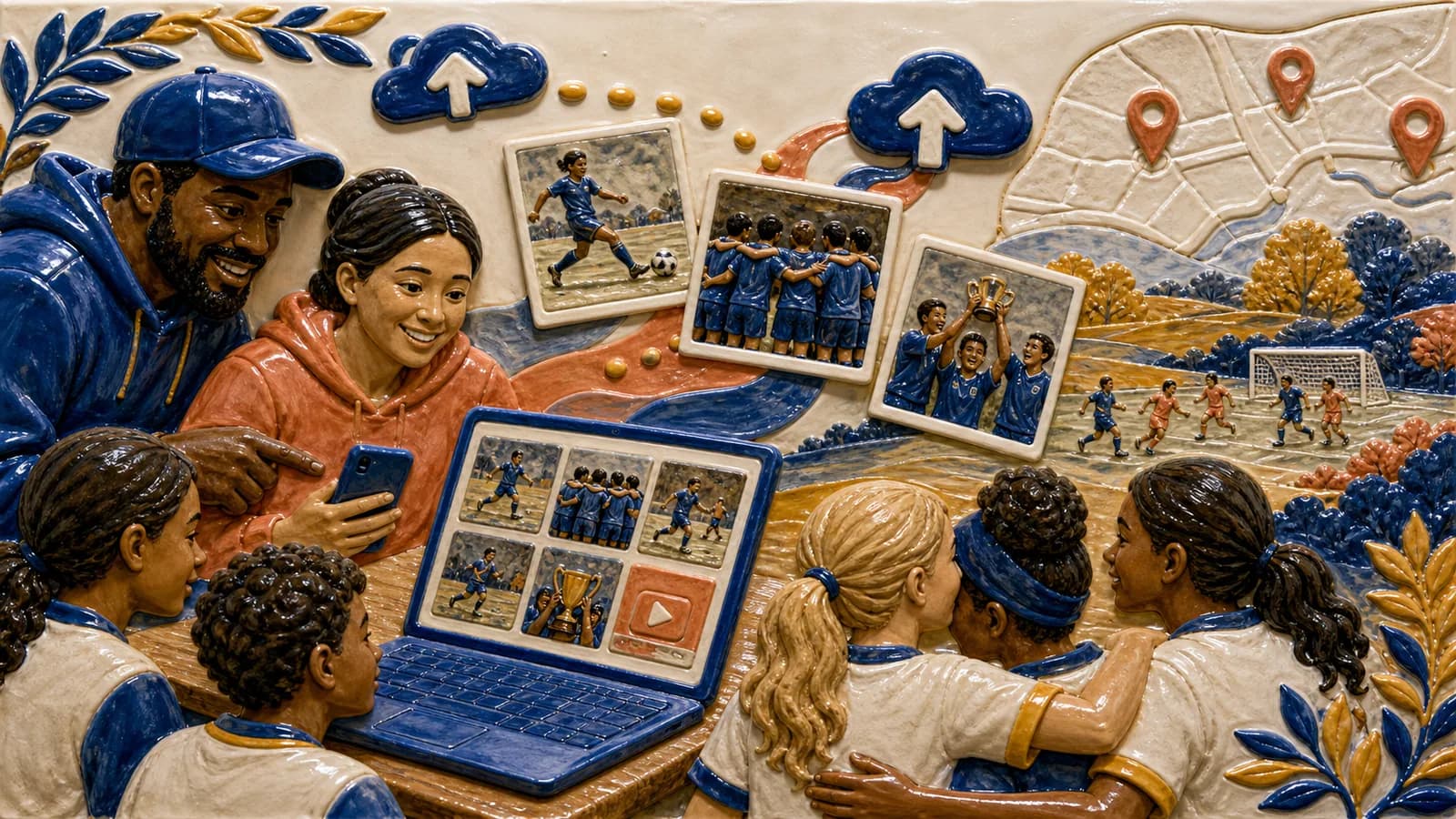
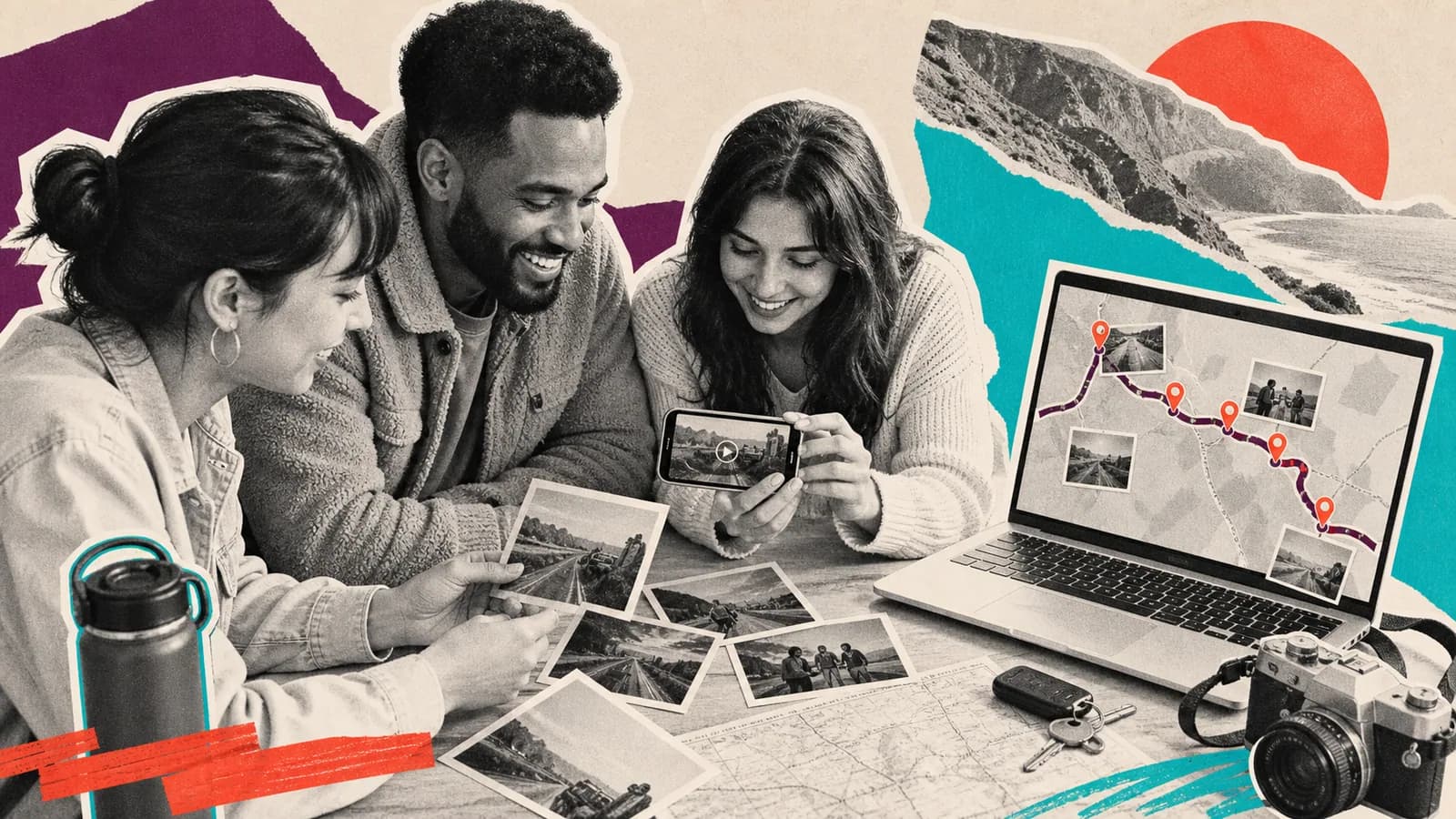
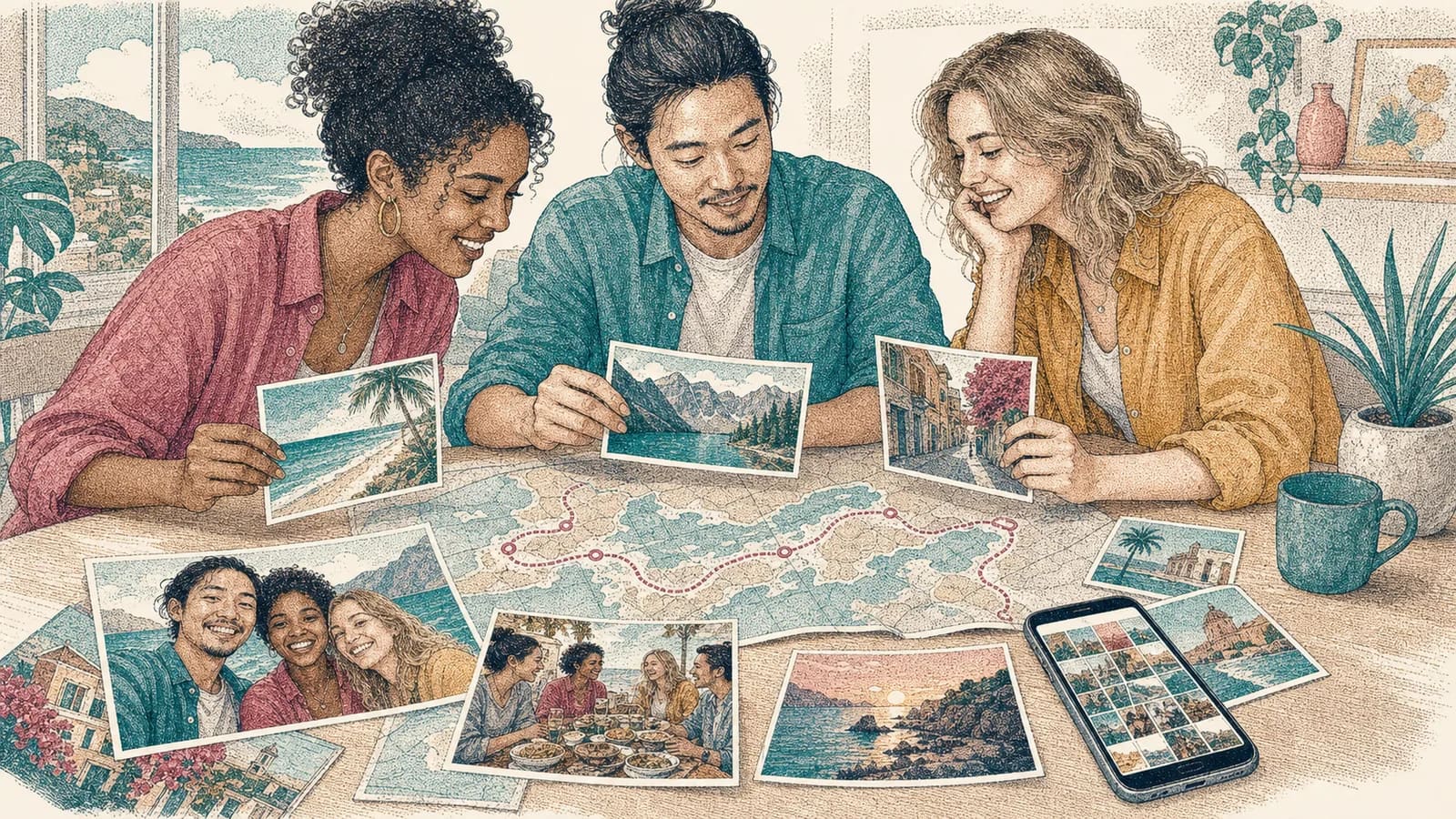
When the places are central to the memory, AlbumMap offers another direction. Photos, short videos, written messages, and locations can become a cinematic map video gift. The route helps connect the beach, hotel, stadium, family home, or roadside stops into one journey. This format is especially useful when several people saw different parts of the same adventure.
Protect privacy and preserve the original files
Before sharing the finished collection, ask whether any photo should stay private. Be careful with children, passports, tickets, room numbers, home addresses, and live location details. Do not post an image publicly just because it was added to a private group space.
Give contributors a chance to correct names and captions. Ask before using a personal written message outside the group. If the album will be a surprise gift, tell contributors who will eventually see it.
Keep at least two copies of the original files in separate places. Download a complete copy if your collection service allows it. Save a note that explains the folder order, dates, and place names. Future viewers should not need the original organizer to understand the trip.
A 30-minute plan for an album you have been avoiding
Set a timer for ten minutes. Create one collection, name it, and send the upload request. Do not start designing yet.
Use the next ten minutes to gather your own best files. Choose a few moments from each day or place. Add rough captions only where the story would otherwise be unclear.
Spend the final ten minutes making a simple list of trip stops and missing moments. Assign each gap to the person most likely to have the file. Send one specific request, such as “Do you have the group photo from the lighthouse?”
You do not need to finish the whole keepsake today. Your first goal is to stop the memories from staying scattered. Once everything is collected, the creative work becomes much easier.
Examples You Can Copy
Copy-ready group upload message
Hi everyone! I’m collecting our trip memories in one place. Please add five to ten favorite photos from each day, plus any short videos only you captured. Add the place name and one quick memory when you can. Please upload by Sunday evening: [shared link].
Copy-ready final reminder
One last photo check before I organize the album. If you have a group picture, funny candid moment, short video, or photo from a stop we are missing, please add it by tomorrow: [shared link]. No need to edit anything first.
Copy-ready caption prompt
Complete one line for your favorite memory: “At [place], I will always remember [small detail, funny moment, or feeling].” Keep it to one or two sentences.
Copy-ready folder structure
01 — Arrival; 02 — First Full Day; 03 — [Place or Activity]; 04 — [Place or Activity]; 05 — Journey Home; 06 — Group Favorites; 07 — Original Files Archive.
Copy-ready album opening
In [month and year], we traveled from [starting place] to [final place]. These photos, videos, and notes show the trip through everyone’s eyes, including the moments no single camera could have caught.
Final Thoughts
The best travel collection is not always the largest one. It is the one that brings together the people, places, and small stories you want to remember. Start with one shared destination, a short request, and a deadline. Then sort the files into a simple journey. Whether you choose a digital gallery, printed book, slideshow, or map video, that basic plan will help the whole group see the trip again.
Helpful answers
Frequently asked questions
- How do I collect vacation photos from a group?
- Create one shared collection and send the link before the trip. Ask each person for a limited number of favorites, short videos, place names, and brief memories. Send one reminder during the trip and one soon after everyone returns.
- When should I ask people to upload their travel photos?
- Ask for a few favorites during the trip, especially after a major stop or event. Send the final request within two days of returning home. People are more likely to contribute while the trip is still fresh.
- How many photos should each traveler contribute?
- Five to ten favorites per day is a useful starting point. People can add more when they captured a moment nobody else has. The goal is a varied story, not an equal number from each phone.
- What should I include besides scenic pictures?
- Include candid moments, group shots, food, signs, transport, rooms, tickets, and small details. Short videos and written memories add sound, movement, and context. Place names help future viewers follow the journey.
- Should I organize travel photos by date or location?
- Use the order that best matches the trip. Dates work well for a tour with a clear daily plan. Locations suit road trips and multi-city travel. Activities may work better for a resort stay, cruise, or sports trip.
- How can I make a group travel album feel like a story?
- Open with the route and dates. Move through the days or places in a clear order. Mix wide scenes with personal details, add short captions, and finish with the return home or a final message from the group.
- How can AlbumMap fit a group vacation project?
- AlbumMap is most useful when the places form an important part of the memory. Shared photos, short videos, written messages, and locations can become a cinematic map video that follows the group’s journey.