The Best Way to Share Photos and Videos With a Sports Team
Sports team photo sharing works best when everyone uses one clear system. Without a plan, action shots stay on parents’ phones. Short videos get compressed in group chats. The team manager spends days asking people to resend missing files. A shared album, one contribution link, and a few simple rules can prevent that mess. The best method is easy to explain: choose one private home for the media, invite the right people, organize it by game or event, and save a backup. The system should work for coaches, players, parents, and volunteers. It should also respect team policies and each player’s privacy. This guide shows how to set it up before the next practice, game, or tournament.
The best method at a glance
Use one shared team photo album for the full season. Give contributors one link or QR code. Create folders for games, practices, tournaments, travel, and team events. Ask people to upload original files instead of sending copies through a chat.
Assign one organizer and at least one backup. They should check uploads, remove duplicates, and handle privacy questions. After each event, send a short reminder while the photos are still easy to find.
A good system has four parts: one collection place, clear access rules, a simple folder plan, and a reliable backup. Extra features are useful only when they support those four needs.
Build one sports team photo sharing system
Start by choosing one main platform. It could be a shared album, team-management platform, private cloud folder, or event-sharing tool. Avoid using several collection places at once. People will forget which one holds the final files.
Check whether the platform accepts both photos and videos. Look at upload limits, original-file downloads, contributor access, moderation, and storage length. Find out whether contributors need an account or app. Test the process on both a phone and a computer.
Choose based on the team's real needs. A team that wants simple parent uploads may value a quick link or QR code. A media volunteer may need folders, labels, full-resolution downloads, and clear usage permissions.
Set privacy rules before inviting contributors
Ask the coach, school, club, or league about its media policy. Do not assume that every player can appear in a shared or public album. Youth teams may need consent from a parent or guardian.
Decide who can upload, view, download, and repost files. A private link is safer than a public social post, but links can still be forwarded. Use passwords, approved-member access, or upload review when the team needs more control.
Tell contributors how the team may use their files. For example, media might appear in a private season album, banquet slideshow, yearbook, or approved team post. Make it easy for a player or family to request removal.
Keep personal details out of filenames and captions. Do not attach private schedules, addresses, medical information, or travel plans to public media. Review backgrounds for visible documents, locker-room details, and other sensitive information.
Create folders before the first upload
A simple structure saves hours later. Create one folder for each game, tournament, practice, or team event. Use dates in year-month-day order so folders remain sorted. A useful name is “2026-09-12 — Away Game — North Field.”
Add separate folders for team portraits, player-approved highlights, travel, volunteer moments, and the end-of-season event. If the platform does not support folders, use short captions or consistent file labels.
Do not build a complex system that only one person understands. A new volunteer should be able to find a game in seconds. Write the folder rule in the album description so every uploader can follow it.
Share one link in several useful places
Send the contribution link before the first game. Pin it in the team chat, add it to the team email, and place it in the manager’s notes. At an in-person event, a tested QR code can make uploading easier.
Explain what the link does. A bare link looks unimportant and may be ignored. Say that it is the team’s official place for original photos and short videos. Include the upload deadline and the organizer’s name.
Test the link as a contributor. Check whether it opens on common phones, whether the instructions are clear, and whether uploading needs a login. If using a QR code, test the printed version from a normal viewing distance.
Ask for useful moments, not every file
Give contributors a short shot list. Ask for action, reactions, teamwork, coaches, volunteers, travel, and quiet moments away from the main play. Include people who often stay behind the camera.
For each game, try to collect one wide scene, several clear action shots, a team moment, and a short video. Tournament weekends can also include the bus ride, warm-up, meal, venue sign, medal ceremony, or team celebration.
Quality matters more than volume. Ask people to upload their strongest images rather than every burst photo. The organizer can still keep several angles of an important moment, but hundreds of near-duplicates make the album harder to enjoy.
Never pressure a player to pose or appear on camera. The goal is to preserve a shared season, not document every person at every event.
Collect better team videos
Short clips are easier to upload, review, and reuse. Ask contributors to hold the phone steady and record a few seconds before and after the main action. They should avoid shouting over a player’s interview or covering the microphone.
Use horizontal video when the final plan is a landscape film or television playback. Use vertical video when the team mainly shares phone-first clips. If the final format is not known, consistency is more helpful than mixing every orientation.
Useful clips include the team entering the field, a short play, a bench reaction, a coach’s message, and a group cheer. Avoid recording private strategy talks, injuries, changing areas, or a player who has asked not to be filmed.
For a senior night or coach thank-you, invite short messages with one prompt. A clear prompt produces better clips than “say anything.” Give contributors a time limit, a deadline, and a quiet place to record.
Use a repeatable game-day workflow
Before the event, remind people where to upload and what the team needs. During the event, let photographers focus on the game. One simple sign or pinned message is enough; repeated requests can become distracting.
After the event, send one reminder within 24 hours. Ask for original files and give a short deadline. The organizer can then move uploads into the right folder, remove accidental duplicates, and flag anything that needs approval.
Once the folder is clean, tell the group it is ready. If downloads are allowed, explain whether files are for personal use only or may also be reposted. Follow the club’s rules for logos, uniforms, player names, and sponsor material.
Organize and protect the collection
Keep the original files when possible. Group chats and social platforms may reduce quality, which matters when the team later wants prints, a yearbook, or a large-screen video.
Use a second storage location for the final collection. Do not rely on one volunteer’s phone or one live album. At the end of the season, download the approved files and confirm that the backup opens correctly.
Remove obvious duplicates, screenshots, and accidental uploads. Keep enough context to tell the season’s story. A reaction after a difficult game may matter as much as the winning play.
Set a date for the final review. Ask the team whether access should remain open, become view-only, or close after everyone has downloaded what they need. Record who manages the archive when volunteers change.
Choose what the team will make
A clean collection can support several outcomes. The team might keep a private album, create a banquet slideshow, print a yearbook, thank a coach, recognize volunteers, or make a senior-night video.
Choose the outcome before the season ends. That decision tells the organizer which files still need captions, permissions, or higher-quality copies. It also gives contributors a reason to send the missing moments.
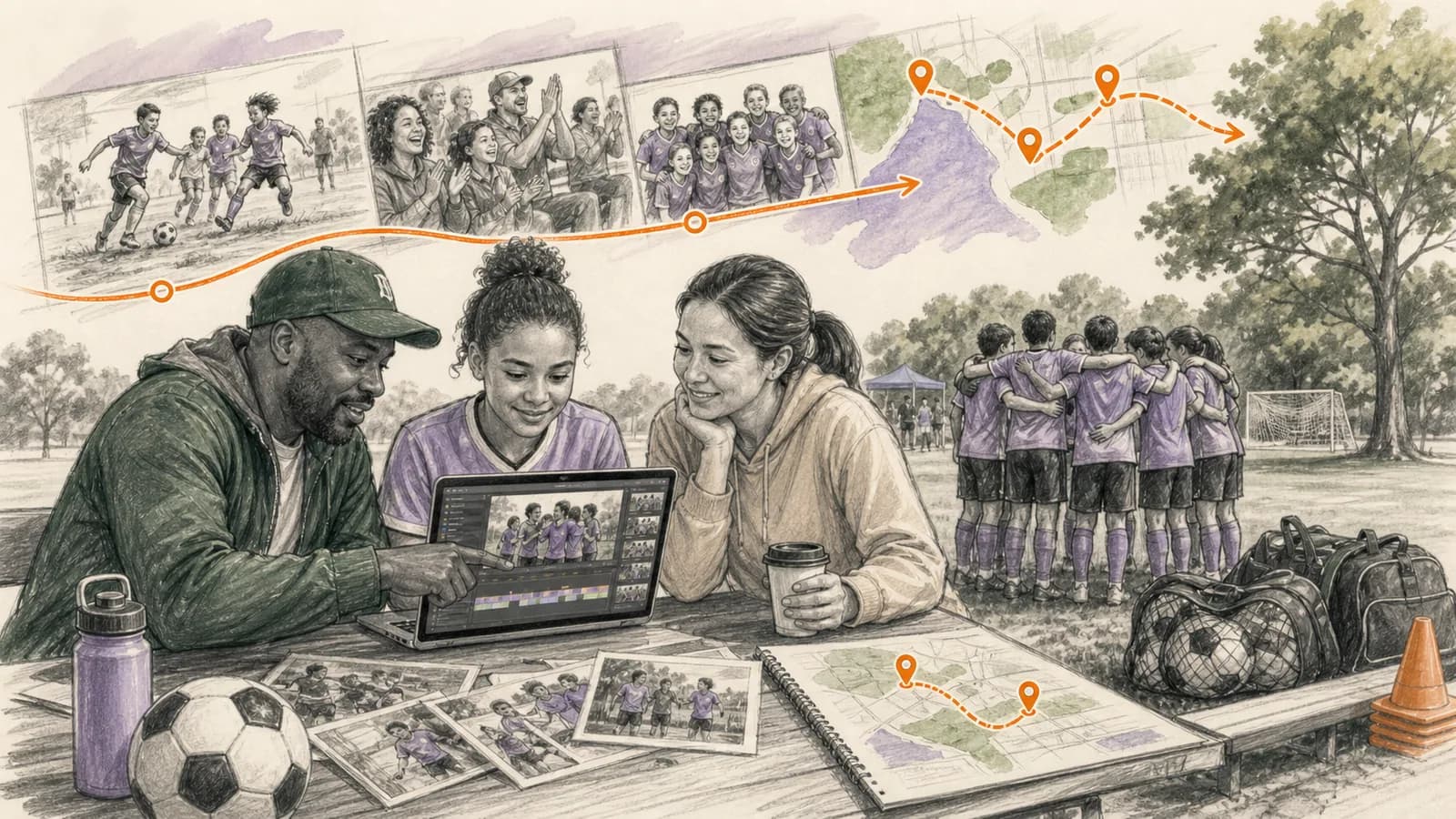
If the team played in several places, AlbumMap can turn approved photos, short videos, written messages, and locations into a cinematic map story. The route might move from the first practice field to an away tournament and the final game.
This format can work well for a season recap, a graduating player, or a coach thank-you. Use it only when places are an important part of the story. A normal shared album remains the better choice for everyday browsing and downloads.
Adapt the plan to your team
For a youth team, keep access limited and make consent the first step. Let a parent or approved volunteer moderate uploads. Avoid public player names unless team policy clearly permits them.
For a school team, follow school and athletic-department rules. Ask who owns official media and who may approve public use. Keep private team uploads separate from files cleared for recruitment or promotion.
For an adult recreational team, agree on boundaries before the first upload. Some players may welcome public posts while others want a private album. One shared rule prevents awkward requests later.
For a tournament or travel team, organize folders by date and location. Add travel moments only when the group wants them included. A separate private folder can keep informal photos away from public game highlights.
Common mistakes to avoid
Do not wait until the season ends to collect files. People delete clips, change phones, and forget which game a photo came from. Start before the first event and send small reminders throughout the season.
Do not make the coach manage every upload. Assign a media organizer and backup so game planning stays separate from file sorting.
Do not treat a social feed as the only archive. Posts are useful for selected highlights, but the team still needs original files, clear consent, and a backup.
Do not share an open link without explaining the rules. Contributors need to know who can view the files, how they may be used, and whom to contact about removal.
Do not promise that every upload will appear in the final album or video. The organizer may need to remove duplicates, poor-quality files, or media that does not meet the team’s privacy rules.
Examples You Can Copy
Copy-ready message for the start of the season
We are using one private album for this season’s team photos and short videos: [LINK]. Please upload original files and place them in the folder for the correct game or event. The album is for approved team members and families. Please do not repost another player’s image without permission. Contact [NAME] if you want an image removed.
Copy-ready post-game reminder
Thanks for today’s game. If you took a few strong photos or short videos, please add the original files to [GAME FOLDER] by [DATE]. We would especially like action, teamwork, coach, volunteer, and group moments. You do not need to upload every burst photo.
Copy-ready video prompt for a coach thank-you
Record a video of 20 seconds or less. Please finish this sentence: “Coach [NAME] helped our team by…” Record in a quiet place, hold your phone steady, and leave two seconds before and after your message. Upload your clip here by [DATE]: [LINK].
Copy-ready tournament folder plan
2026-10-03 — Travel and Arrival; 2026-10-04 — Game One; 2026-10-04 — Game Two; 2026-10-05 — Final Game and Awards; Team Portraits; Coach and Volunteer Messages; Approved Highlights.
Final Thoughts
The best way to share a team’s photos and videos is to make the process predictable. Use one private collection place, one link, clear consent rules, simple folders, and a backup. Start early and ask for a few useful moments after each event. By the end of the season, the team will have more than scattered highlights. It will have an organized record that players, families, coaches, and volunteers can revisit. If games and tournament locations shaped that story, the approved media can also become an AlbumMap video that follows the team’s journey from place to place.
Helpful answers
Frequently asked questions
- What is the easiest way to collect sports team photos from parents?
- Create one private shared album and send every contributor the same link. Pin it in the team chat and organize uploads by game or event. Explain what to upload, who can view it, and when files are due.
- Should a sports team use a shared album or a group chat?
- Use the shared album as the main collection place. A group chat is useful for reminders, but it can compress files and make older media hard to find. Ask contributors to upload original photos and videos to the album.
- Can a QR code help collect team photos?
- Yes. A QR code can open the team’s contribution page at a game, tournament, or banquet. Test it before printing, keep the normal link available, and do not place a private code where the public can easily copy it.
- How should a youth sports team protect player privacy?
- Follow the club, school, or league policy. Confirm consent, limit access, and explain how images may be used. Avoid public names and sensitive details unless clearly approved. Give families a simple way to request removal.
- How should team photos be organized for a full season?
- Create folders using the date, event, opponent, or location. Add separate folders for portraits, travel, volunteers, approved highlights, and end-of-season messages. Use one naming rule throughout the season.
- How can a team avoid chasing people for photos and videos?
- Share the collection link before the season begins. Send one short reminder within 24 hours of each event and set a clear deadline. Copy-ready prompts also help contributors understand what the team needs.
- Can AlbumMap be used for a sports season recap?
- Yes, when locations are part of the story. Approved photos, short videos, messages, and game locations can follow a route from early practices to tournaments and the final event. For simple storage and downloads, keep using a shared album.