Introduction
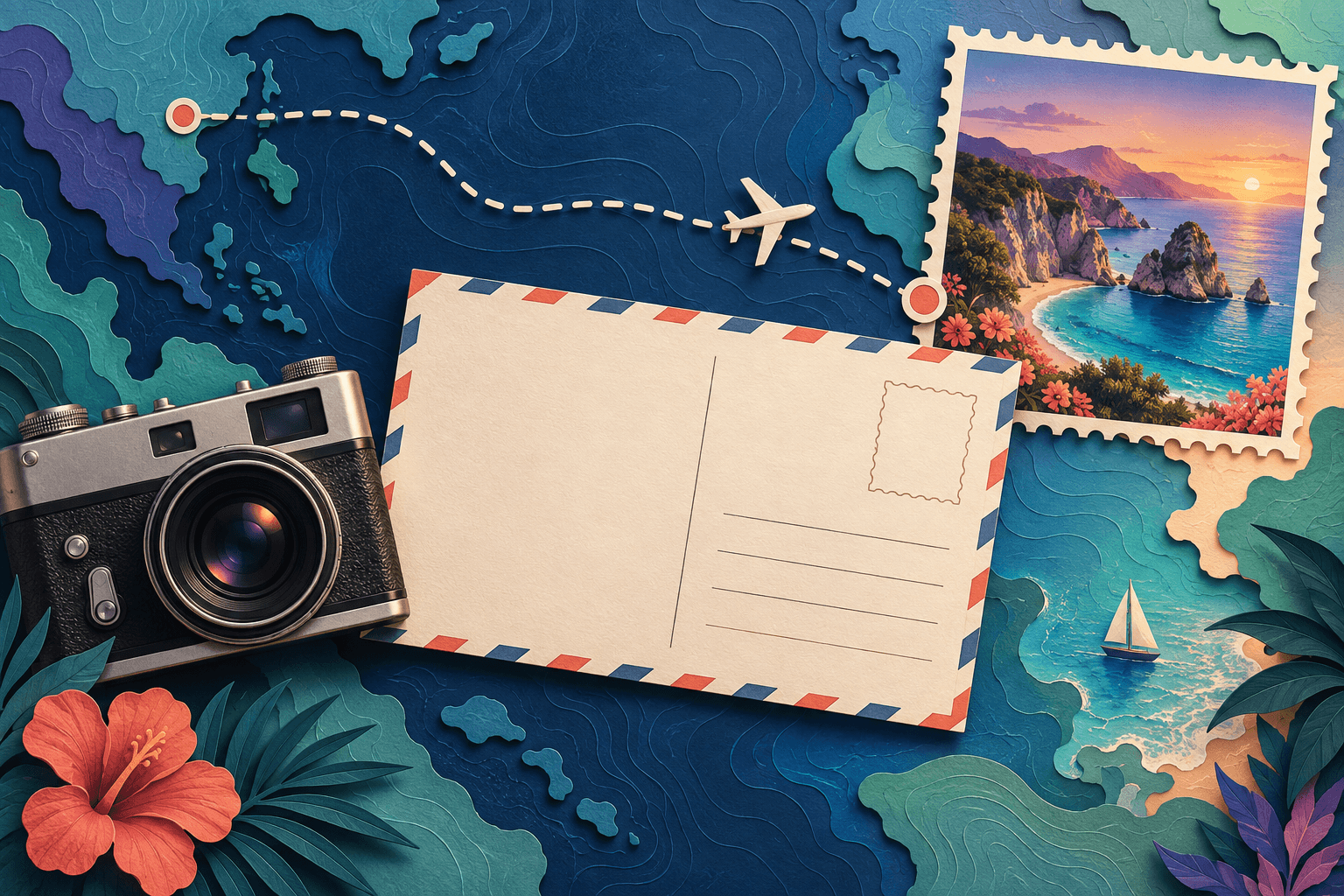
A travel video postcard is a short personal message built around one place and one moment. Instead of explaining your whole holiday, show where you are, share a detail that made you think of the recipient, and end with a line meant for them. A map establishes the place; your words make it a postcard.
You do not need a complete itinerary or a camera roll full of footage. Three photographs, a brief map scene, and a specific message can be enough. Think of the finished piece as a small note with movement, not a miniature travel documentary.
Start a map-led travel story with AlbumMap, then keep the postcard focused using the plan below.
Choose the recipient before choosing the scenery
Start with a person, not the most impressive view. Ask what they would notice about this place. Your sister might appreciate the tiny bakery. A friend might recognise a bookshop that resembles your old meeting spot. Your parents might simply enjoy seeing the quiet corner where you stopped for a break.
That choice changes what you record. “Look at this beautiful city” could accompany almost any travel clip. “You would have made us stop at this window” belongs to a particular relationship.
A postcard to yourself works too. Address it to the person who will watch after returning to ordinary routines. Instead of summarising everything you did, preserve one sensation or thought you do not want to lose.
A postcard shares an experienced moment. To announce a future getaway instead, use the surprise trip reveal structure, which builds towards a destination rather than reflecting on time already spent there.
Give the map one clear job
Use the map to answer “Where does this moment belong?” A city, island, or broad region is often enough. The postcard does not need to show the journey from your front door or your exact accommodation.
Introduce the place once, then let the images and message take over. Returning to a map after every photograph can make a small story feel unnecessarily busy.
For a postcard from a neighbourhood, choose a map scale that makes the place understandable without exposing private details. A public waterfront or a town label can provide context without an exact pin outside a rented apartment.
A 30-second travel video postcard storyboard
This is an original planning example, not a required length or a ready-made software template. Adjust it to the pace of the message.
| Time | Scene | Purpose | Example text |
|---|---|---|---|
| 0–4 seconds | Broad map and place name | Establish where the moment belongs | A little note from the coast |
| 4–10 seconds | One scene-setting photo or clip | Let the recipient enter the place | We stopped here after the rain |
| 10–16 seconds | A small detail | Explain what caught your attention | The café had the cups you would love |
| 16–25 seconds | Personal image or quiet view | Deliver the main message | I kept imagining what you would order |
| 25–30 seconds | Closing image and short sign-off | Finish the note | Saving this corner for our next trip |
Keep the spoken message shorter than the full running time so the images have room to breathe. Read it aloud before editing. When a sentence feels rushed, remove words or extend its scene rather than speeding up the whole film.
Gather five useful pieces, not fifty similar clips
Collect one broad view, one detail, one personal image, one place label, and one message. These are story ingredients rather than a compulsory shooting list. A single photograph can serve more than one purpose.
The broad view establishes the setting. The detail explains why you noticed it. The personal image can be a photograph of you, a shared object, or something the recipient will recognise. You do not have to appear on camera.
Choose images that add information. Three nearly identical photographs of the same table may be less useful than one table photograph and a sentence about the conversation that happened there.
When the meaning is difficult to identify, use a few travel journal prompts before selecting the images. The sentence often reveals which photo belongs.
Three original messages to adapt
For a friend who would enjoy the small details
“I found a little second-hand bookshop today and immediately thought of you. There was a chair by the window that we would have argued over. Here is your tiny visit until we can come back together.”
Pair the message with a permitted exterior photograph, a detail you photographed with permission, and the broad town location. Do not add a pretend visit by the recipient.
For family at home
“Sending you a small piece of our afternoon. We took the slow path, found a quiet place to sit, and stayed longer than planned. Nothing dramatic happened, which might be why I wanted to remember it.”
This version does not need a famous attraction. The point is letting someone share an ordinary part of the trip.
For your future self
“Remember this morning: the cool air, the slow breakfast, and having nowhere urgent to be. You do not need to repeat the whole holiday to make room for another morning like it.”
These are fictional sample messages. Replace their details with something you actually experienced rather than matching your footage to a borrowed story.
Build a postcard from photos only
Arrange the images in the same order as the storyboard and choose a single map introduction. Let each photograph remain visible long enough to recognise the important detail and read any text.
Movement is optional within the photo scenes. Avoid enlarging every image simply because the project is a video. A still photograph with a well-timed sentence can provide the calm moment the postcard needs.
Put the closing line on an uncluttered image. Keep longer explanations in the message accompanying the video. The screen does not need to carry an entire letter.
Choose words first and sound second
Try the postcard with no music. A written message may already communicate everything. Original narration can add warmth when the recipient values hearing your voice, but it is not required.
For a YouTube version, the YouTube Audio Library guide explains its music options and when attribution is required. Check the actual track licence and the intended sharing platform rather than assuming any track called “free” covers every use.
Listen for unrelated speech or background music in your own footage before including its sound. Silence is preferable to audio that distracts from the personal message or introduces a rights question you have not resolved.
Send the note without oversharing the trip
Review the destination label, visible addresses, ticket details, and the people in each image. Consider sending the postcard after leaving the location rather than treating it as a live update.
Google notes that people may infer a location from visible landmarks even when location information is not shared in Photos. Its photo-location guidance is a useful reminder to review the image itself, not only its settings.
Save an original copy with a useful filename, such as coastal-afternoon-postcard, before making a shorter or differently cropped version. The recipient should be able to recognise what they are opening without needing a long explanation.
Make one place feel personal
Choose the person, write the sentence, and select only the images that support it. Create your map postcard with AlbumMap and let one small moment carry the message.
Helpful answers
Frequently asked questions
How is a video postcard different from a travel recap?
A postcard concentrates on one moment and a message to someone. A recap explains a larger trip or period. Choose the postcard when personal connection matters more than completeness.
Can a postcard contain more than one location?
Yes, but only add another place when it strengthens the same message. Otherwise, make a second postcard rather than turning a small note into an itinerary summary.
Do I need to record a voiceover?
No. A short written message can work with photographs and a map. Choose the form that feels natural and remains understandable to the recipient.
Is a postcard suitable for an ordinary day at home?
Yes. A familiar park, a family kitchen, or a place connected to a shared memory can give the note its setting. Travel distance is not what makes the message worth sending.