Introduction
A surprise trip reveal video can do more than announce a place. It can explain why you chose it for the person receiving the gift.
Start with something you share: an unfinished conversation about travelling together, a photo from a previous weekend away, or a place they have wanted to revisit. Then let the map lead toward the new destination.
The basic structure is simple: a personal opening, a small clue, a clear reveal, and a final message about the experience you hope to share. You do not need a long film or a complicated puzzle.
Decide what is actually a surprise
Separate the destination from the practical arrangements. The video can reveal where you hope to go without pretending dates, bookings, or availability are settled when they are not.
For a confirmed plan, a closing line might be:
“The dates are arranged. The destination was the part I wanted to keep for you.”
For a gift that still needs planning:
“This is the trip I would love to take with you. We can choose the dates together.”
Both can feel thoughtful. The second is not a weaker gift simply because it leaves room for the recipient's preferences.
Do not build the surprise around concealing commitments the other person needs to make. Confirm the practical essentials separately, particularly when the gift involves a group or someone else's schedule.
Choose the kind of reveal that suits the person
A puzzle is fun only when the recipient enjoys solving one. Consider three approaches.
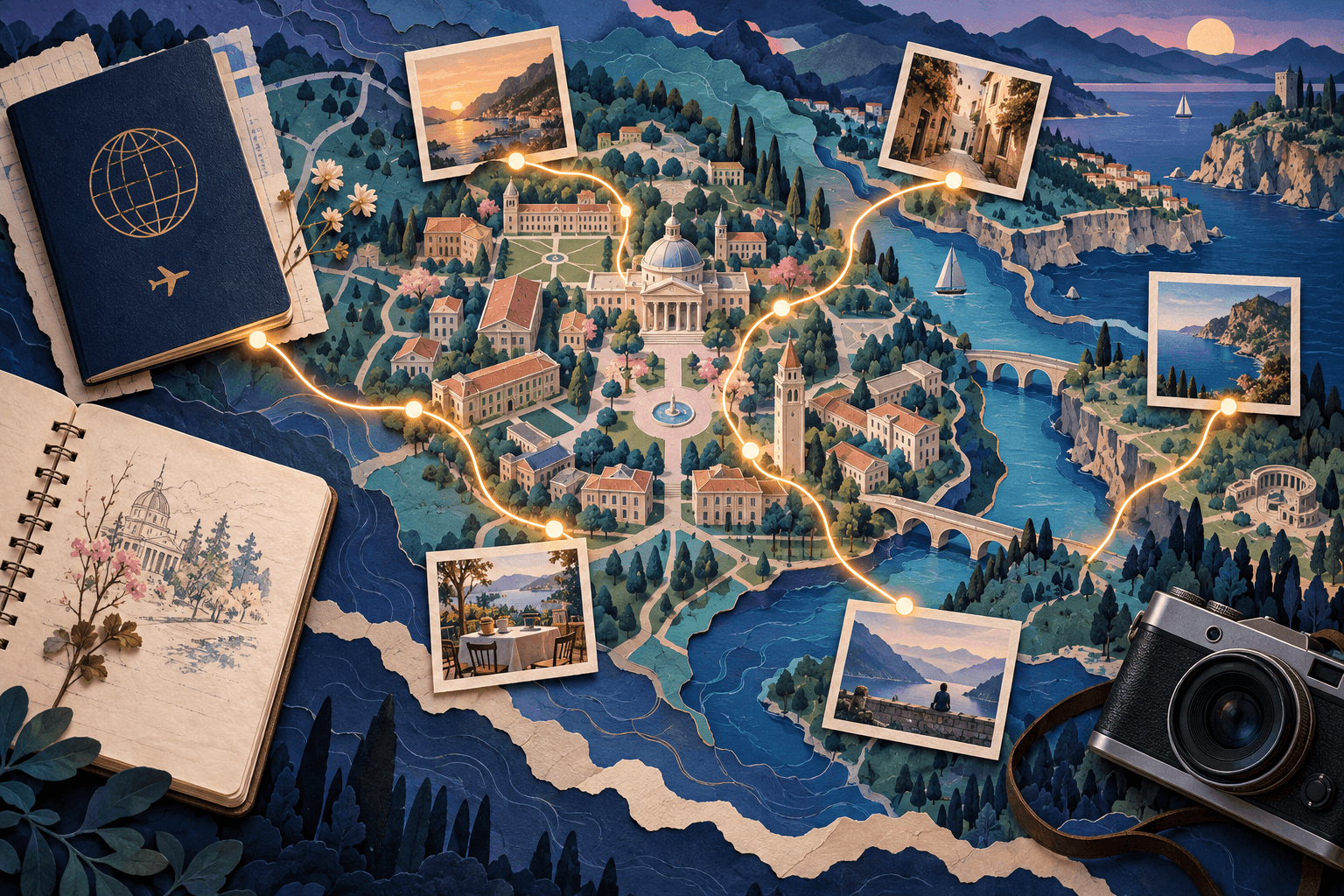
The memory-to-next-chapter reveal. Begin with a previous trip photo, show the place on a map, then introduce a new destination. This works when the gift continues a shared tradition.
The gentle clue reveal. Use two or three small hints before the destination name appears. Keep the clues personal rather than relying on obscure geography.
The direct reveal. Show the destination early and spend the rest of the video explaining why you picked it. This is a good choice when the emotional message matters more than suspense.
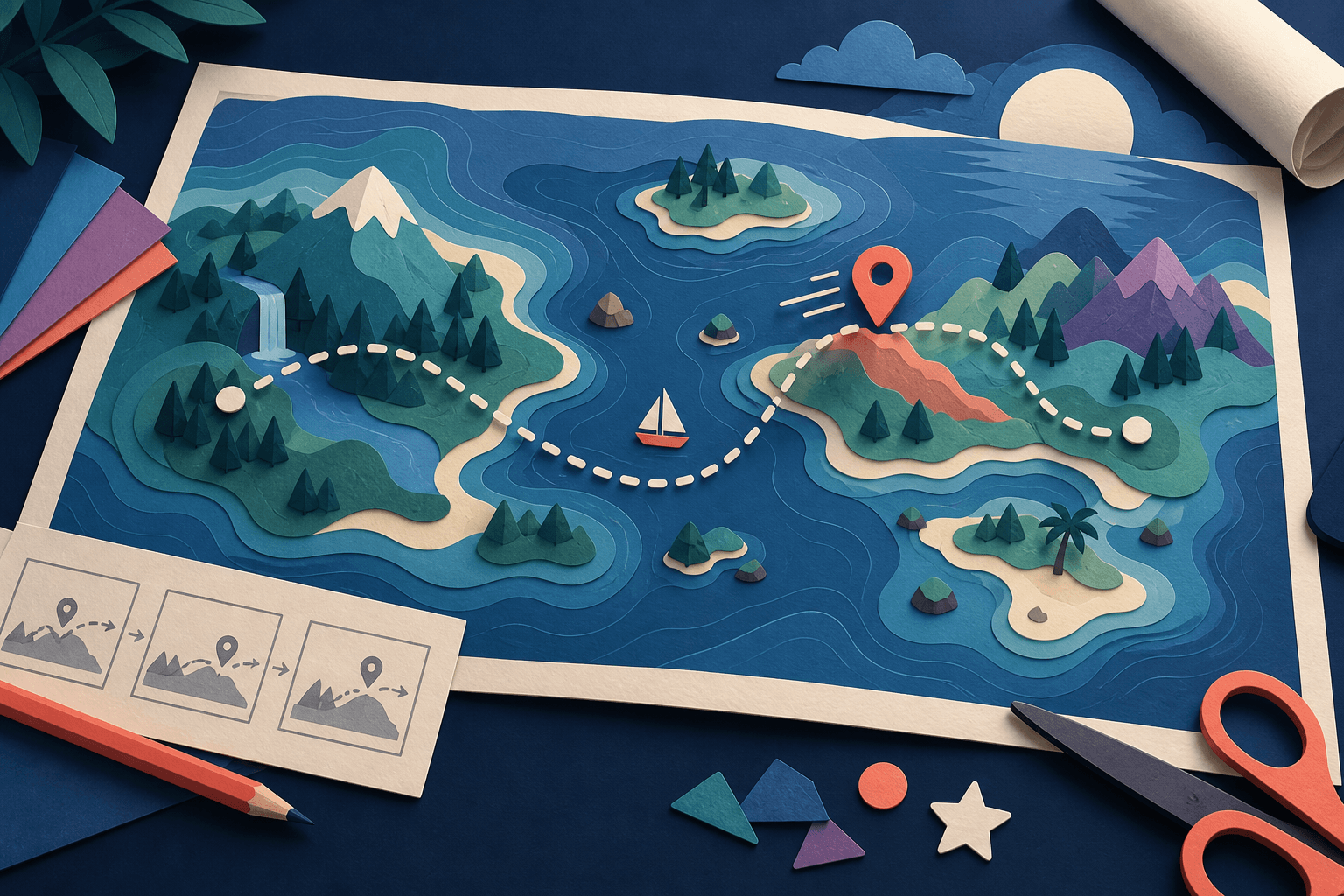
The map has a different job in each version. It can connect two chapters, carry the suspense, or simply establish the setting.
Plan a thirty-second version
Here is an original storyboard to adapt. It is not a claim that every trip announcement should last thirty seconds.
| Time | What appears | Example wording |
|---|---|---|
| 0–5 seconds | A shared photo or a simple opening card | “Remember when we said we should do this again?” |
| 5–10 seconds | A familiar place on the map | “We started making plans here.” |
| 10–16 seconds | A clue card or partial map view | “This time, there is somewhere new.” |
| 16–22 seconds | The destination and its name | “Our next chapter: the coast.” |
| 22–30 seconds | A personal message and the practical next step | “Let's choose our favourite stops together.” |
“The coast” is an example, not a suggested itinerary. Replace it with the real gift and keep the description accurate.
Notice that the reveal is not the final frame. Leave time afterward for the recipient to understand what they have been given.
Gather only the media the story needs
For the first version, try two personal photos, one destination image you have permission to use, a map scene, and a closing message.
The destination image does not need to promise a specific hotel, room, view, or activity. Choose something representative and avoid implying that an item is included when it is only an idea.
Personal photos can do much of the emotional work. A photo from an ordinary day when you first discussed travelling together may mean more than a polished stock montage.
Write the closing message before spending time on animation. It should answer: why this place, why this person, and what happens next?
Build the map scene around the reveal
For a route-based announcement, begin from a meaningful place and end at the destination. Present the connecting line as a storytelling device unless you are showing a verified itinerary. A curved line on a map should not imply an exact flight path.
Keep the final destination label clear. A reveal that depends on the recipient recognizing an outline or landmark may be less obvious than it feels to you.
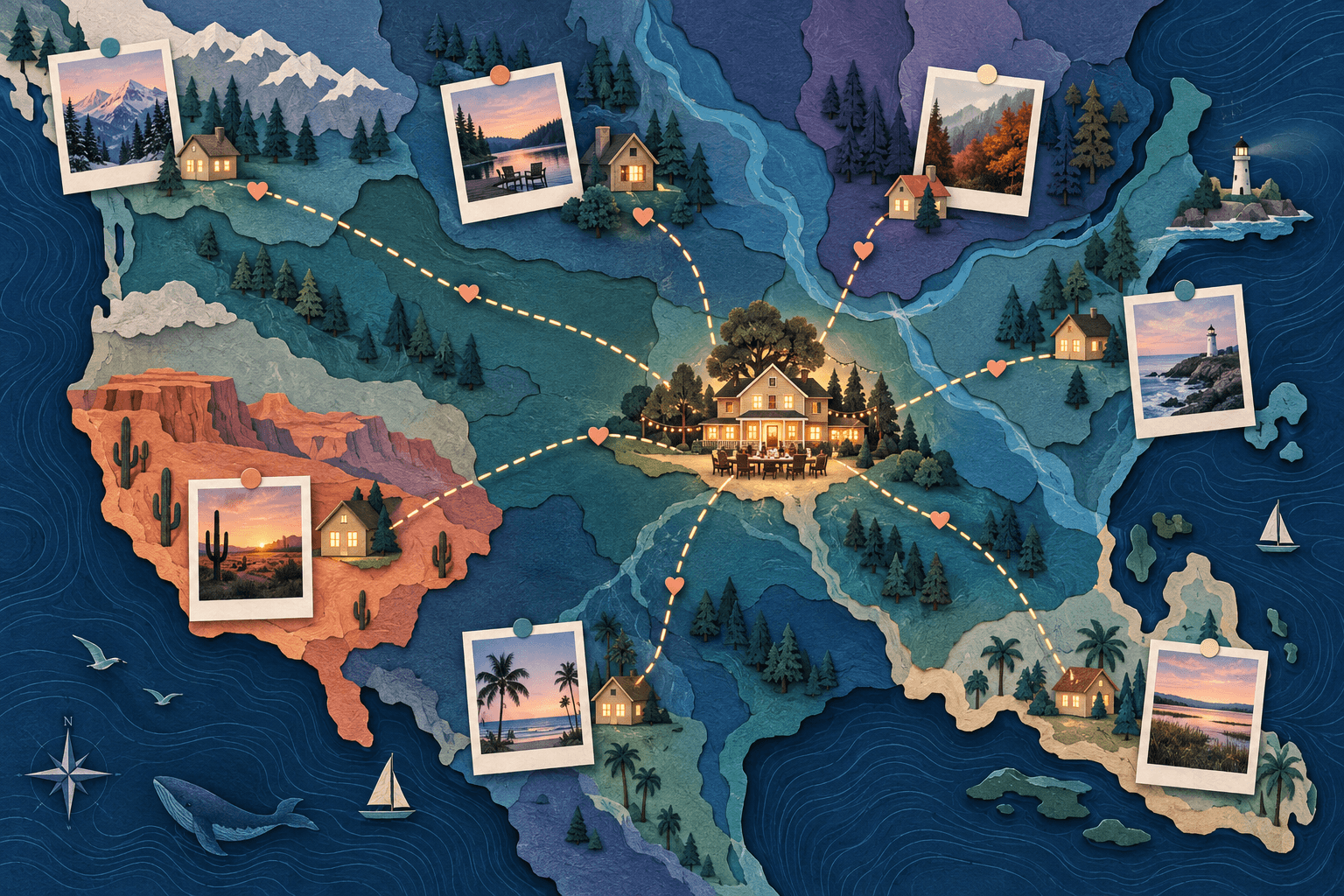
A destination-first map can also work. Start on the new place, reveal its name, then use the rest of the video to explain how the gift connects to your shared memories. Suspense is optional.
For route design ideas, see the flight route animation guide. Apply the same principle here: make the geography understandable before adding decoration.
Separate the map video from the mystery effect
AlbumMap's social-content video page describes a workflow with photos, clips, locations, and map-animation options. It can be a starting point for the place-based part of the announcement.
A hidden label, timed clue card, or precisely controlled destination reveal may require an additional editing step. This guide does not assume AlbumMap has a dedicated surprise-trip template or a control that conceals every destination reference.
Create the map or memory sequence, then use a suitable editor for any extra reveal timing your project needs. Check the finished video from beginning to end rather than relying on the appearance of one scene.
Use a script that sounds like you
These are original examples to personalize, not messages tied to a particular destination.
For a partner
“We have talked about this trip so many times that it almost feels like a memory already. I thought it was time to make a new one. This is where I would love our next adventure to begin. The best part is that we get to plan the little details together.”
For a friend
“We have enough photos of us saying we should go somewhere. I thought we could try the part where we actually do it. There is a new place on the map for us, a lot of time to catch up, and absolutely no pressure to have a perfect itinerary.”
For a family gift
“The gift is not just a place to visit. It is time together somewhere different. Here is the destination we have been saving for a surprise. Now we can choose the moments that will make it our kind of trip.”
Change any line that does not match the real arrangement. A sincere sentence is better than a dramatic promise you cannot make.
Keep the surprise out of the preview
Review the filename, opening frame, cover image, and the text accompanying the video. A title containing the destination can reveal the answer before the recipient presses play.
Choose a neutral filename and an opening image that fits the story without giving away its ending. When using a sharing link, test the preview as the recipient will see it. Different sharing services may generate different previews.
Do not include booking references, full tickets, private addresses, or other details that do not belong in a shareable file. The announcement and the practical travel documents should remain separate.
Present it without making the reaction a performance
Choose a setting where the person can hear or read the message comfortably. A quiet reveal on a phone may be more meaningful than a public announcement.
Ask before recording or sharing their reaction. The gift should not depend on producing a dramatic response for social media.
Keep a copy of the video that can be watched again. After the trip, you can create a second film that answers the first: the place that was once a surprise, now filled with actual memories.
Give the place a personal reason
The strongest reveal is not simply “we are going here.” It is “I chose this because I want to share it with you.”
Explore AlbumMap's travel video maker to turn the places and memories behind the gift into the beginning of that story.
Helpful answers
Frequently asked questions
Do I need bookings before making the video?
No. Be clear about whether the gift is a confirmed trip or an invitation to plan one together. Avoid wording that implies details are settled when they are not.
Can a map reveal work for a nearby weekend away?
Yes. The meaning comes from the shared experience, not the distance. A nearby place can support a thoughtful reveal.
What can I use instead of destination footage?
Use a properly licensed image, a simple map, and your own message. Do not present unrelated footage as a preview of a specific included experience.
What should the final frame say?
State the destination and the next step clearly. Give the person enough information to understand the gift without putting private booking details on screen.