First Birthday Memory Map: From Birth to One Year
A first birthday video can hold the small changes that are easy to forget: a sleepy newborn stretch, the first real smile, a favorite toy, a family visit, and the wobble before a first step. Instead of placing random clips in a slideshow, you can shape the year into a simple story. Start at birth, move through the months, and finish with the child at one. Photos and videos show how the baby changed. Short family messages add voices and feelings. Meaningful places can give the story a clear path. This guide shows you how to collect, organize, and share those memories without making the project too complicated.
Begin with the story you want to keep
Before opening an editor, decide what the finished video should say. A useful theme is simple: look how much happened in one year. That idea keeps the project focused when your camera roll holds hundreds of similar pictures.
Think about the people who will watch it. The video may be a party feature, a private gift for the parents, or a keepsake the child can watch later. A lively party version may need quick clips and bright music. A family keepsake can move more slowly and include longer messages.
Choose two or three words for the mood. Warm, playful, calm, curious, and grateful are good options. Use those words when selecting media. A clear mood is more helpful than adding every photo you love.
How to plan a first birthday video from birth to one year
Create thirteen folders or album labels: birth, months one through eleven, and first birthday. Add a small group of possible photos and clips to each one. Do not make final choices yet. The first pass is only about finding material.
Next, choose one main moment for each month. It might be a new expression, a family visit, a favorite activity, a seasonal event, or an ordinary routine. Milestones do not need to follow a standard list. Pick the moments that tell this child's real story.
Aim for variety. Mix close portraits with wider family scenes. Use a short moving clip after several still photos. Include quiet moments as well as celebrations. This makes a baby's first year video feel like a life unfolding, not twelve nearly identical portraits.
Build a simple month-by-month outline
Begin with a short opening card. It might show the child's first name and a line such as, “From your first day to your first birthday.” Follow it with one early photo, a brief newborn clip, or a parent's welcome message.
For each month, use a simple pattern: month label, one strong image, one short clip, and one sentence. The sentence can name a favorite activity, a funny habit, or a person who became important that month. You do not need all four pieces every time.
Let the seasons help the story move. A spring walk, summer visit, autumn afternoon, or winter celebration can show time passing. If several months look alike, a seasonal detail gives each part its own feel.
End with recent footage that clearly shows the child at one. Add a final family message or a quick group greeting. The ending should feel like a welcome to the next year, not a sudden stop after month twelve.
Choose first-year moments that feel personal
Big milestones can be useful, but small details often carry more feeling. A video of a baby laughing at the same sound each day may matter more than a formal monthly portrait. A worn toy, bedtime song, or messy meal can bring the year back in an instant.
Consider moments from daily life: coming home, meeting relatives, bath time, stroller walks, story time, first foods, dancing in the kitchen, or watching a pet. Include only the events that belong to this family. There is no required checklist.
Avoid turning the video into a comparison. Babies grow at different rates. Use captions such as “You found a new way to explore” or “This became your favorite game.” These lines celebrate the child without measuring them against anyone else.
Add places to create a first-year memory map
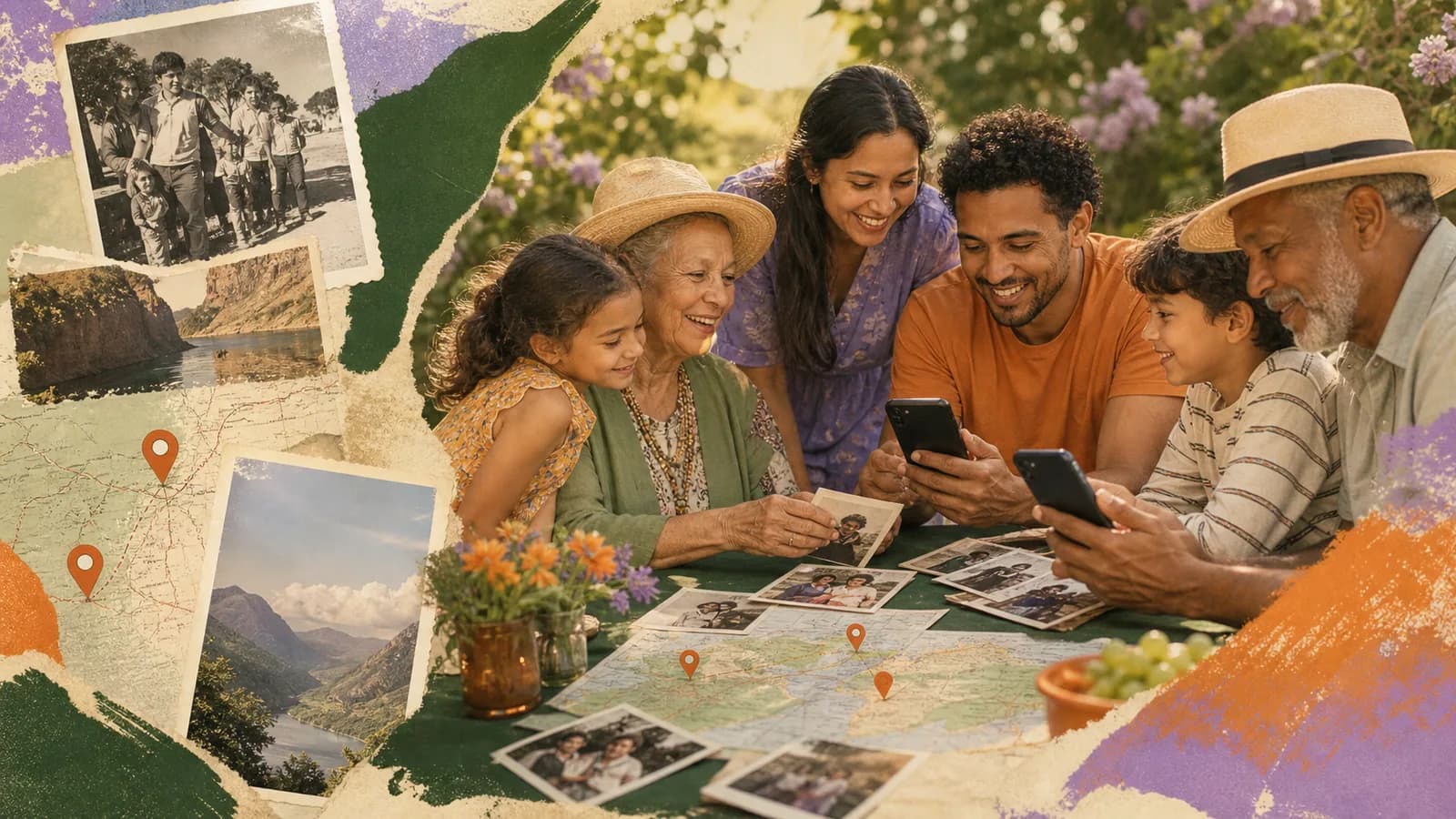
Some first-year memories are closely tied to places. The story might begin in the birth city, move to the first home, visit a grandparent's town, pause at a favorite park, and end at the birthday gathering. A few locations can give the video a natural route.
Use a place only when it adds meaning. A living-room floor may be where crawling began. A relative's city may mark the first family visit. A lakeside cabin may hold the first trip. You do not need a new location for every month.
Protect the child's privacy. Use a city, neighborhood, or family label instead of an exact address. Avoid showing medical records, daily schedules, school details, or other information that should stay private.
AlbumMap can help when you want photos, short videos, written notes, and places in one story. The finished video can travel between map stops as the child moves through the year. If locations are not important, a simple chronological montage is still a good choice.
Ask family members for useful contributions
Relatives may have photos and clips that the parents never received. Ask grandparents, siblings, aunts, uncles, and close family friends to check their phones. Give them a deadline and one private place to upload everything.
Make the request specific. Ask for one favorite photo or clip, the month it was taken, and a short note about why it matters. If the memory is tied to a place, ask for the city or a broad location label too.
Invite a few people to record messages for the child. They can share what they remember about meeting the baby, a small change they noticed, or a hope for the coming year. Brief prompts usually produce warmer messages than a request to “say anything.”
When another child appears in a submitted photo or video, confirm that their parent or guardian is comfortable with its use. Keep the finished project private unless everyone involved has agreed to wider sharing.
Record short messages that will still matter later
A strong family message does not need to sound polished. Ask each person to speak for about 15 to 30 seconds. They can say the child's name, share one true detail, and finish with a wish or promise.
Parents might describe what surprised them during the year. Grandparents can recall the first time they met the baby. A distant relative can record from their own city and explain what they look forward to doing together.
Ask contributors to face a window, record in a quiet room, and look at the camera. A short pause before and after speaking makes trimming easier. Clear sound matters more than a perfect background.
Written notes can replace video when someone is camera-shy. Display one or two sentences beside that person's photo. The change in format can also give the viewer a quiet moment between active clips.
Edit for a clear, gentle pace
For many families, three to six minutes is enough for the main birthday memory video. A longer private archive can hold extra clips. Keeping the party version shorter makes it easier for guests to stay engaged.
Trim repeated moments and long pauses. A short clip often needs only its best five to ten seconds. Let an important sound remain when it adds meaning, such as a laugh, a first word, or a family member's voice.
Use simple transitions. Fades, clean cuts, and month cards are usually enough. Too many effects can compete with the baby's face and the family story. The memories should remain the main event.
Choose music that supports the mood and that you have permission to use. Keep it low beneath spoken messages. Review the whole video with headphones and speakers so no voice disappears under the soundtrack.
Three first birthday video examples you can adapt
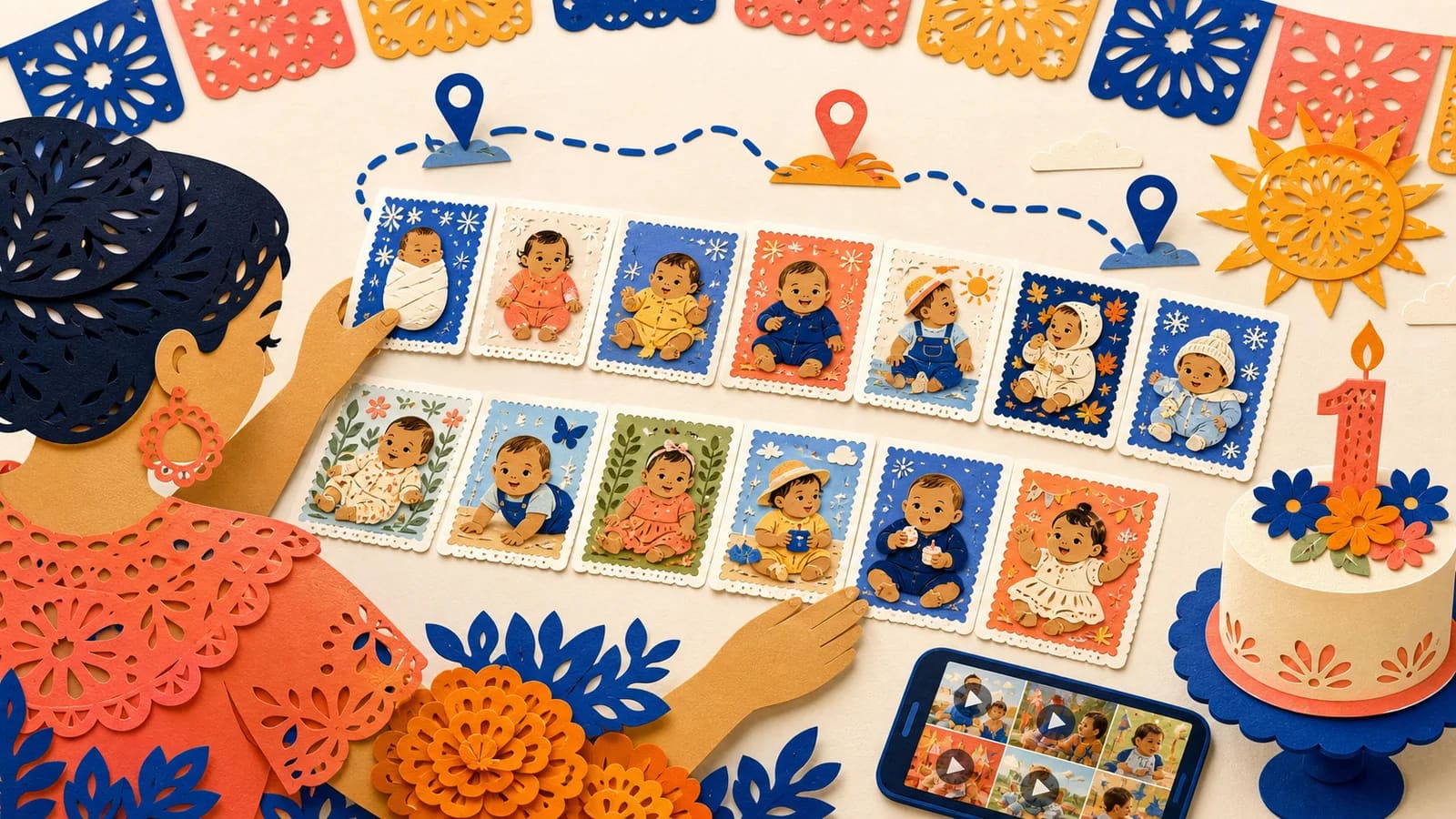
For a monthly growth story, open with the newborn stage and give each month about 10 to 15 seconds. Use one image, one movement, and one short caption per month. End with the birthday child beside the first photo. This structure is clear and easy to follow.
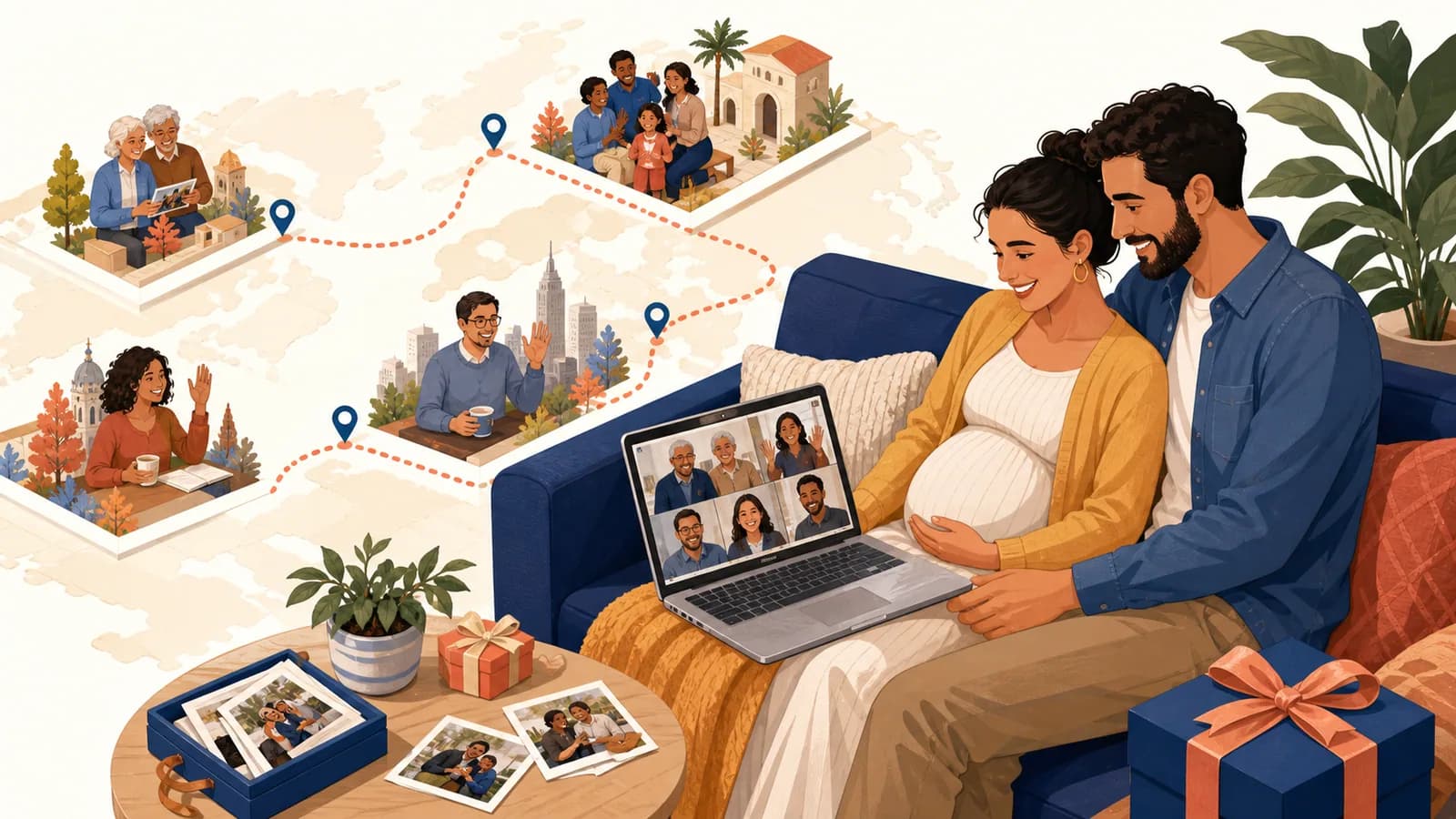
For a family-across-the-map story, begin at home and move to the places where relatives met or visited the baby. Each stop can hold a photo, short clip, or message. The map helps distant contributions feel like parts of one family journey.
For a small-moments story, skip formal monthly cards. Group the year by themes such as sleepy days, new tastes, favorite faces, little adventures, and reasons we laughed. This approach works when your best media does not cover every month evenly.
You can also combine these formats. Use the monthly timeline as the main structure, then add three or four map stops where a place changed the story. Keep the mix simple enough that viewers always know where they are in the year.
Review the video with care
Watch the full edit before the birthday. Check names, dates, month labels, sound levels, and the order of events. Ask another close adult to review it because they may spot a private detail or mistaken date you missed.
Look closely at the background of every image. Crop out medical forms, house numbers, name tags, screens, and private messages. Remove any scene that could embarrass the child or another person later.
Save the project files and final export in more than one secure place. Use clear filenames and keep the original media too. Technology changes, so a downloadable copy is safer than relying on one shared link.
If the video will be posted online, make a separate public version. It can use fewer locations, shorter captions, and no full dates. The private family version can hold details that should not be shared widely.
Plan a simple birthday reveal
At a party, play the video after guests have settled but before the room becomes noisy. Test the screen, sound, internet connection, and file before people arrive. Keep a downloaded copy ready in case the connection fails.
A private viewing may feel more meaningful for the parents and close family. Watch it during breakfast, after the party, or when the house is quiet. The child may not sit through the full video, and that is fine. The keepsake is also for future years.
You can add a QR code to a card for relatives, but protect the link if the video contains private child images. Tell recipients not to repost it without permission.
Consider recording a few seconds of the family watching together. That reaction can become the first clip in next year's memory collection. It closes one story while making an easy start on the next.
Examples You Can Copy
Copy-ready family contribution request
Hi everyone. We are creating a birth-to-one memory video for [Child's name]. Please upload one favorite photo or short clip by [date]. Add the month it was taken, one sentence about the moment, and a broad place label if the location matters. You can upload everything here: [private link]. Please do not post the project publicly.
Copy-ready video-message prompt
Please record a 15- to 30-second message for [Child's name]. You could share what you remember about meeting them, one small moment that made you smile, or something you hope to do together next year. A normal phone recording in a quiet room is perfect.
Copy-ready monthly caption template
Month [number]: This was the month you [favorite activity or small change]. You loved [person, toy, food, song, or routine], and we will always remember [specific moment].
Copy-ready place prompt
What place belongs in [Child's name]'s first-year story? Send one photo or clip from that place and tell us why it matters. A city, park, family home label, or trip destination is enough. Please do not send an exact private address.
Copy-ready grandparent message
Happy first birthday, [Name]. I still remember meeting you at [broad place or family moment]. This year, I loved watching you [specific detail]. I hope we share many more stories, walks, and laughs in the year ahead. You are deeply loved.
Copy-ready closing card
One year of small moments, favorite faces, and places that already feel like part of your story. Happy first birthday, [Name]. We cannot wait to see where the next year takes you.
Final Thoughts
The first year does not need to be reduced to a perfect milestone list. Its meaning often lives in ordinary scenes, familiar voices, and places where the family spent time together. Choose a clear structure, keep only the strongest moments, and protect the child's privacy. A chronological slideshow can tell the story well. When locations and group contributions are important, AlbumMap can connect the photos, videos, messages, and places as one memory-map journey. The result is more than party entertainment. It is a record of how one small person changed through a full year.
Helpful answers
Frequently asked questions
- How long should a first birthday memory video be?
- Three to six minutes is a practical length for a party or family viewing. Create a longer private archive if you have extra footage. Short clips and one main moment per month will help the video move well.
- What should I include from each month?
- Try one strong photo, one brief clip, and one sentence about the month. You can skip a piece when you do not have it. The goal is a clear family story, not a complete record of every day.
- What if I do not have photos from every month?
- Group the year by themes instead. Use sections such as favorite faces, new tastes, quiet routines, family visits, and little adventures. You can also use a written month card when no suitable image exists.
- Which places work in a first-year memory map?
- Use places that changed or supported the story, such as the birth city, first home, a grandparent's town, a favorite park, or a family trip. Broad labels are usually enough. Keep exact addresses and private medical details out of the video.
- How can relatives contribute without making the project confusing?
- Send one private upload link, one deadline, and a short request. Ask each person for a favorite photo or clip, the month, a sentence of context, and an optional place. Track submissions in a simple checklist.
- Can I share the finished baby video online?
- Make a separate public version if you want to post it. Remove exact dates, addresses, medical details, routine information, and images of other children without permission. Keep the full family version in private storage.