Introduction
Instagram trends 2024 vs 2025 can sound like a hunt for the newest winners. That is not a safe way to compare social posts. Likes can change. Posts can vanish. A place in an image is not always a location tag. This guide uses two fixed nine-post samples and one simple rule set. It records only supported country context, subject, stated post type, and location role. It does not claim a live ranking. Last verified: 2026-08-10. Data cutoff: 2026-08-10.
Instagram trends 2024 vs 2025: what this can show
This article compares two fixed sets of nine named posts. The 2024 set comes from the AlbumMap video. The 2025 set comes from the earlier local snapshot used in the completed review. Each item uses the same four fields.
First, note a country only when a public event or club gives support. Next, name the main subject. Then name a post type only when the source says it. Last, choose a location role: public event, club context, travel context, or no supported place.
These rules keep a small sample honest. They do not measure all of Instagram. They also do not turn an event country into proof of an Instagram location tag.
A simple comparison method
Use one row for each named item. Write what happened. Write what can be seen. Write whether a public location tag is shown. Then add any outside fact that supports a broad event place. Keep those notes apart.
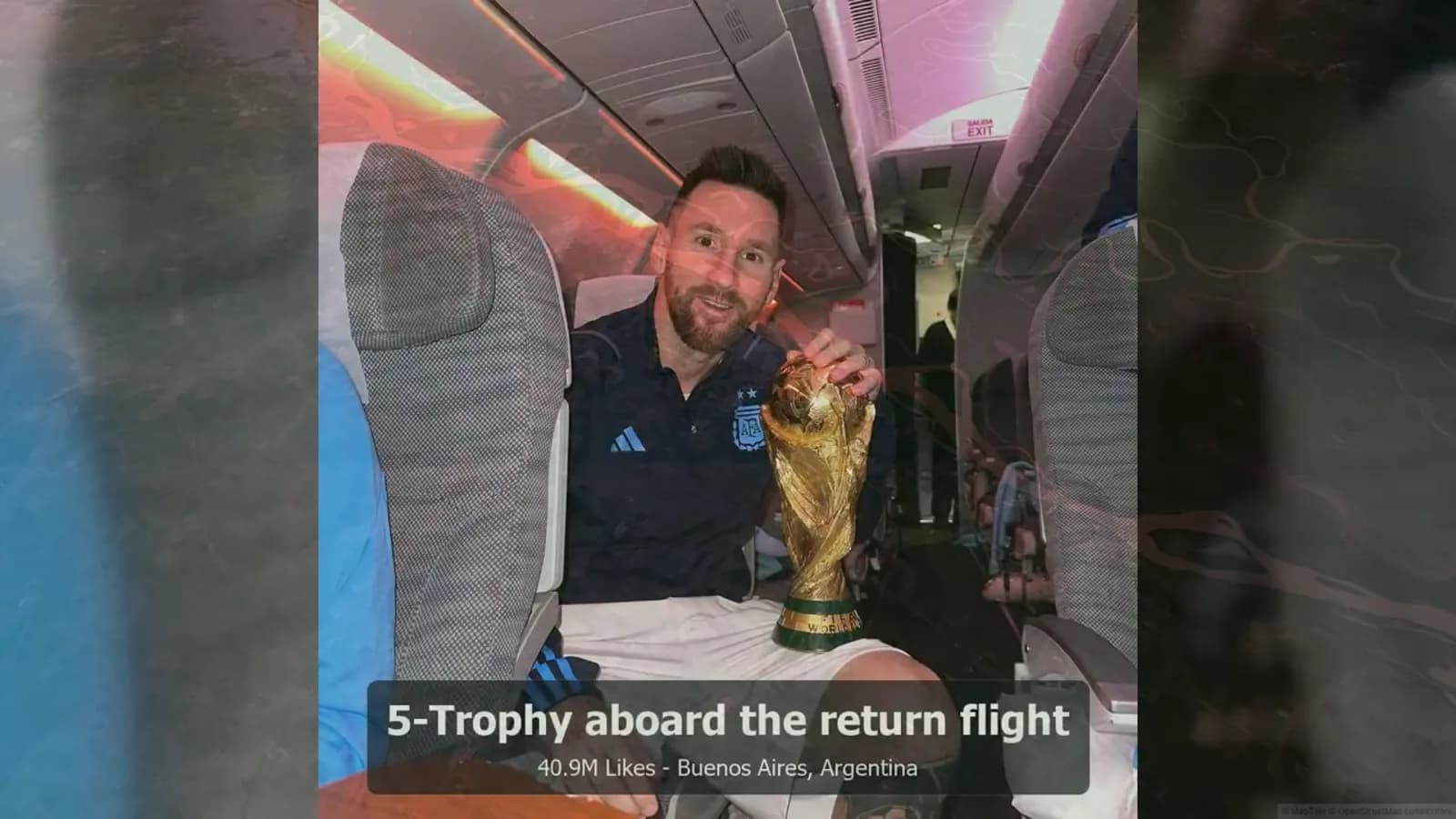
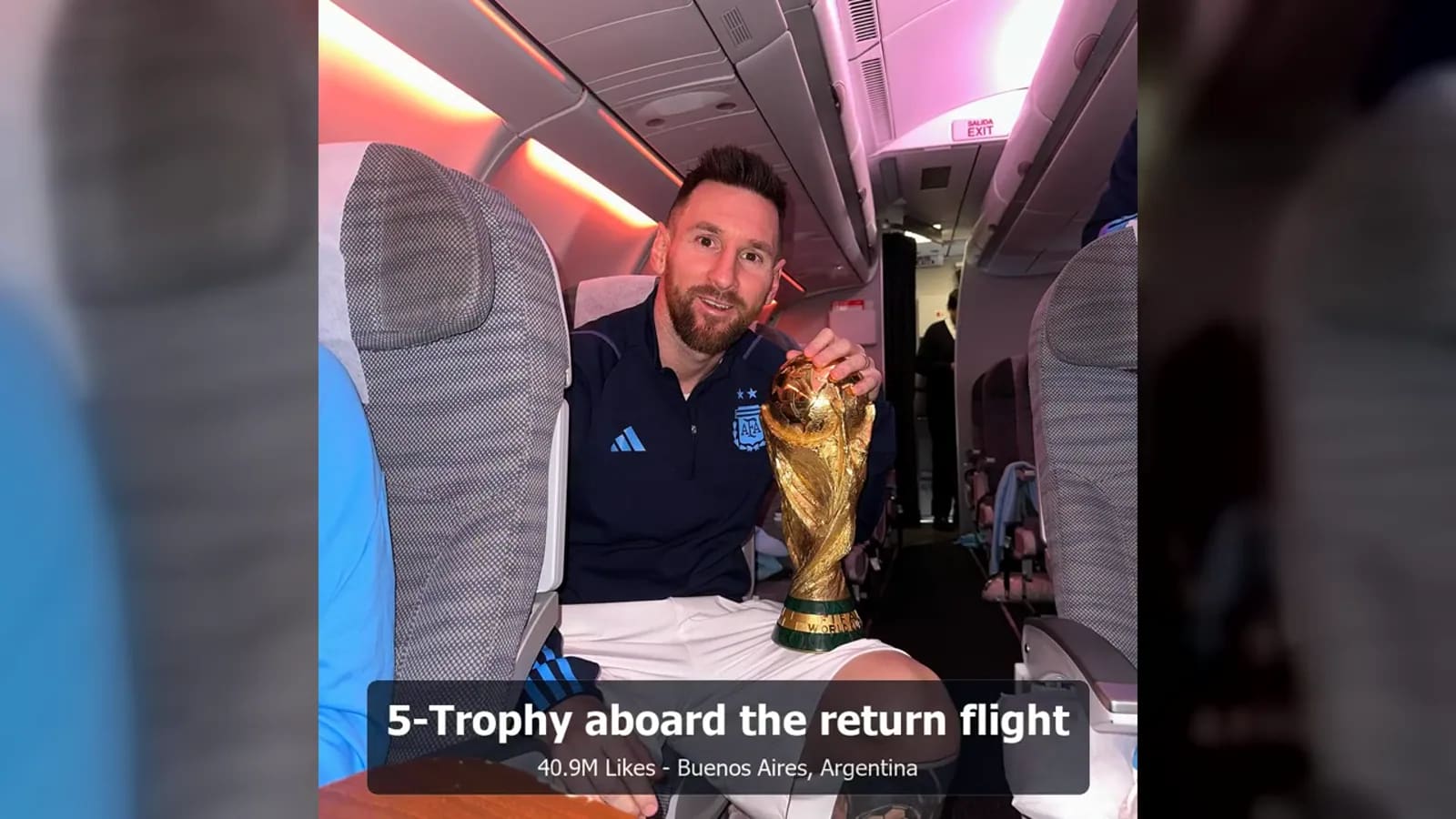
Choose the smallest true label. A World Cup event may support a country-level note. A team shirt may support club context. A trophy on a plane supports travel context, not a named airport.
Leave a place blank when the proof is weak. An AI sunset may look like a place, yet it is synthetic. A viral egg has no useful physical setting. A blank field is better than a made-up pin.
Two-year method and comparison table
The table below is a method table, not a winner list. Both samples have sports moments, campaign work, synthetic imagery, and novelty imagery. That means the table cannot show every change on the platform.
It can show a better way to read a social post. A location may explain a public story, but it may not be a tag on the post. A scene may look real, but it may not be a real place.
What the country notes mean
In the 2024 sample, Qatar fits the World Cup event context. Argentina fits the victory-parade context. Saudi Arabia fits the Al-Nassr club context. These are broad public notes, not route pins.
Most items do not support a country. The chess campaign needs more proof before it gets a place. The return-flight image has travel context but no proven airport. The AI sunset has no supported real-world setting.
This is the key lesson for viral Instagram locations. A country can add useful context. It should not be used just to fill a map. If the source is not clear, use a broad label or no label.
Subjects and formats
The video moves from sports to advertising, AI imagery, and the viral egg. It calls the AI sunset a reel. It does not confirm a format for every other item. Do not guess whether those items are photos, carousels, or videos.
The subject may tell more than the format. Sports posts can carry a shared win, a trophy, or a parade. A campaign can use a familiar image. A strange picture can gain attention through surprise.
For an Instagram trend report, ask a plain question: what can a viewer grasp at once? It may be a public event, a known face, a clear object, or an odd visual. That answer is more useful than a broad rule about what format always wins.
Map a trend with care
If a public post is needed, start with an official embed. Record the date of the sample. Keep four notes: what happened, what the image shows, whether a public tag exists, and what supports any place.
Do not infer a private home, school, hotel, or live location from an image. Do not map a person’s daily path without permission. Use a city, a region, or no pin when detail could harm privacy.
A useful caption can say: “This post relates to a public World Cup event. We use the country as context, not as a claimed Instagram location tag.”
Use the idea for your own group
Public posts can offer a simple story shape: label each moment, say why it matters, and move to the next stop. They do not give anyone the right to reuse a stranger’s media.
For a birthday, reunion, team season, or trip, ask each person for one photo or short clip, one short note, and a city or broad place they are happy to share. Three to nine stops are enough.
AlbumMap works best when those places belong to a real shared story. A school, stadium, wedding venue, hometown, or trip city can add meaning without sharing more detail than the group wants.
Sources and verification
Last verified: 2026-08-10. Data cutoff: 2026-08-10. The 2024 sample is the AlbumMap video. The 2025 sample is the completed local comparison set used for this documented method.
Review this page before an update if a source changes, an official embed is no longer available, or Instagram changes its location tools. This is not a live ranking.
Two-year methodology and comparison table
Method: compare two fixed nine-item snapshots. Count a country only with supported public context; code subjects from the named item; code format only when explicit; and label each location as public-event, organization, in-transit, or unsupported. Counts are sample descriptions, not a live platform-wide ranking.
| Measure | 2024 fixed snapshot | 2025 fixed snapshot | How it was coded | What it means |
|---|---|---|---|---|
| Sample | 9 named posts in the supplied AlbumMap 2024 snapshot | 9 named posts in the existing successful local 2025 snapshot | Fixed sample; one row per named item | A repeatable sample, not all Instagram activity |
| Supported country context | Qatar, Argentina, and Saudi Arabia appear only as broad public event or club context | Same broad country-context pattern in the reviewed 2025 set | No exact pin without direct support | Countries explain some public stories; they do not prove post geotags |
| Subjects | Sports/public events; advertising; synthetic imagery; novelty still image | Same broad subject mix in the reviewed 2025 set | Named item and scene description | Shared public moments dominate this small sample |
| Post types | 1 explicitly named reel; 8 entries not format-verified by the supplied evidence | Use only format labels verified in the 2025 source | Do not guess photo, carousel, or video | Format claims need their own evidence |
| Location roles | Public event, club context, in-transit, and unsupported physical setting | Same role categories applied | Smallest supported location label | Many viral posts are not travel-location stories |
Examples You Can Copy
Public-event context caption
This post is tied to a public World Cup moment. We use the event country as context, not as a claimed Instagram location tag.
Limited-location caption
The image suggests a journey, but the post does not verify an exact place. We have kept the location broad.
Group contribution prompt
Please add one photo or short video, one sentence about why this place matters, and a city or broad location you are comfortable sharing.
Final Thoughts
The useful change is not a claim that every viral post moved to a new place. It is a better habit: date the sample, separate event context from a platform tag, and leave unsure places unpinned. For a map story that lasts, use the places and memories your own group chooses to share.
Helpful answers
Frequently asked questions
How were 2024 and 2025 compared?
The article applies one method to two fixed nine-item snapshots: supported country context, subject, explicitly stated post type, and location role.
Do viral Instagram locations prove a post’s exact location?
No. A public event setting, what an image shows, a caption, and an Instagram location tag are different kinds of evidence.
Why are some sample items not mapped to a country?
A country is listed only when the public context supports it. Synthetic, novelty, campaign, and in-transit images may not have a supported physical place.
Can I reuse viral Instagram posts in a map video?
Only if you own the media or have permission. Use official embeds for public third-party posts and approved group media for a map video.