90th Birthday Video Ideas From Every Generation
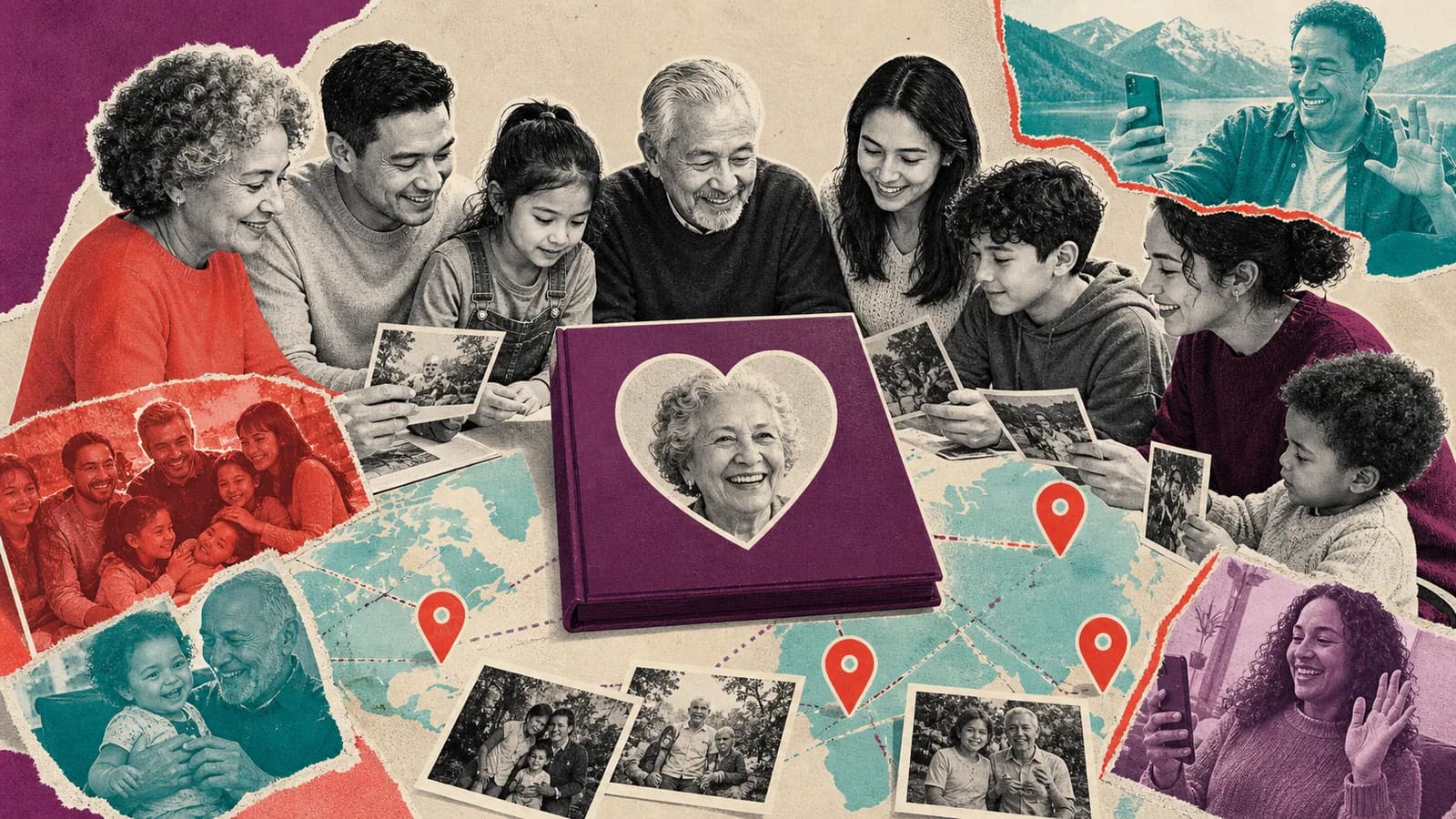
A 90th birthday video can bring nearly a century of memories into one warm celebration. The best version does more than show old photographs. It lets each generation share something only they can offer. Children may remember family turning points. Grandchildren may recall traditions and quiet lessons. Great-grandchildren can bring joy with a song, drawing, or simple greeting. Lifelong friends can reveal stories the family has never heard. This guide will help you give everyone a clear role. You will also find practical prompts, filming tips, and copy-ready messages. The result can feel personal without becoming too long, formal, or focused only on age.
Start with the person, not the number
Turning 90 is a major event, but age should not become the whole story. Begin with the birthday person's character, relationships, interests, and daily life. Ask what makes them feel most like themselves.
Choose one main feeling for the finished video. It might be joyful, grateful, playful, or gently reflective. This choice helps contributors understand what to send. It also keeps the final edit from feeling uneven.
Think about the recipient's comfort. Some people enjoy a large party reveal. Others would rather watch with two or three close relatives. Plan the video and its presentation around the person receiving it.
Avoid treating the tribute like a farewell. Include old stories, but leave room for current joys and future wishes. Celebrate the person who is here now.
10 ideas for a 90th birthday video from every generation
1. Build a four-generation welcome. Open with quick greetings from children, grandchildren, and great-grandchildren. A sibling, cousin, or lifelong friend can introduce the early years. This opening shows the family's range without a long explanation.
2. Give each generation a different prompt. Ask children about values or advice. Ask grandchildren about family traditions. Invite great-grandchildren to share a drawing, joke, song, or wish. Different prompts prevent every clip from sounding the same.
3. Create a family saying chain. Ask each person to repeat a favorite phrase used by the birthday person. They can explain when they heard it and why it stayed with them. Place the clips together for a warm repeated theme.
4. Follow one tradition through time. Choose Sunday lunch, a holiday recipe, gardening, card games, or another shared custom. Let older relatives explain how it began. Younger relatives can show how they continue it today.
5. Make a then-and-now photo sequence. Pair an early photograph with a recent message from someone connected to it. A wedding picture could lead into a child's message. A school photograph could introduce an old friend's story.
6. Collect ninety small reasons people appreciate them. These can be short spoken lines or written notes. Divide the list across the family so no contributor feels overwhelmed. Mix serious reasons with light details that feel true.
7. Build a life-in-places story. Move through a childhood home, school, workplace, family house, favorite trip, and present community. Add one photo, message, or short clip at each stop. This gives the birthday video montage a clear path.
8. Record a lesson that traveled forward. Children can name advice they received. Grandchildren can explain how they used it. Great-grandchildren can show a simple habit or tradition that came from it. This idea shows influence without making grand claims.
9. Invite peers to fill the missing chapters. Siblings, cousins, neighbors, former coworkers, and old friends may know stories younger relatives have never heard. Ask for one safe, kind memory rather than a full life history.
10. End with wishes for the year ahead. Ask every generation to name one thing they hope the birthday person enjoys next. Suggestions might include more family meals, garden time, music, visits, or a favorite outing. This keeps the ending hopeful.
Choose contributors without leaving a life chapter empty
Make a simple list before sending invitations. Include close family first. Then think through school, work, neighborhoods, clubs, faith communities, travel, and long friendships. You do not need someone from every group. Look for people who can add a real detail.
Give each person one clear task. A specific request is easier than asking them to “say something nice.” Tell them the theme, clip length, deadline, and upload method. Include two prompt choices so they can begin quickly.
Leave enough time for reminders and replacement clips. Start several weeks before the celebration when possible. Set the contributor deadline well before the birthday. That gives you time to check sound, organize photos, and finish the edit.
Offer a simple alternative for anyone who cannot record. They can send a written message, photograph, voice note, or drawing. With permission, another family member can read their words on camera.
Help every age group record a natural message
Children of the birthday person often carry the longest shared history. Ask them about a lesson, turning point, or ordinary act of care. One clear memory will usually feel stronger than a list of compliments.
Grandchildren can connect older and younger parts of the family. Good prompts include a favorite visit, tradition, meal, trip, or piece of advice. Ask them to explain why that moment still matters.
Great-grandchildren do not need polished scripts. Let young children wave, sing, show artwork, or answer one easy question. Their natural energy can give the family tribute video a welcome change of pace.
Friends and peers can share stories from school, work, travel, or the old neighborhood. Remind them to choose a story the recipient would be comfortable hearing in front of others.
Ask everyone to look toward the camera and speak as if the birthday person is in the room. A direct greeting feels warmer than talking about them in the third person.
Use a simple recording plan
Ask for short clips, usually 30 to 60 seconds. A person with an important story may need longer. Short guidance keeps the group birthday video moving and makes recording less stressful.
Have contributors face a window or soft lamp. They should avoid bright light behind them. Ask them to record in a quiet place and keep the phone steady. Clear sound matters more than a perfect background.
Choose one phone direction if your editing method needs it. Tell contributors before they record. Ask them to pause for a second before speaking and again after finishing. Those quiet moments make editing easier.
Encourage one or two practice attempts, but do not demand perfection. A small laugh or natural pause can make the message feel real. Review each clip soon after it arrives so there is time to request a new version.
Shape the clips into a story
Begin with a familiar voice and a clear welcome. Explain that people from different parts of the recipient's life came together for the celebration. Keep this introduction brief.
Move through the material by generation, life chapter, theme, or place. Any of these structures can work. Do not switch between them without a reason, or the story may become hard to follow.
Use photographs and short written messages between video clips. These pauses add variety and give the viewer time to take in each story. Leave older photographs on screen long enough to recognize faces.
Mix lighter moments with deeper ones. Several emotional messages in a row can feel heavy. A child's greeting, a funny memory, or a lively current photo can reset the pace.
Finish with one strong message or a short set of 90th birthday wishes from the whole family. End on a clear image and hold it for a moment. Do not let the video stop without a closing thought.
Make the finished video comfortable to watch
Plan for the birthday person's hearing, eyesight, energy, and technology preferences. Use captions when possible. Keep on-screen words large, brief, and easy to read.
Balance the volume between clips. Keep background music below speaking voices. Avoid fast cuts, flashing effects, and busy graphics. Use music you are allowed to include and choose a style the recipient enjoys.
A shorter, focused video is often easier to enjoy than a long archive. If you receive many clips, create a main presentation and save extra messages separately. Nothing meaningful has to be discarded.
Test the final version on the same television, tablet, or computer you will use at the celebration. Check the internet connection, sound, captions, and screen brightness before guests gather.
Add a map when places carry the family story
A location can bring a memory into focus. Ask contributors where they met the birthday person or where their favorite story happened. The answer might be a family home, school, factory, farm, hospital, park, place of worship, or holiday spot.
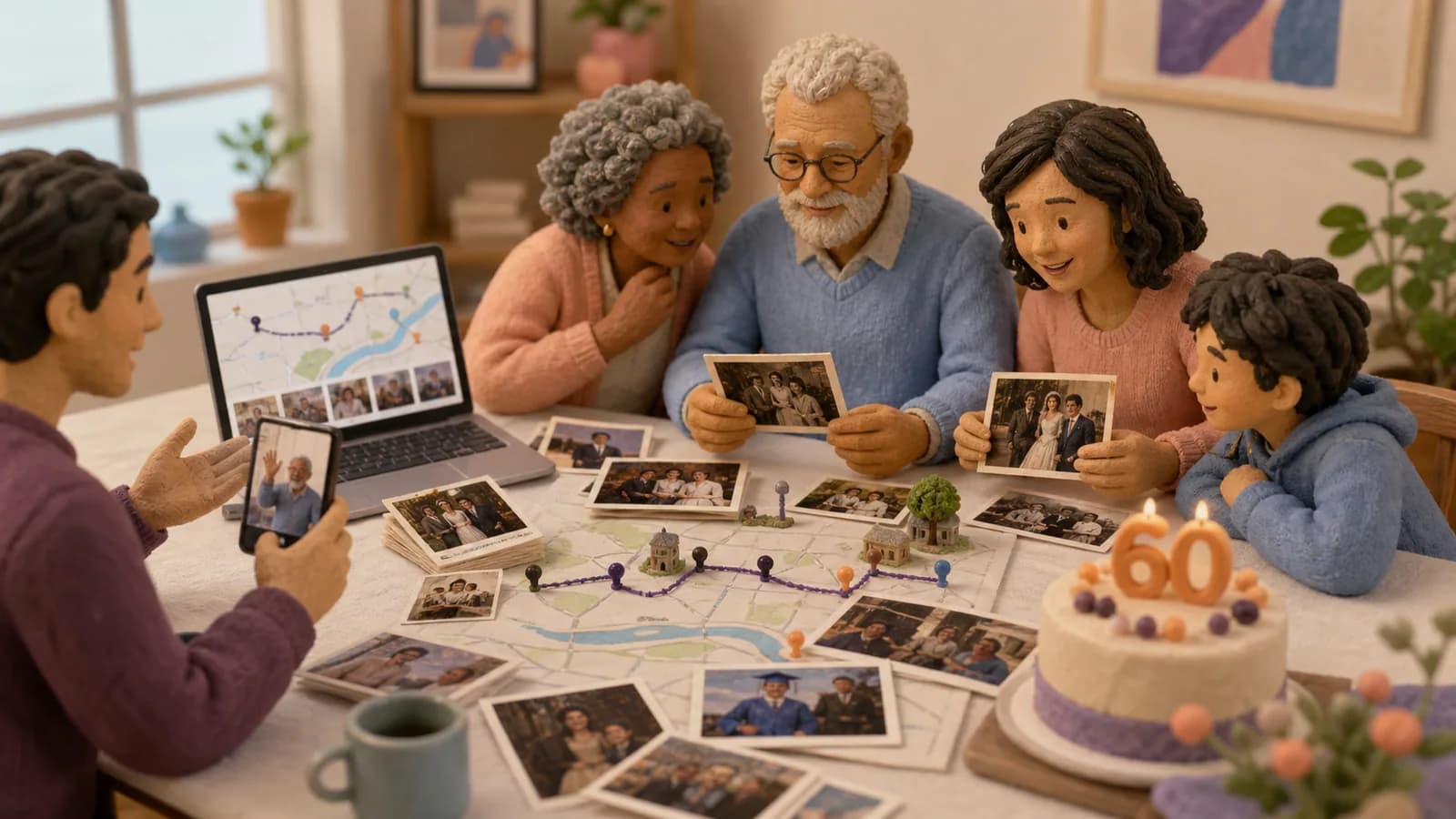
AlbumMap is useful when you want to collect photos, short videos, written messages, and locations in one project. The finished story can move between meaningful places instead of showing unrelated clips in a row.
Keep the map selective. Choose places that add context or emotion. You do not need every address. A town or city may be enough when an exact location is private.
One possible route starts at the recipient's birthplace. It can move through school, work, family homes, and favorite trips. The final stops can show where children, grandchildren, and great-grandchildren live today.
Avoid common mistakes
Do not build the whole video around jokes about age, health, memory, or physical change. Even a playful person may not enjoy hearing the same joke from several contributors.
Do not include private stories or photographs without checking. Ask the person who supplied an old image whether it can appear. Remove details that could embarrass the recipient or another family member.
Do not chase a perfect count of clips. Ten thoughtful messages can be better than forty rushed greetings. Focus on people who know the recipient and can share something specific.
Do not make one relative carry the whole project. Divide contributor outreach, photo gathering, clip review, and presentation testing among a small team.
Plan a calm and meaningful reveal
Choose a point in the celebration when people can listen. Before pressing play, lower background noise and help the recipient get comfortable. A quiet family viewing may work better than showing it during a busy meal.
Introduce the gift in one sentence. You might say, “People from every part of your life wanted to celebrate with you.” Then let the messages speak for themselves.
Stay nearby during the viewing. The shared experience is part of the gift. Afterward, make the video easy to replay and give trusted family members access to the saved version.
Examples You Can Copy
Copy-ready group invitation
Hi everyone. We are creating a birthday video for [Name]'s 90th celebration. Please send a 30 to 60 second clip by [date]. Choose one prompt: share a favorite memory, thank [Name] for something specific, or offer one wish for the year ahead. Please upload it here: [link].
Copy-ready request for children
Please share one lesson, family tradition, or act of care you received from [Name]. Tell us when it happened and why it stayed with you. One clear story is enough.
Copy-ready request for grandchildren
What is one visit, meal, trip, holiday, or ordinary afternoon with [Name] that you still remember? Share the detail that makes the memory feel real.
Copy-ready request for great-grandchildren
Please say happy birthday, show a picture you made, sing a short song, or tell us one thing you enjoy doing with [Name]. A quick and natural clip is perfect.
Copy-ready request for a lifelong friend
We would love one story from an earlier part of [Name]'s life. Please choose a kind memory they would enjoy hearing at the celebration. Tell us where it happened if you remember.
Copy-ready location prompt
Please add one place connected to your memory. It could be a home, school, workplace, town, park, restaurant, or trip. Include one sentence explaining why that place matters.
Copy-ready reminder
A quick reminder that clips for [Name]'s birthday video are due on [date]. A short phone recording is perfect. It does not need to be polished. Upload your message here: [link]. Thank you for being part of it.
Copy-ready opening narration
Happy 90th birthday, [Name]. People from every generation and many chapters of your life wanted to celebrate you. These are a few of the stories, lessons, places, and happy moments we share because of you.
Copy-ready closing message
Happy birthday, [Name]. Your stories live in our stories, and your care appears in the way we care for each other. We love you, and we hope the year ahead brings more music, laughter, visits, and good days together.
Final Thoughts
The strongest 90th-birthday tribute is not the one with the most effects or the longest timeline. It is the one that feels true to the person receiving it. Give each generation a clear role. Ask for specific memories. Make the finished video easy to see, hear, and replay. If the family's story is tied to many places, a map can give those memories a natural order. Most of all, keep the focus on love, gratitude, current joys, and time together.
Helpful answers
Frequently asked questions
- What should a 90th birthday video include?
- Include short messages, family photographs, current clips, specific memories, and a warm closing. Ask different generations to cover different parts of the story. Add only material the recipient will enjoy seeing and hearing.
- How long should the finished birthday video be?
- There is no single correct length. Many families can create a focused video in about 8 to 15 minutes. A larger family may need longer. Keep individual messages brief, vary the pace, and consider saving extra clips as a separate collection.
- What should each generation say?
- Children can share lessons and family turning points. Grandchildren can recall traditions and visits. Great-grandchildren can sing, show artwork, or offer a short wish. Friends and peers can add stories from earlier life chapters.
- What if someone cannot record a video message?
- Invite them to send a written note, photograph, drawing, or voice recording. With their permission, another person can read the message on camera. A simple contribution can still have great meaning.
- How can we make the video easier for an older adult to enjoy?
- Use clear sound, captions, large on-screen text, gentle transitions, and a comfortable viewing screen. Test the volume in advance. Choose a calm time and sit with the recipient while the video plays.
- How do we use old printed photographs?
- Scan them if you can, or photograph them in soft natural light. Keep the camera parallel to the picture and avoid glare. Check names, dates, and permission before adding the images.
- When is AlbumMap useful for this kind of birthday gift?
- AlbumMap is most useful when memories are connected to places or many people want to contribute. Photos, videos, written messages, and locations can become one map-based story that follows the person's life and relationships.